
Yes, an HVAC maintenance plan is worth it for most DFW homeowners whose system is more than 5 years old. At about $150 to $300 a year, a good plan usually costs less than booking two tune-ups on your own. It may not be worth it for a brand-new system still under full warranty, or for a cheap plan built to upsell you.
An HVAC maintenance plan is a yearly service agreement with a heating and cooling company. You pay a monthly or yearly fee and get two tune-ups a year, plus perks like repair discounts and priority service.
Is an HVAC Maintenance Plan Worth It? The Cost Breakdown
In a typical DFW year with one common summer repair, a plan member spends about $270 less than a homeowner who pays per visit. Here's the math for a 10-year-old system in Arlington whose capacitor fails in July.
One Year With a Plan vs. Without a Plan
Cost item | With a plan | Without a plan |
|---|---|---|
Yearly plan fee | $200 | $0 |
Spring AC tune-up | Included | $150 |
Fall furnace tune-up | Included | $150 |
Service call fee for the July breakdown | $0 (waived) | $129 |
Capacitor replacement ($300 regular price) | $255 (15% member discount) | $300 |
Total for the year | $455 | $729 |
Your numbers will depend on your plan's price, its discount and what breaks. Always ask whether the discount covers parts, labor or both.
Now the honest part: if you skip both tune-ups and nothing breaks, a year without a plan costs $0. A plan won't save money every year. Its value shows up over several years, when a tune-up catches a $300 problem before it becomes a $3,000 one.
Skipping maintenance can also cost you your warranty. Many manufacturers can deny a claim without maintenance records, turning a covered repair into a full-price one.
What Our Techs Find in Systems That Skip Maintenance
When our technicians work on a system that hasn't been serviced in two or more years, these are the problems they find most:
- Weak or failing capacitor:
- Dirty outdoor coil.
- Clogged drain line or full drain pan.
- Dirty, clogged air filter.
- Low refrigerant from a leak.
- Worn or burned contactor.
- Dirty flame sensor on gas furnaces.
The average repair bill on these neglected systems is much more compared with $225 for our plan members. Most of these problems are cheap to fix when caught early. Left alone, a weak capacitor strains the compressor and a clogged drain can leak through your ceiling.
Should You Invest in an HVAC Maintenance Plan? Signs It's Worth It
A plan is a smart buy if any of these describe your home:
- Your system is more than 5 years old.
- Your furnace and indoor coil are in the attic.
- You have pets, allergies or a lot of dust.
- You have two or more systems.
- You tend to forget seasonal maintenance.
- Someone at home can't go long without AC, like a baby, an older adult or someone with health issues.
When a Maintenance Plan Is Not Worth It
Here's when we'd tell you to skip a plan or wait:
- Your system is brand new. Early repairs are usually covered by warranty, so member discounts add little. You still need the maintenance your warranty requires, but one documented tune-up a year or any free visits from your installer may be enough.
- You're moving soon and the plan can't transfer. You'd pay for visits you won't use.
- The home sits empty most of the year. A system that rarely runs wears out slowly.
- Your system is near the end of its life. If it's 15 or more years old and needs a major repair, a plan won't turn back the clock. Get an honest repair-or-replace opinion first.
- The plan is vague or very cheap. If it doesn't list what happens at each visit, it's likely a sales call, not maintenance.
Why DFW Heat Makes HVAC Maintenance More Important
DFW summers make your AC run longer and harder than it would in most of the country, and that wears parts out faster.
100°F Summers Mean Long Runtimes
DFW often gets long stretches of 100°F days. The record is 71 days at 100°F or hotter, set in 2011. On days like that, your AC can run almost nonstop from late morning into the night.
Every extra hour adds wear to the compressor, fan motors, capacitor and contactor. Spring wind, dust and cottonwood fluff also clog the outdoor coil, which makes the system run even longer.
Attic Units Work in Extreme Heat
In many DFW homes, the furnace and indoor coil sit in the attic, where summer temperatures can climb past 130°F. That heat is hard on motors and wiring. If the drain line clogs, water can overflow into your ceiling unless the drain pan and safety switch are working.
Heat Waves Mean Longer Waits for Repairs
Breakdowns tend to happen on the hottest days, when your system works hardest. That's also when HVAC companies across DFW get flooded with calls, and wait times can stretch from same day to several days.
Plan members usually move to the front of the line. When it's 100°F outside and your house is heating up fast, that can matter more than any discount.
Winter Freezes Test Your Heater Too
DFW winters are short, but hard freezes like the one in February 2021 push furnaces and heat pumps to their limits. A fall tune-up catches a dirty flame sensor or worn igniter before the first cold night.
HVAC Maintenance Plan Cost in Texas: 2026 DFW Prices
Most DFW maintenance plans cost $150 to $300 a year for one system, while a single tune-up runs about $100 to $200. Here are typical 2026 prices for plans, tune-ups and the repairs we see most.
Service | Typical 2026 DFW price |
|---|---|
Maintenance plan, one system | $150 to $300 a year |
Premium plan (more perks, bigger discounts) | $300 to $500 a year |
Single AC or furnace tune-up | $100 to $200 per visit |
Service call or diagnostic fee | $79 to $150 (more after hours) |
Capacitor replacement | $150 to $450 |
Contactor replacement | $150 to $350 |
Clearing a clogged drain line | $100 to $250 |
Flame sensor cleaning or replacement | $100 to $250 |
Igniter replacement | $150 to $400 |
Refrigerant leak repair and recharge | $400 to $1,500+ |
Blower motor replacement | $500 to $1,800 |
Compressor replacement | $2,000 to $4,500 |
Full system replacement | $8,000 to $15,000+ |
Prices vary with your system's size, brand and age. Most plans charge per system, so homes with two units pay more, often with a discount on the second.
Refrigerant has also gotten pricier as the older R-410A type is phased out of new systems. That's one more reason to catch small leaks early.
What the Best HVAC Maintenance Plan Includes: A 10-Point Checklist
The best HVAC maintenance plan isn't the cheapest one. It's the one that spells out exactly what you get, in writing. Use this checklist to compare plans side by side.
- Two tune-ups a year. AC in spring, furnace or heat pump in fall. In Texas, your system needs a check before each season.
- A written checklist and report. You should get real readings after every visit, like refrigerant pressures and capacitor values. "Everything looks good" is not a report.
- Real repair discounts. The plan should state the exact percentage and whether it applies to parts, labor or both.
- Priority scheduling. Members should get service first, especially during heat waves.
- No or reduced trip fees. The service call fee should be waived or cut for members.
- Clear parts coverage. The plan should list which parts are covered, if any, and which aren't.
- TDLR-licensed, insured technicians. In Texas, AC contractors must be licensed by TDLR (the Texas Department of Licensing and Regulation), and techs must be registered. You can look up any license on the TDLR website.
- Transparent pricing. You should see the price before any work starts, with no hidden fees.
- Easy cancellation. You should be able to cancel without a big fee or a sales pitch.
- Records that protect your warranty. Every visit should be documented, so you can prove maintenance if you ever file a warranty claim.
How the Team Enoch Plan Measures Up
We built our Team Enoch Membership around this checklist. Plans range from $225 to $600 per year, with biannual or annual maintenance visits depending on the plan. Members receive 5%, 10%, or 15% discounts on eligible work under $2,000. Coverage includes HVAC maintenance and, depending on the plan, water heater and plumbing services; parts and labor are not explicitly stated as included. No trip fee policy or cancellation terms are specified on the page.
Our technicians are licensed and insured in Texas (license TACLB00086312C). We never use subcontractors, our pricing has no hidden fees, and you don't pay until the job is done.
HVAC Maintenance Plan Red Flags: What to Watch for in the Fine Print
Some plans exist mainly to lock you in and sell you equipment. Watch for these eight red flags before you sign.
- Silent auto-renewals. The plan renews and charges your card with no reminder.
- Excluded parts. The fine print leaves out common parts like capacitors, motors or refrigerant, so the coverage rarely applies.
- Discounts off inflated prices. A 20% discount means nothing if the regular price was padded first. Compare the member price with other quotes.
- Early cancellation fees. You pay a penalty just to leave.
- Multi-year lock-ins. You must sign up for years with no real savings for committing.
- Tune-ups used as sales calls. Every visit ends in a pitch for a new system or a long list of "urgent" repairs. Very cheap plans are often the worst, since the company plans to make its money on the upsell.
- Vague "inspection" language. If the plan says "inspection" but doesn't list tasks, you may get a 15-minute look instead of a real tune-up.
- No transfer when you sell. A good plan moves to the new owner or refunds the unused time.
A good tech will still tell you about real problems. The difference is proof: readings, photos and a clear "fix now" or "watch it" list.
What's Included in an HVAC Tune-Up?
A full HVAC tune-up takes about an hour per system and covers cleaning, testing and safety checks, with a written report at the end. Here's what happens when a Team Enoch technician visits your home.
Spring AC Tune-Up: What We Check
The tech starts by asking about problems you've noticed, like hot rooms, odd noises or high bills. Then they work through these checks:
- Thermostat: Checks the settings and makes sure it reads the right temperature.
- Air filter: Checks the filter and changes it if needed.
- Refrigerant readings: Connects gauges to confirm your system has the right amount of refrigerant. Refrigerant doesn't get used up, so a low level means a leak.
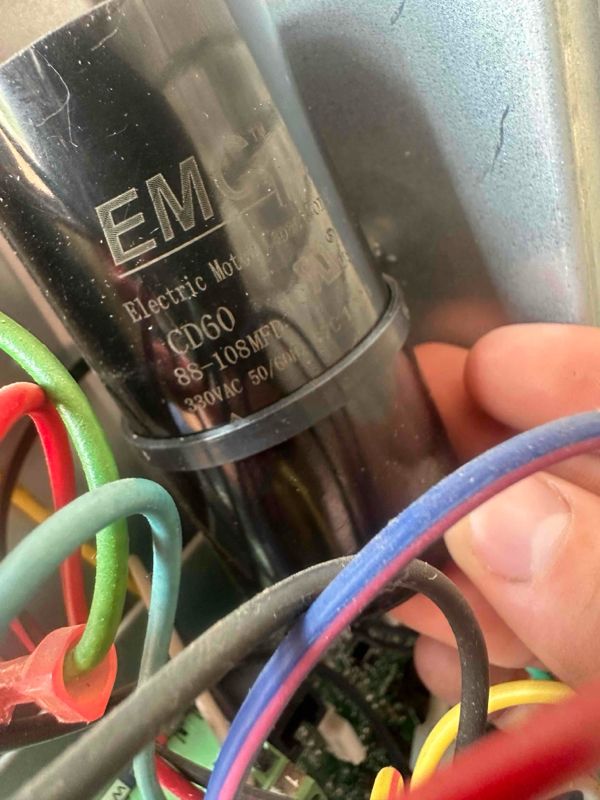
- Capacitor test: Measures the capacitor, the part that helps the motors start. Weak capacitors are one of the most common summer breakdowns.
- Contactor check: Inspects the contactor, the switch that turns the outdoor unit on and off, for burn marks and wear.
- Coil cleaning: Rinses dirt, grass and cottonwood fluff off the outdoor coil and checks the indoor coil.
- Drain line: Clears the line that carries water away from the indoor unit, then checks the drain pan and safety switch.
- Temperature split: Compares the air going into your system with the air coming out of your vents. A drop of about 15 to 20 degrees means it's cooling well.
- Electrical: Tightens connections, checks wiring and measures how much power the compressor and motors draw. High readings can warn of a part that may fail soon.
- Blower and fan motors: Checks the indoor blower and outdoor fan for wear, noise and proper speed.
Fall Furnace Tune-Up: What We Check
- Heat exchanger: Inspects it for cracks. A crack can let carbon monoxide into your home.
- Carbon monoxide test: Tests for CO around the furnace and in your home's air.
- Burners: Cleans them and checks for a steady, even flame.
- Flame sensor: Cleans the small rod that tells the furnace the burners are lit. A dirty one makes the furnace shut off within seconds.
- Igniter: Tests the part that lights the burners. Igniters wear out and often fail without warning.
- Gas pressure: Measures the gas pressure so the furnace burns safely and efficiently.
- Safety controls: Tests the switches that shut the furnace off if it overheats or the vent gets blocked.
- Venting: Checks the flue pipe so exhaust leaves your home safely.
Have a heat pump? The fall visit checks its heating side instead. That includes the valve that switches it to heating, the defrost controls and the backup heat.
After the Visit: Your Written Report
Before the tech leaves, you should get a written report with the actual readings. That includes refrigerant pressures, capacitor values, temperature split and power readings, plus gas pressure and CO levels in the fall. Any problems should come with photos and a clear label: fix now or watch for next time.
Keep every report. It's your proof of maintenance if you ever file a warranty claim.

10 Questions to Ask Any HVAC Company Before You Sign Up
Ask these 10 questions before you buy any plan, including ours. A good company will answer every one clearly and in writing.
- What's on your tune-up checklist? Ask to see it in writing.
- Will I get a written report? You want real readings, not just "looks good."
- What's excluded? Ask which parts and repairs the plan doesn't cover.
- How does the discount work? Ask if it applies to parts, labor or both, and off what price.
- How fast is priority service? Ask how soon members get a tech during a heat wave.
- How does auto-renewal work? Ask if you'll get a reminder before your card is charged.
- How do I cancel? Ask about fees and whether you can cancel by phone or online.
- Are your technicians licensed? Ask for the TDLR license number and look it up.
- Will this protect my warranty? Ask if their records meet your manufacturer's maintenance rules.
- Can the plan transfer if I sell my home? A plan that transfers can be a plus for buyers.
HVAC Maintenance Plan FAQs
How often should I service my AC in Texas?
Twice a year: your AC in spring (March or April) and your heater in fall (September or October). Booking before the season starts gets you an appointment before the rush. Check your air filter monthly in summer and change it when it's dirty, usually every 1 to 3 months.
Does skipping maintenance void my HVAC warranty?
It can. Many manufacturers can deny a warranty claim if you can't show proof of regular professional maintenance. Check your warranty paperwork for the exact rules, and keep every tune-up report.
Is an HVAC maintenance plan the same as a home warranty?
No. A maintenance plan pays for tune-ups that prevent problems, plus perks like repair discounts. A home warranty is a service contract that helps pay for covered repairs after something breaks, usually with a fee per claim.
Many home warranties won't cover breakdowns caused by poor maintenance, so the two can work together.
Can I do my own HVAC maintenance?
Some of it. You can change filters, keep 2 feet of space around the outdoor unit and gently hose off the outdoor coil with the power off. Leave refrigerant, electrical and gas work to a licensed pro, since federal rules require EPA certification to handle refrigerant.
Will a maintenance plan lower my energy bills?
It can help. The U.S. Department of Energy says replacing a dirty, clogged filter can lower an AC's energy use by 5% to 15%. Clean coils and the right refrigerant charge help too, and in DFW those savings add up over a long cooling season.
Get an HVAC Maintenance Plan From Team Enoch
Team Enoch has served DFW homeowners for more than 12 years, completing over 15,000 residential jobs a year. We have 5,000+ positive reviews and a 4.9 rating on Google.
We serve Arlington, Fort Worth, Kennedale, Pantego, Dalworthington Gardens, Everman, Forest Hill, Richland Hills, Watauga, White Settlement and nearby cities. Call (817) 888-8880 or visit our Memberships page to see what our plan includes.