
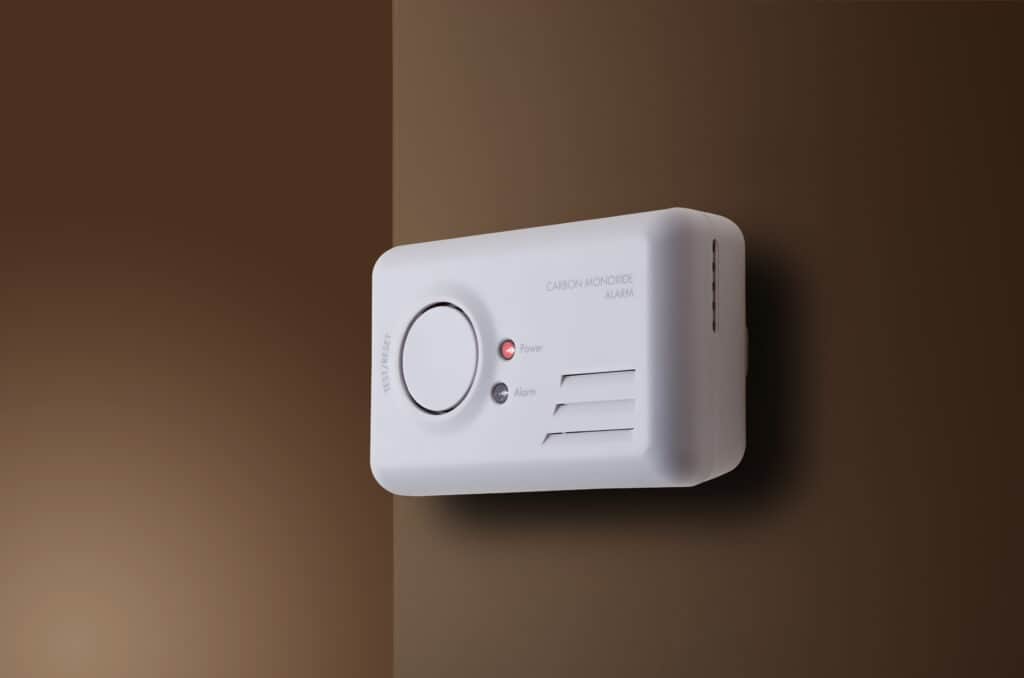
Carbon monoxide has no smell. It is a colorless, odorless, tasteless gas, and that is precisely what makes it dangerous. You cannot rely on your nose to warn you about a CO buildup in your home. The only reliable protection is a working carbon monoxide detector.
Why Carbon Monoxide Has No Smell
CO forms when carbon-based fuels like natural gas, propane, oil, wood, or charcoal burn incompletely. The incomplete combustion reaction produces CO molecules that carry no scent whatsoever.
For comparison, the rotten-egg odor in natural gas comes from a chemical called mercaptan, which gas companies add deliberately so leaks can be detected by smell. No such additive exists for carbon monoxide.
This distinction is critical: natural gas and propane have a built-in warning odor. Carbon monoxide does not.
What People Actually Smell During a CO Event
When someone reports "smelling" a CO leak, they are almost always detecting the other combustion gases traveling alongside CO. These include:
- A sulfuric or exhaust-like odor from backdrafting combustion gases
- A faint burning or overheating smell from malfunctioning equipment
- Stale, stuffy air caused by poor ventilation pulling exhaust back indoors
- Vehicle or generator exhaust near an open window or garage door
These are real warning signs. But the smell comes from combustion byproducts accompanying CO, not from CO itself.
Visible Warning Signs of a CO Problem
Because CO has no smell, look for physical clues around fuel-burning appliances instead:
- Yellow or orange burner flame on your furnace or gas range instead of a steady blue flame (this does not apply to decorative gas fireplaces designed for a yellow flame)
- Soot or black marks around a furnace, boiler, water heater, or fireplace opening
- Heavy condensation on windows near appliances that was not there before
- Fallen soot in the firebox or around the hearth
- A pilot light that keeps blowing out
- Rust or staining on vent pipes and flue connections
- Stale or stuffy air that does not clear with normal ventilation
If you notice any of these signs near a gas appliance or heating system, treat it as a potential CO hazard and call a licensed HVAC technician for an inspection.
Symptoms of Carbon Monoxide Poisoning
Your body can signal a CO problem before a detector does. Early symptoms of CO exposure include:
- Dull, persistent headache
- Dizziness or lightheadedness
- Nausea or upset stomach
- Shortness of breath during normal activity
- Confusion or difficulty concentrating
- Fatigue or drowsiness that improves when you go outside
The pattern to watch for: multiple people in the home experiencing the same symptoms at the same time, with improvement once they leave the building. This is a strong indicator of CO exposure rather than illness.
At high concentrations, CO can cause loss of consciousness with no prior warning. This is why it is called the "silent killer."
Common Sources of Carbon Monoxide in Texas Homes
CO can come from any fuel-burning appliance or equipment. The most common sources in DFW-area homes include:
- Gas furnaces with cracked or deteriorated heat exchangers
- Gas or propane water heaters
- Gas stoves and ranges
- Fireplaces and wood-burning stoves
- Attached garages with running vehicles
- Portable generators operated indoors or near open windows or doors
- Gas dryers with blocked or damaged exhaust vents
- Charcoal or propane grills used in enclosed spaces
A furnace that sits dormant through a Texas spring and summer and fires up in October is a particular risk. Cracks in heat exchangers, bird nests in flue vents, and corroded burner components can all develop silently over the warm season without any visible warning until the heat turns on.
The Only Reliable Way to Detect Carbon Monoxide
CO detectors are the only effective tool for knowing carbon monoxide is present. Use them correctly:
- Install a CO alarm on every level of your home, including the basement
- Place alarms outside each sleeping area so they wake you if CO rises at night
- Test alarms monthly by pressing the test button
- Replace batteries annually and replace the full unit every 5 to 7 years, or per the manufacturer's guidance
- Do not place detectors directly above or beside a fuel-burning appliance, which can cause nuisance alarms
Combination smoke and CO detectors are widely available and are acceptable for most residential applications.
What to Do If Your CO Alarm Sounds
- Do not assume it is a false alarm.
- Get everyone out immediately, including pets.
- Leave doors and windows as-is to help emergency responders locate the CO source.
- Call 911 from outside the home.
- Do not re-enter until emergency personnel have cleared the building.
- Seek medical attention if anyone has symptoms.
Never silence the alarm and return to sleep. CO may still be present even after the alarm stops.
Annual HVAC Inspections Are Your First Line of Defense
The most effective protection against CO from your heating system is professional annual maintenance. A licensed HVAC technician will:
- Inspect the heat exchanger for cracks or deterioration
- Check the combustion chamber and burner assembly
- Test flue venting and confirm there are no blockages
- Verify gas connections and operating pressure
- Check the draft to confirm exhaust is properly exiting the home
The CDC and major fire safety organizations recommend annual inspections for all fuel-burning appliances before heating season begins.
At Team Enoch, our licensed HVAC technicians serve homeowners across the DFW Metroplex, including Arlington, Fort Worth, Dallas, and surrounding communities. We inspect furnaces, water heaters, and gas appliances as part of our comprehensive home comfort and safety services.
FAQ Videos

Okay, can you just give me a quote? No, I don't want to schedule anything. Wait, you want to come to my house? I don't have time for that. I'm at work. Forget it. Stop calling these companies. We can never get a straight answer, and when you finally do, it's some guy trying to upsell you everything under the sun. And so, you ask, "Why is one quote six grand and the other one 12 grand for the same system on the same house?" I'll tell you why. Most companies send a commission salesman out there so they can upsell you on everything. We don't do that here. Here's a real estimate by team Henault. So, you pick which system fits best for you, and nobody's commission is riding on it. Now, if you want a full breakdown of this estimate, go check out our other video.
Read More
Is your home ready to face the chill? Trey from Team Enoch is here to guide you through the must-do winter prep for your plumbing.
Read More
Good, better, best. Goodman vs. Carrier vs. Traine. And, what is a variable speed system?
Read More
It doesn't need a tune up! Does your system need a tune up or full replacement?
Read More
Do you know what's supposed to be in an AC quote? Most people don't, and that's how they get charged for things later.
Read More
Here's the $5,000 rule we use for every call.
Read More
AC For $8,180. That's everything. Here's exactly what's in a real AC install quote no hidden fees.
Read More
How much does AC replacement actually cost in DFW? Don't have time? Get your estimate online!
Read More
Do you know what's in your AC quote?
Read More