
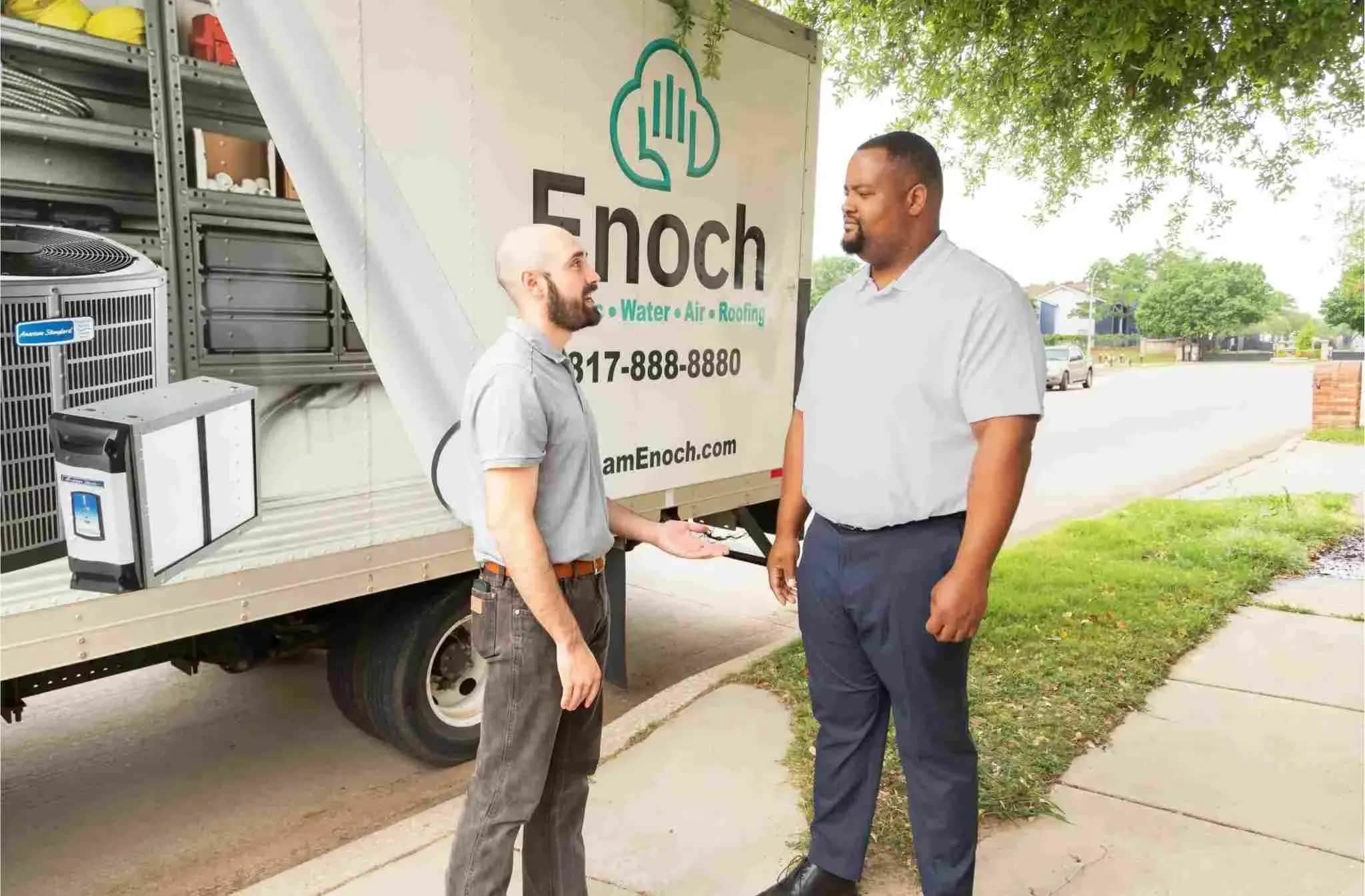
Common HVAC Sales Scams and How to Avoid Them
Common HVAC sales scams and the warning signs to watch for, so you can make informed repair and replacement decisions.
May 5, 2026

Your AC stopped working on a 98-degree Saturday afternoon. You're sweating, your kids are complaining, and you desperately call the first company that answers the phone. Two hours later, a technician is telling you that your entire system needs to be replaced immediately, and they can do it today for just $12,000—but only if you sign right now because they "happen to have a unit on the truck."
Sound familiar? You've just encountered one of the most common HVAC scams in the industry. Before you sign anything or hand over your credit card, you need to know what dishonest contractors are doing to separate homeowners from thousands of dollars—and how to protect yourself.
The Dirty Truth About HVAC Scams
The HVAC industry has a problem. While most contractors are honest professionals who do quality work, there's a significant minority of companies built entirely on deceptive sales tactics, unnecessary repairs, and outright fraud. These companies target homeowners during their most vulnerable moments: when the AC breaks during a heat wave, when the furnace dies during a cold snap, or when a elderly homeowner doesn't know any better.
The Federal Trade Commission receives thousands of complaints about HVAC contractors every year. The Better Business Bureau lists HVAC services as one of the top complaint categories. In Texas alone, hundreds of homeowners file complaints annually about contractors who performed unnecessary repairs, charged astronomical prices, or damaged working equipment to create repair needs.
What makes HVAC scams particularly effective is the knowledge gap. Most homeowners don't understand how their heating and cooling systems work, can't verify what technicians are telling them, and feel pressured to make expensive decisions quickly. Dishonest contractors exploit this vulnerability ruthlessly.
The "Your System Is Leaking Carbon Monoxide" Scare Tactic
This scam is particularly dangerous because it preys on legitimate safety concerns. A technician inspects your furnace and comes up with an alarming announcement: "Your heat exchanger is cracked and leaking carbon monoxide. This is extremely dangerous, your family could die in their sleep. We need to red-tag this furnace immediately and replace it."
They might show you photographs of "cracks" (often just normal surface corrosion or shadows in photos), wave a carbon monoxide detector near the furnace that suddenly beeps (spoiler: they triggered it themselves), or use technical jargon to confuse you into compliance. The goal is to terrify you into an immediate furnace replacement costing $4,000-8,000.
Here's the reality: yes, cracked heat exchangers are serious and can leak carbon monoxide. However, actual dangerous cracks are relatively rare in systems under 15 years old, and there are specific tests to verify their presence. A visual inspection through the burner ports or a smartphone camera inserted into the heat exchanger is not sufficient evidence.
Legitimate verification requires a combustion analysis using specialized meters to measure CO levels in the flue and around the furnace. Some technicians use camera scopes (borescopes) to thoroughly inspect the heat exchanger interior. Many jurisdictions require independent verification before a system can be red-tagged, meaning a second company must confirm the issue before the homeowner is forced to replace the furnace.
If a technician tells you there's a cracked heat exchanger:
- Ask them to show you the crack clearly, not just shadows in photos
- Request a detailed combustion analysis report showing actual CO measurements
- Get a second opinion from another licensed company before agreeing to replacement
- Don't let them pressure you with "we have to shut this off immediately" unless they can demonstrate actual high CO readings
- Know that in Texas, contractors cannot legally force you to replace equipment without proper documentation
The Refrigerant Scam: "Your Freon Is Low"
We covered this extensively in another article, but it bears repeating because it's the most common HVAC scam in Texas. A technician comes out for a cooling problem and announces, "Your Freon is low. AC systems need to be recharged every year or two. We can top it off today for $400."
Everything about that statement is false. AC systems are closed loops—they don't consume refrigerant like a car consumes gas. If refrigerant is low, there's a leak. Period. Adding refrigerant without fixing the leak is pouring money down a hole, and doing it repeatedly generates thousands in profit for dishonest contractors.
The really insidious version of this scam involves technicians deliberately releasing refrigerant from your system during a "routine maintenance check," then "discovering" low refrigerant and offering to recharge it for a premium price. This is illegal under EPA regulations, but it happens more often than you'd think.
Some contractors take this scam further with R-22 systems. They'll dramatically overstate the cost of R-22 refrigerant (claiming $200-300 per pound when the actual price is $100-150) and insist you need 10-15 pounds when you only need 3-4 pounds. On a system that might have a simple, fixable leak, you could end up paying $3,000 for refrigerant that will leak out again in a few months.
Warning signs of this scam:
- Technician says refrigerant needs regular recharging as "normal maintenance"
- They add refrigerant without demonstrating there's actually a leak
- They can't or won't show you where the leak is located
- They pressure you to add refrigerant immediately without time to get a second opinion
- The price per pound seems excessively high
- They want to "just top it off" instead of evacuating and precisely recharging the system
Protect yourself:
- Ask specifically where the leak is located and request to see it
- Get a written estimate showing the exact amount of refrigerant needed (in pounds) and the price per pound
- Request that they evacuate the system properly, repair the leak, then recharge precisely by weight
- Get a second opinion if the cost seems excessive or the explanation doesn't make sense
- For R-22 systems, research current market prices for R-22 before authorizing the repair
The Oversizing Scam: "You Need a Bigger System"
When your AC finally dies and needs replacement, an unscrupulous contractor tells you, "Your old system was only 3 tons, but your house really needs a 4-ton or 5-ton unit to cool properly. We can install this bigger system for just $2,500 more."
This sounds logical—bigger is better, right? Wrong. Oversizing HVAC systems is one of the most harmful mistakes contractors make, whether through ignorance or intentional upselling. An oversized system costs more upfront, costs more to operate, wears out faster, and actually cools your home less effectively than a properly sized system.
Why? AC systems need to run in sustained cycles to dehumidify your home effectively. An oversized unit cools the air temperature quickly but shuts off before it can remove adequate moisture. Your home feels cold but clammy, humidity levels stay high (promoting mold growth), and the system short-cycles repeatedly, wearing out components rapidly.
You end up with a $8,000 system instead of a $6,000 system, higher monthly energy bills, more frequent repairs, and worse comfort. The contractor made an extra $2,000 on the initial sale and positioned you for more service calls down the road. It's a win-win for them, lose-lose for you.
Proper AC sizing requires a Manual J load calculation that accounts for your home's square footage, insulation levels, window sizes and orientations, ceiling heights, ductwork configuration, and local climate conditions. This calculation should take 1-2 hours minimum. Anyone who sizes your system based solely on square footage rules of thumb ("500 square feet per ton") is doing it wrong.
Red flags for the oversizing scam:
- Contractor sizes system based only on square footage
- No formal load calculation is performed or provided
- They push for a larger system than your old system without explaining why
- They claim "bigger is better" or "you can't have too much cooling"
- They're reluctant to show you the load calculation or explain the sizing methodology
Protect yourself:
- Require a written Manual J load calculation for any system replacement
- Get multiple estimates and compare the recommended system sizes
- If sizes differ significantly between contractors, ask why
- Be skeptical of recommendations for systems more than half a ton larger than your existing system
- Consider that a proper replacement might actually be smaller than your old system if the original was oversized
The Duct Replacement Scam
A technician is inspecting your system and casually mentions, "Your ducts are in terrible shape. They're leaking 40% of your conditioned air. We really should replace all your ductwork—it'll save you hundreds on energy bills." They might show you photos of dust on duct surfaces (which is normal), small gaps at joints (which can be sealed), or disconnected segments (which can be reconnected for $100, not $5,000).
Complete duct replacement rarely makes economic sense for existing homes. Duct replacement typically costs $3,000-$10,000 depending on home size and accessibility. While damaged or poorly designed ductwork does waste energy, the payback period for complete duct replacement is often 15-25 years—longer than the lifespan of the HVAC system itself.
More importantly, most duct problems can be corrected for a fraction of the cost of full replacement. Professional duct sealing using mastic or Aeroseal technology costs $1,000-2,500 and typically solves 80-90% of duct leakage issues. Adding insulation to accessible ducts costs a few hundred dollars. Reconnecting disconnected segments or repairing damaged sections costs $100-500.
The duct replacement scam works because contractors can always find something "wrong" with existing ductwork. Dust inside ducts? Normal. Some air leakage at joints? Expected. Flex duct with minor kinks or compressions? Usually manageable. They present normal wear and minor issues as catastrophic problems requiring complete replacement.
How to spot this scam:
- Contractor recommends full duct replacement without performing actual leakage testing
- They show you dust or minor imperfections as evidence of "severe problems"
- No discussion of more affordable repair options like sealing or partial replacement
- Pressure to include duct replacement with system replacement as a "package deal"
- Claims that duct replacement will save enough on energy bills to pay for itself quickly
What to do instead:
- Ask for a duct blaster test to quantify actual duct leakage (legitimate problem homes show 30%+ leakage)
- Get a second opinion specifically about the ductwork before authorizing replacement
- Request itemized pricing for duct sealing and partial repairs versus full replacement
- Consider that even seriously problematic ducts can often be corrected for $2,000-3,000 instead of $8,000-10,000
- Be especially skeptical if your home is relatively new (less than 15 years old) with factory-installed ductwork
The "Temporary Fix" Emergency Scam
Your AC stops working on a Sunday afternoon in July. You call an emergency service, and a technician arrives within an hour (red flag #1—legitimate busy companies usually can't respond that quickly). They diagnose a failed capacitor and say, "I can get you up and running temporarily, but this is just a Band-Aid fix. Your compressor is really struggling, and you'll need a full replacement soon. This repair will cost $450."
You're desperate for cooling, so you agree. The technician replaces a $15 capacitor, charges you $450 (normal cost: $150-250), and plants the seed that your system is dying. Two weeks later, another part "fails" (or they sabotage something during the first visit). You call again, they charge you $400 for a $20 relay. After $1,200 in "emergency repairs" over a month, they finally recommend the system replacement they were planning to sell from the beginning.
This scam works through manufactured urgency, inflated emergency rates, and sometimes actual sabotage. By responding quickly and getting you back up and running, they earn your trust. By charging 3-4x normal rates and making vague warnings about impending system failure, they set up future sales opportunities.
Some versions of this scam involve:
- Intentionally loosening connections or disconnecting wires during initial "inspection"
- Removing capacitors or relays and replacing them with borderline or worn components
- Manipulating refrigerant pressures to create future problems
- Deliberately not tightening electrical connections so they fail in a few weeks
Warning signs:
- Emergency repair costs 2-3x normal service call pricing
- Technician makes ominous warnings about your system without specific details
- Multiple components fail in rapid succession after the first repair
- Parts prices seem dramatically higher than online prices (capacitors cost $10-25, not $150-300)
- Pressure to authorize additional work immediately without time to research or get second opinions
Protect yourself:
- Get emergency pricing in writing before authorizing work
- Ask for the specific part numbers and research typical costs
- Take photos of your equipment before the technician arrives
- Get a second opinion if multiple expensive repairs are recommended in short succession
- Consider that legitimate emergency service might cost $150-250 for standard parts like capacitors, not $400-600
The Commission-Based Technician Scam
Many HVAC companies pay their technicians primarily through commission on repairs and sales rather than hourly wages. A technician earning $15/hour on service calls but $500-1,000 commission on a system sale has tremendous incentive to recommend replacement over repair, even when repair is perfectly viable.
This creates a systematic bias toward unnecessary system replacements, oversized equipment, add-on accessories you don't need (UV lights, high-end filters, duct cleaning), and expensive parts replacements when cheaper solutions exist. The technician might be a decent person who needs to feed their family, but the compensation structure forces them to prioritize their income over your best interests.
Some commission-based companies also use high-pressure sales tactics baked into their business model:
- Technicians arrive with tablets loaded with financing offers and "same-day discounts"
- They're trained to present three options (good, better, best) with the "best" option being dramatically oversized and overpriced
- "Today only" pricing that expires if you don't sign immediately
- Financing options that obscure the actual cost through low monthly payments
The most aggressive version involves companies that send "salespeople" instead of technicians. These individuals have minimal technical training but extensive sales training. They're taught scripts about "efficiency," "energy savings," and "home comfort" designed to overcome objections and close deals, not to accurately diagnose problems or provide cost-effective solutions.
How to recognize this:
- Technician spends more time on their tablet with financing calculators than actually diagnosing your system
- Constant push toward system replacement rather than repair, even for minor issues
- Pricing that varies based on payment method (cash discount, financing premium)
- Pressure to decide immediately with "special pricing" that expires today
- Technician can't clearly explain technical problems without pivoting to sales pitches
Protect yourself:
- Ask upfront whether technicians work on commission or hourly wages
- Never agree to major purchases without getting 2-3 additional estimates
- Take time to research before signing anything, regardless of "today only" pricing
- Get all recommendations and pricing in writing so you can compare with other companies
- Consider that legitimate companies explain problems clearly and give you time to make informed decisions
The Filter/Maintenance Scam
A technician is performing routine maintenance and recommends you need a special filter system. "Your standard filters just aren't cutting it. You should really upgrade to our HEPA whole-home filtration system for just $2,500. It'll improve your indoor air quality dramatically and save you money on filters."
Or they recommend duct cleaning, UV light installation, air purifiers, humidifiers, or other add-ons that might provide some benefit but aren't necessary for system operation and won't pay for themselves. The profit margins on these accessories are enormous—a UV light that costs the company $50 might be sold to you for $500-800 installed.
The filter scam specifically targets homeowners concerned about air quality, allergies, or COVID-19 concerns. While better filtration does help with these issues, you don't need a $2,500 system. High-quality MERV 13 filters cost $20-30 each and provide excellent filtration for most homes. Upgrading to MERV 13 filters and changing them every 2-3 months solves 90% of indoor air quality concerns for under $200 per year.
Duct cleaning is another common upsell. While ducts do accumulate dust over time, professional duct cleaning costs $400-800 and provides minimal benefit in most homes. The National Air Duct Cleaners Association (NADCA) even states that duct cleaning is only necessary if there's visible mold growth, vermin infestation, or excessive dust and debris impacting system performance.
Red flags for accessory upselling:
- Technician recommends expensive add-ons during routine maintenance without being asked
- Claims the accessories will "pay for themselves" through energy savings (they won't)
- Pressure to add multiple accessories as part of a "complete home comfort solution"
- Pricing isn't itemized—everything bundled together so you can't evaluate individual costs
- Recommendations based on fear (health, safety, air quality) rather than demonstrated need
Make smart decisions:
- Ask specifically what problem the accessory solves and what measurable benefit you'll receive
- Research the accessory costs independently before authorizing installation
- Consider whether the problem could be solved more affordably (better filters instead of whole-home purification)
- Get independent indoor air quality testing if you're concerned about actual problems
- Remember that basic maintenance and good filters handle most homeowners' needs adequately
The "Hard Start Kit" Justification
Some companies routinely install hard start capacitors on compressors during service calls, charging $300-600 for a part that costs $30-50 and takes 10 minutes to install. They justify this by claiming it "helps your compressor start easier, extends its life, and saves energy."
While hard start kits do serve a purpose—they can help aging compressors that struggle to start, or they're beneficial in areas with voltage issues—they're not necessary on most residential systems. Manufacturers don't include them as standard equipment because they're not needed under normal conditions.
The scam is presenting hard start kits as essential preventive maintenance that every system needs. Dishonest technicians install them routinely without actual cause, charging premium prices for unnecessary parts. Some companies have policies requiring technicians to install hard start kits on every service call over a certain age threshold, turning a sometimes-useful component into a guaranteed revenue stream.
Licensing and Insurance Scams
In Texas, HVAC contractors must hold proper licenses: TACL (Texas Air Conditioning Contractor License) for AC work, TECL (Texas Electrical Contractor License) for electrical work, and master plumber licenses for plumbing. Many fly-by-night operators work without proper licensing or use someone else's license number illegally.
Unlicensed contractors offer remarkably low prices to win jobs, then perform substandard work that violates building codes, voids equipment warranties, and creates safety hazards. When something goes wrong, they have no licensing board oversight and often no insurance to cover damages. The homeowner is left with a non-functional system, void warranties, and no recourse.
The insurance angle is equally problematic. Legitimate contractors carry general liability insurance and workers' compensation coverage. If a technician is injured on your property or damages your home during work, insurance covers the costs. Unlicensed or underinsured contractors don't have this coverage—if their employee is injured on your property, you could be personally liable for medical costs and damages.
Verify licensing and insurance:
- Check license numbers on the Texas State Board of Plumbing Examiners website (for master plumbers)
- Verify TACL licenses through the Texas Department of Licensing and Regulation (TDLR)
- Request proof of general liability insurance and workers' comp before work begins
- Verify the company address and phone number—some scammers use fake addresses
- Check Better Business Bureau and Google reviews, looking for patterns of complaints
How to Protect Yourself: The Ultimate HVAC Scam Defense Plan
Get Multiple Estimates
Never authorize major repairs or replacements based on a single estimate, especially emergency service calls. Get at least 2-3 estimates from different companies for any work over $500. Compare the diagnoses, recommended solutions, and pricing. Significant discrepancies between estimates are red flags requiring further investigation.
Ask Questions and Demand Explanations
Legitimate technicians are happy to explain problems in terms you understand and show you the actual failed components. Ask:
- Can you show me the problem?
- What specifically is wrong with this component?
- What are all my repair options, from most to least expensive?
- What's the expected lifespan if I repair versus replace?
- Why do you recommend this specific solution over alternatives?
If the technician becomes defensive, uses excessive jargon to confuse you, or pressures you to decide without adequate explanation, that's a red flag.
Verify the Problem Independently
For major issues like cracked heat exchangers, compressor failures, or duct problems, get second and third opinions. Yes, this costs additional diagnostic fees ($75-150 per visit), but it's cheap compared to thousands in unnecessary repairs.
Research Normal Pricing
Before authorizing work, research typical costs for the specific repair or component. Online forums, HVAC subreddits, and consumer sites like HomeAdvisor provide ballpark pricing for most common repairs. If a quote is 50-100% higher than normal, ask why or get additional estimates. For central AC replacement specifically, our AC replacement cost guide shows current 2026 pricing ranges so you can benchmark any quote you receive.
Don't Make Fear-Based Decisions
Scammers use urgency and fear to pressure quick decisions. Yes, a cracked heat exchanger could be dangerous. But you have time to verify the problem and get second opinions. Don't let "you could die" scare tactics push you into immediate major purchases.
Trust Your Instincts
If something feels wrong—too much pressure, confusing explanations, pricing that doesn't add up, or a technician who seems more like a salesperson—trust that instinct. It's better to send them away and call someone else than to approve work you're uncomfortable with.
Check Reviews and Reputation
Before hiring any HVAC company, check:
- Better Business Bureau ratings and complaint history
- Google reviews (look for patterns, not just star ratings)
- Angie's List or HomeAdvisor ratings if available
- State licensing board complaint records
- Local community forums and neighborhood social media groups
A few negative reviews are normal—no company satisfies everyone. But patterns of similar complaints (overcharging, unnecessary repairs, poor workmanship) indicate systematic problems.
Get Everything in Writing
Never authorize work based on verbal estimates or promises. Get itemized written estimates showing:
- Specific parts and materials needed
- Labor costs
- Total price including all fees and taxes
- Warranty terms on parts and labor
- Payment terms and schedule
Know Your Rights
In Texas, you have specific rights when dealing with contractors:
- Three-day right of rescission for contracts signed in your home (you can cancel within 3 business days)
- Right to see contractor licenses and insurance certificates before work begins
- Right to itemized invoices showing all parts and labor
- Protection from unlicensed contractor work through state licensing boards
What Legitimate HVAC Service Looks Like
So you can recognize scammers, you need to know what honest service looks like:
Transparent Pricing: Upfront quotes with itemized pricing. No surprises or "additional charges" that appear after work is completed.
No High-Pressure Tactics: Legitimate companies give you time to make decisions, don't push "today only" pricing, and respect your choice to get additional estimates.
Education-Focused: Good technicians explain problems clearly, show you failed parts, and help you understand options without overwhelming jargon or fear tactics.
Flat-Rate or Time-and-Materials Pricing: Honest pricing structures based on actual work, not inflated "emergency" rates or charges that vary based on how much they think you can pay.
Multiple Options: Presenting repair, replacement, and budget-conscious alternatives with pros and cons of each, not just pushing the most expensive solution.
Professional Credentials: Licensed, insured, and bonded with proof readily available. Technicians arrive in marked vehicles, wear uniforms, and carry proper credentials.
Warranty Backing: Comprehensive warranties on parts (manufacturer warranties) and labor (company warranties), typically 1 year minimum on labor, longer on major components.
What to Do If You've Been Scammed
If you believe you've been the victim of an HVAC scam:
- Document Everything: Keep all contracts, invoices, receipts, and communications with the company.
- Get a Second Opinion: Have another licensed company inspect the work to verify whether it was necessary and properly completed.
- Contact the Company: Attempt to resolve the issue directly first. Document all communications in writing.
- File Complaints: Report the company to:
- Texas Department of Licensing and Regulation (TDLR)
- Better Business Bureau
- Texas Attorney General's Office Consumer Protection Division
- Local media consumer protection reporters
- Consider Legal Action: For significant fraud, consult an attorney about small claims court or civil action.
- Payment Disputes: If you paid by credit card, dispute the charges with your credit card company. Credit card companies offer consumer protection for fraudulent charges.
Why Team Enoch Is Different
At Team Enoch, we've built our business on the opposite approach from these scam tactics. Our technicians work on salary, not commission, so they have no financial incentive to recommend unnecessary work. We don't use high-pressure sales tactics, "today only" pricing, or fear-based selling.
When we diagnose a problem, we explain it clearly, show you exactly what's wrong (with photos or by letting you see the actual problem), and present all your options from most to least expensive. We give you time to get second opinions if you want them. We want you to make informed decisions, not rushed ones based on pressure or fear.
Our pricing is transparent and itemized. We tell you upfront what things cost, we don't surprise you with additional charges, and we stand behind our work with comprehensive warranties. If we tell you something needs to be replaced, it actually needs to be replaced—not because we want to sell you something, but because it's actually broken.
We've earned over 5,000 five-star reviews and a 4.9/5 Google rating by treating customers the way we'd want to be treated: with honesty, respect, and transparency. We complete over 15,000 residential jobs per year across the DFW metroplex, and our business grows through referrals from satisfied customers, not through scams and high-pressure tactics.
If you need HVAC service and want a company you can actually trust, call Team Enoch at 817-769-3712. We serve Arlington, Fort Worth, Dallas, and the entire Texas Triangle with the honest, professional service that homeowners deserve.
About Team Enoch: Founded in 2015 by professionals who were tired of seeing dishonest tactics dominate the HVAC industry, Team Enoch is committed to changing how HVAC companies do business. We provide expert installation, repair, and maintenance services based on integrity, transparency, and genuine customer care. Our locally owned company employs skilled, salary-based technicians who focus on solving your problems correctly, not upselling unnecessary services.
FAQ Videos
Is your home ready to face the chill? Trey from Team Enoch is here to guide you through the must-do winter prep for your plumbing.
Read More
Good, better, best. Goodman vs. Carrier vs. Traine. And, what is a variable speed system?
Read More
It doesn't need a tune up! Does your system need a tune up or full replacement?
Read More
Do you know what's supposed to be in an AC quote? Most people don't, and that's how they get charged for things later.
Read More
Here's the $5,000 rule we use for every call.
Read More
AC For $8,180. That's everything. Here's exactly what's in a real AC install quote no hidden fees.
Read More
How much does AC replacement actually cost in DFW? Don't have time? Get your estimate online!
Read More
Do you know what's in your AC quote?
Read More