Your Project Starts Here
Ready to get started?
Team Enoch is your one-stop shop for heating, cooling, electrical, plumbing, and roofing services.
Get a Quote
If you're a homeowner trying to understand your heating and cooling system, you're in the right place. This guide breaks down everything you need to know about HVAC systems in 2026, from how they work to major industry changes that could affect your home.
HVAC stands for Heating, Ventilation, and Air Conditioning. It's the complete system that controls your home's temperature, air quality, and humidity throughout the year.
Think of your HVAC system as your home's respiratory system, constantly circulating, filtering, and conditioning the air you breathe. When working properly, you barely notice it. When something goes wrong, you feel it immediately.
Heating: Warms your home using a furnace, boiler, or heat pump. During winter, your heating system ensures comfort and prevents pipes from freezing.
Ventilation: Circulates air throughout your home, brings in fresh outdoor air, and removes stale air containing CO2, odors, and pollutants. This is the often-overlooked "V" in HVAC that's critical for healthy indoor air.
Air Conditioning: Cools and dehumidifies your home by removing heat and moisture from indoor air and releasing it outside.
Your HVAC system follows a continuous cycle:
This cycle repeats continuously to maintain your desired temperature and air quality.
Thermostat Your control center. Modern smart thermostats can learn your schedule, track energy usage, and be controlled from your smartphone. They signal when to heat or cool and by how much.
Air Handler / Blower The indoor unit that contains the fan (blower motor), evaporator coil, and filter. It circulates air through your ductwork and is typically located in your basement, attic, or closet.
Furnace Generates heat using natural gas, propane, oil, or electricity. The heated air then circulates through your ductwork. Most furnaces last 15-30 years with proper maintenance.
Evaporator Coil Located inside the air handler, these copper coils filled with cold refrigerant absorb heat from your home's air. As warm air passes over these cold coils, heat transfers to the refrigerant, cooling your air.
Air Filter Your first line of defense against airborne particles. Filters trap dust, pollen, pet dander, and other contaminants. They should be checked monthly and replaced every 1-3 months depending on usage and air quality.
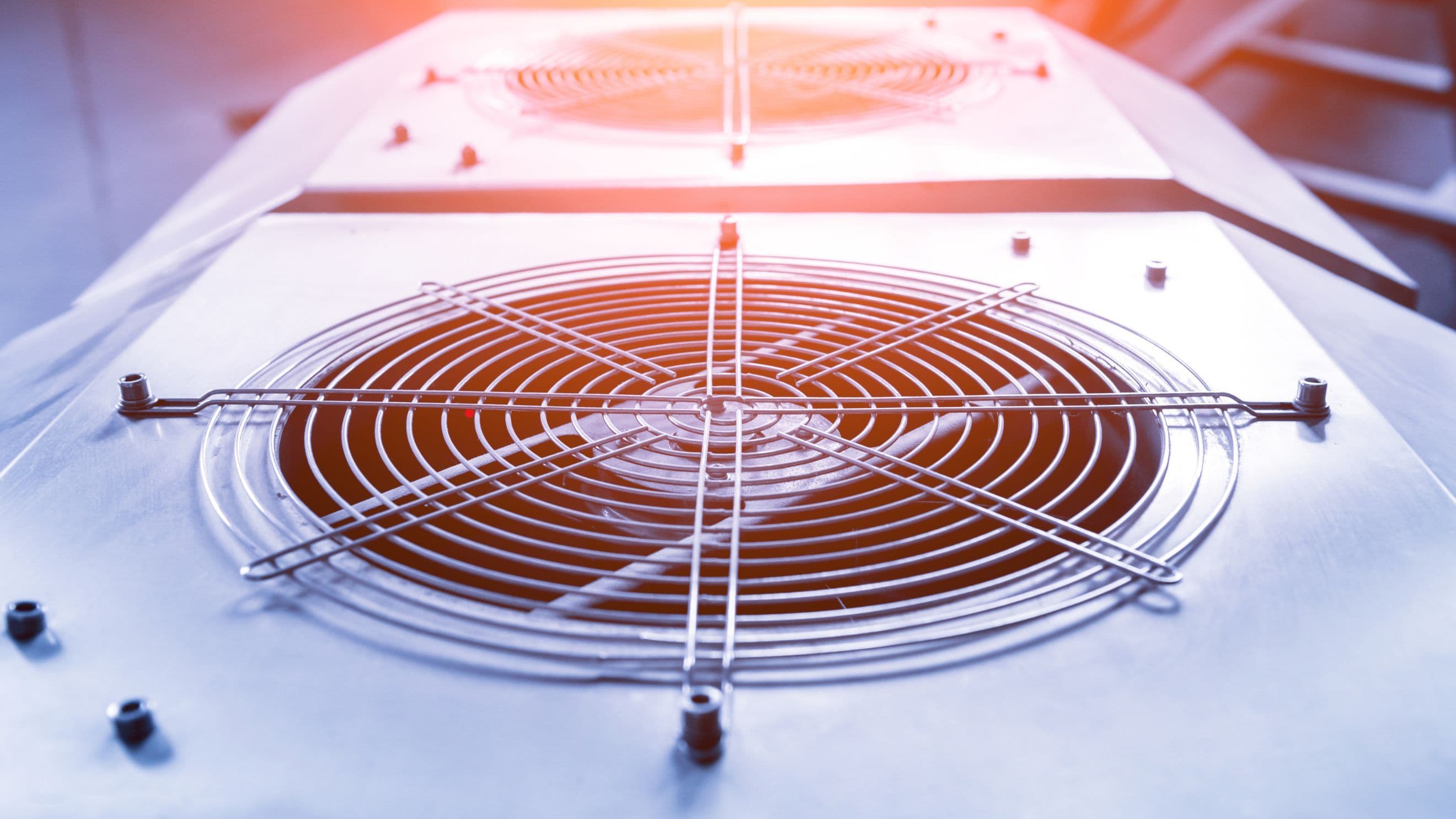
Air Conditioner (Condenser Unit) The outdoor unit that releases absorbed heat from your home into the outside air. Contains the compressor, condenser coil, and fan.
Heat Pump A versatile unit that provides both heating and cooling. In cooling mode, it works like an air conditioner. In heating mode, it reverses the process to extract heat from outside air, even in cold weather, and brings it inside.
Compressor The heart of your cooling system. It pressurizes refrigerant into a hot gas and pumps it to the condenser coil where heat is released outdoors.
Refrigerant The chemical substance that absorbs and releases heat as it cycles through your system. It changes from liquid to gas and back again, making the cooling process possible.
Ductwork The network of metal or flexible tubes that carry conditioned air throughout your home. Properly sealed and insulated ducts are crucial for energy efficiency, leaky ducts can waste 20-30% of your energy.
Vents & Registers Supply vents deliver conditioned air to rooms, while return vents pull air back to the system. Never block these with furniture or curtains.
The traditional setup with an indoor unit (furnace and evaporator) and outdoor unit (air conditioner or heat pump). Works with existing ductwork and is the most common residential system in the US.
Best for: Homes with existing ductwork, all climate zones
Combines an electric heat pump with a gas furnace. The system automatically switches between electric and gas based on outdoor temperature and efficiency, optimizing energy costs.
Best for: Areas with moderate winters, homeowners prioritizing efficiency
Wall-mounted indoor units connected to an outdoor compressor. No ductwork required. Each unit can be controlled independently, perfect for room-by-room temperature control.
Best for: Home additions, older homes without ducts, zone control
All components housed in a single outdoor unit, typically on the roof or beside the home. Common in commercial buildings and homes with space constraints.
Best for: Limited indoor space, commercial applications
Uses the earth's constant underground temperature for heating and cooling through buried pipes. Highest upfront cost but extremely efficient long-term.
Best for: New construction, homeowners committed to maximum efficiency and sustainability
This is the biggest change to hit the HVAC industry in 15 years.
Starting January 1, 2025, manufacturers stopped producing new HVAC systems using R-410A refrigerant (also called Puron). All new systems now use next-generation refrigerants with much lower environmental impact.
R-454B (Puron Advance™)
R-32
No. Here's why:
However, be aware that R-410A refrigerant costs may increase over time as production winds down, similar to what happened with R-22 (Freon).
Consider upgrading to a new system with A2L refrigerant if:
All new HVAC systems using A2L refrigerants include enhanced safety features:
These refrigerants are classified as "mildly flammable," but they operate in sealed systems with multiple safety mechanisms. They pose no danger to homeowners when properly installed and maintained.
Your local climate plays a huge role in determining the best HVAC system for your home:
Hot, Humid Climates (South, Southeast)
Cold Climates (North, Northeast)
Moderate Climates (West Coast, Pacific Northwest)
Dry Climates (Southwest, Desert regions)
Regular maintenance extends your system's life and prevents costly breakdowns. Here's your essential maintenance checklist:
Contact an HVAC professional immediately if you notice:
SEER2 (Seasonal Energy Efficiency Ratio) Measures cooling efficiency. Higher is better. New 2023 standards require:
EER2 (Energy Efficiency Ratio) Measures cooling efficiency at 95°F. More important in hot climates.
AFUE (Annual Fuel Utilization Efficiency) Measures furnace heating efficiency.
HSPF2 (Heating Seasonal Performance Factor) Measures heat pump heating efficiency. Minimum 7.5 HSPF2; high-efficiency models reach 10+ HSPF2.
Myth: Closing vents in unused rooms saves energy Reality: This can actually reduce efficiency and damage your system by creating pressure imbalances.
Myth: Bigger systems are better Reality: Oversized systems cycle on/off frequently, reducing efficiency, comfort, and lifespan.
Myth: Turning your system off when you leave saves the most energy Reality: It's more efficient to adjust temperature by 7-10°F rather than turning off completely.
Myth: You only need maintenance when something breaks Reality: Annual maintenance prevents 95% of breakdowns and extends system life by years.
Myth: The thermostat location doesn't matter Reality: Thermostats near windows, doors, or heat sources will cause inefficient operation.
Your system is only as good as its installation. Here's how to find a qualified professional:
The 3-minute rule is a critical guideline that protects your air conditioner's compressor, the most expensive component of your system. The rule requires waiting at least three minutes after turning your AC off before restarting it.
Why It Matters: When your AC shuts off, refrigerant pressure throughout the system is unequal. The compressor needs time for refrigerant pressure to equalize before it can restart safely. Restarting too quickly forces the compressor to work against high pressure, similar to pedaling a bike uphill with the brakes locked.
What Happens If You Ignore It:
Modern Systems: Many newer units have built-in time-delay safety switches that automatically enforce this rule. However, the physics still applies even with modern protections, it's best practice to wait the full three minutes regardless.
Pro Tip: If you're adjusting your thermostat frequently, consider upgrading to a smart thermostat with built-in delay settings to avoid accidentally triggering rapid restart cycles.
The 2-foot rule applies to ductwork design and states that takeoffs from the main trunk line need approximately 24 inches of straight duct before adding elbows or transitions.
Technical Explanation: When air flows through ductwork and encounters a takeoff or branch, it loses pressure and becomes turbulent. The air needs 18-24 inches to re-pressurize and regain turbulent flow before it can effectively continue down the duct or branch.
Why Contractors Follow It:
This is primarily a concern for HVAC professionals during installation or duct modifications, but homeowners should know about it when evaluating ductwork design or planning major renovations.
The 3 R's stand for Recover, Recycle, and Reclaim, three essential processes for responsible refrigerant management.
1. Recover Removing refrigerant from a system and storing it in an external container without testing or processing it. This prevents harmful chemicals from escaping into the atmosphere and damaging the ozone layer.
EPA Requirements:
2. Recycle Reducing contaminants in used refrigerant by separating oil, removing non-condensables, and using filter driers to reduce moisture, acidity, and particulate matter. Recycled refrigerant can be reused in the same system or by the same owner.
3. Reclaim Processing used refrigerant to new product specifications through chemical analysis and certification. Reclaimed refrigerant meets AHRI-700 standards and can be sold to different customers, it's essentially as good as new.
Why This Matters to Homeowners:
Always choose contractors who properly recover refrigerant rather than venting it, it's not just good environmental practice, it's the law.
The basics of HVAC center on controlling three key environmental factors: temperature, humidity, and air quality. The fundamental principle is continuous air circulation, your system pulls indoor air through return vents, conditions it (heats, cools, filters, or dehumidifies), then distributes it back through supply vents.
Core operating cycle:
This cycle repeats continuously, maintaining your desired comfort levels while managing indoor air quality.
While different sources describe HVAC components differently, the 5 essential components every system needs are:
1. Thermostat: The control center that senses temperature and signals the system 2. Air Handler/Blower: Moves air through the system and ductwork 3. Heat Source: Furnace, boiler, or heat pump for warming 4. Cooling Source: Air conditioner or heat pump for cooling (includes evaporator and condenser coils, compressor, refrigerant) 5. Ductwork & Vents: Distributes conditioned air throughout your home
Additional critical components include air filters, refrigerant lines, drainage systems, and electrical controls, all working together as an integrated system.
You can absolutely learn HVAC basics for homeowner-level maintenance and understanding. However, there are important limitations:
What You CAN Learn:
What Requires Professional Training:
Learning Resources:
For DIY enthusiasts: Focus on maintenance tasks and system understanding. Leave refrigerant work, electrical repairs, and installations to licensed professionals, it's safer, legal, and protects your warranty.
Yes, significantly. Studies show that well-maintained systems operate 15-25% more efficiently than neglected ones. Annual professional maintenance typically costs $80-150 but can save $200-500 annually on energy costs while preventing expensive emergency repairs.
For a 1,500 square foot home, expect to pay $8,000 to $12,000 for a complete HVAC system replacement in 2026, including both heating and cooling.
Typical breakdown:
System-specific costs for 1,500 sq ft:
For a 1,500 sq ft home, you'll typically need:
Add to budget if needed:
Costs vary significantly by region, with higher prices in urban areas and coastal markets. Always get 3-5 quotes from licensed contractors.
Getting the best value (not just the lowest price) requires strategic timing and smart shopping:
1. Time Your Purchase Strategically
2. Get Multiple Quotes
3. Maximize Rebates and Incentives
4. Evaluate Total Value
5. Negotiate Smartly
6. Consider Financing Options
Red flags indicating you're NOT getting a good deal:
What "best deal" really means: The optimal balance of quality equipment, professional installation, comprehensive warranty, and fair pricing, not simply the cheapest option.
The 2025 HVAC mandate refers to EPA regulations that took effect January 1, 2025, phasing out production of systems using R-410A refrigerant and requiring new A2L refrigerants in residential air conditioners and heat pumps.
Key regulation details:
Cost impact in 2026: New A2L refrigerant systems typically cost $300 to $800 more than equivalent R-410A systems due to:
However, A2L systems offer:
What this means for homeowners:
The overall cost increase is relatively modest compared to total replacement costs, and improved efficiency often offsets the difference within 3-5 years.
The "top" HVAC systems vary by criteria (reliability, efficiency, value), but here are the 5 leading brands consistently rated highest by professionals and consumers in 2026:
1. Carrier
2. Trane
3. Lennox
4. Rheem/Ruud
5. American Standard
Honorable mentions:
Important consideration: The quality of installation matters MORE than brand name. A mid-tier system installed perfectly will outperform a premium system installed poorly. Always prioritize finding an excellent contractor over chasing a specific brand.
Average lifespans with proper maintenance:
Well-maintained systems in moderate climates last longer. Neglected systems or those in extreme climates may fail earlier.
For most homeowners, yes. High-efficiency systems cost 20-40% more upfront but offer:
Payback period typically ranges from 5-10 years, but factor in improved comfort, better air quality, and environmental benefits.
Absolutely. The EPA estimates that programmable thermostats can save the average homeowner $180 annually. Smart thermostats with learning capabilities and remote access can save even more, up to 23% on heating and cooling costs, by optimizing temperature settings based on your actual schedule and preferences.
Use the $5,000 rule: Multiply the repair cost by the system's age. If the result exceeds $5,000, replace it.
Example 1: $400 repair × 8-year-old system = $3,200 → Repair
Example 2: $800 repair × 14-year-old system = $11,200 → Replace
Also consider replacing if:
HVAC is the complete system including heating, ventilation, and air conditioning. AC (air conditioning) refers only to the cooling component. All AC systems are part of HVAC systems, but not all HVAC systems include AC (some use evaporative coolers or no cooling at all).
Contact a licensed HVAC professional in your area for:
How to Keep Your A/C Running Strong This Summer
April 6, 2026
Ductwork Explained: Cost, Problems & Signs You Need Repair
December 4, 2025
AC Not Working? Here’s How to Fix a Clogged Drain Line Fast
January 13, 2026
7 Signs That It’s Time for A New AC Unit
September 2, 2025
Heat Pump Defrost Cycle: What It Is, How It Works, and When to Worry
April 4, 2026
How to Rough-In Electrical Wiring
September 3, 2025
6 Ways to Lower Your AC Costs This Summer
September 2, 2025
Why You Need a Generator Interlock and How to Install One
September 2, 2025
Control Your Home's Power With a Span Smart Electric Panel
September 2, 2025
A Complete Guide to Storm-proofing Your Home
September 3, 2025