Logo

Sign up to our newsletter and get all of the latest news and updates.

Contact Us

mail@teamenoch.com(407) 336-8000100 E Pine St STE 110Orlando, Florida 32801

Quick Links

About UsMembershipsFinancingBlogsPrivacy Policy

Services

HeatingAir ConditioningCommercial Services
bbbnate
bbb
nate

License #CAC1824490

Call Us

Your home’s ductwork plays a critical but often overlooked role in keeping your living space comfortable and energy-efficient. Though hidden behind walls, floors, and ceilings, ductwork in homes is essential for distributing heating and cooling from your HVAC system throughout every room. Properly installed, maintained, and efficient duct systems ensure better air quality, lower energy bills, and a more comfortable home year-round.

In this guide, we’ll cover everything from the types of home ductwork, common problems, signs your ducts need repair, and maintenance tips. Whether you have a central air ductwork system, a trunk and branch duct system, or a smaller residential duct system, understanding your ducts is crucial for keeping your HVAC system running efficiently.

What is Ductwork in a House?

If you’ve ever wondered what is ductwork in a house, it’s the network of channels that distribute conditioned air from your furnace, heat pump, or air conditioner to each room. Ducts essentially act as the arteries of your home, moving air in and out of living spaces.

Your home’s HVAC ductwork includes several components:

  • Supply Ducts: Carry heated or cooled air from the HVAC system to rooms.
  • Return Ducts: Pull air back to the system to be reheated or cooled.
  • Main Trunk Line HVAC: The central duct from which smaller branches extend.
  • Branch Ducts (Trunk and Branch Duct System): Smaller ducts that deliver air to individual rooms.
  • Air Duct Vents / Vent Ducts: Points where air enters rooms.

Understanding these parts of ductwork is essential for diagnosing problems and maintaining optimal airflow.

Types of Home Ductwork

Knowing ductwork definition and types helps homeowners select and maintain the right system:

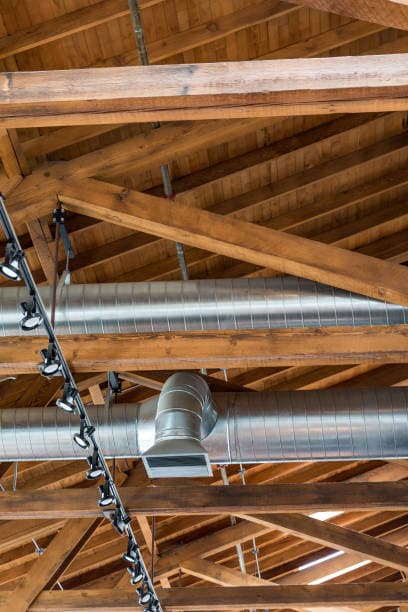
  1. Sheet Metal Ducts: Durable and efficient, these are commonly used for central air ductwork. Sheet metal ducts are less likely to sag or leak but may produce some noise during operation.
  2. Flexible Ducts (Flex Duct): These HVAC ducts are made from plastic and a metal coil. They are easier to install than sheet metal but can kink or sag, restricting airflow. Proper sizing, using a flex duct CFM chart, ensures consistent distribution.
  3. Fiberglass Duct Board: This type of duct helps reduce noise and insulates well, but it can deteriorate over time. It’s often used in residential duct systems for sound absorption.
  4. Fabric Ducts: Less common in homes, fabric ducts are more frequently used in commercial applications for uniform air distribution.

Why Ductwork is Important

Your ducts play a crucial role in energy efficiency, comfort, and air quality. Here’s why maintaining your air ducts in house is essential:

  • Energy Efficiency: Leaks or poorly insulated ducts can waste up to 30% of heating or cooling energy, causing higher utility bills.
  • Indoor Air Quality: Dust, mold, and allergens can circulate through ventilation ducts in homes, worsening respiratory issues.
  • Comfort: Proper supply and return ductwork ensures even temperatures and prevents hot or cold spots.
  • HVAC System Longevity: Well-maintained heating and air conditioning ductwork reduces strain on your system, potentially extending its lifespan.

Common Ductwork Problems

Homeowners frequently encounter home AC ductwork problems or other common ductwork problems. Recognizing these issues early can save both energy and money:

  1. Leaky Ducts: Air escaping from damaged or poorly sealed ducts can reduce system efficiency. Leaks often occur at joints, bends, or areas where ducts pass through walls.
  2. Blocked or Dirty Ducts: Dust, debris, or even pests can obstruct airflow, impacting HVAC ducts and airflow and reducing comfort in certain rooms.
  3. Sagging or Disconnected Ducts: Flexible ducts may sag or disconnect over time, leading to uneven air distribution and higher energy use.
  4. Poorly Insulated Ducts: Uninsulated ducts in attics, basements, or crawlspaces can lose heat or cooling, causing your HVAC system to work harder.
  5. Noisy Ducts: Vibrations, loose metal, or high-velocity air through air duct vents can produce rattling or whistling sounds.

Signs Your Ductwork Needs Repair

Knowing signs your ductwork needs repair helps prevent serious HVAC problems:

  • Uneven heating or cooling across rooms
  • Higher-than-normal energy bills
  • Strange noises coming from vents
  • Excess dust accumulation
  • Increased allergy or asthma symptoms
  • Visible leaks or disconnected ducts

If you notice any of these issues, it’s time to schedule a professional inspection.

How to Improve Ductwork Efficiency

Here are practical ways to how to improve ductwork efficiency and maintain your system:

  1. Regular Maintenance: Follow ductwork maintenance tips such as inspecting ducts for leaks, loose connections, and insulation problems.
  2. Clean Your Ducts: Learn how to clean home ductwork or hire a professional to remove dust, debris, and potential allergens. Regular cleaning improves airflow and central air ductwork performance.
  3. Seal Leaks: Use mastic sealant or metal tape to seal gaps, especially at joints and bends. Sealing prevents energy loss and improves efficiency.
  4. Insulate Ducts: Adding insulation to exposed ducts reduces heat loss or gain and increases comfort.
  5. Upgrade or Replace Ducts: If your AC duct replacement is necessary due to damage, old age, or inefficiency, replacing your ducts can enhance airflow and reduce energy costs.

Ductwork Maintenance Tips

To keep your HVAC ductwork in top condition, follow these essential ductwork maintenance tips:

  • Replace air filters every 1–3 months to prevent debris from entering ducts.
  • Inspect ducts annually for leaks, disconnected sections, or blockages.
  • Ensure vents are not blocked by furniture or other objects.
  • Schedule professional duct inspections and cleaning every 3–5 years.

Following these tips helps prevent home AC ductwork problems and keeps your HVAC system running efficiently.

Technical Considerations of Ductwork

For homeowners or HVAC enthusiasts, understanding technical aspects is also helpful:

  • Main Trunk Line HVAC: Ensures even airflow throughout a trunk and branch duct system.
  • Flex Duct CFM Chart: Helps determine the proper size for flexible ducts to maintain airflow.
  • Heating and Air Conditioning Ductwork: Proper design ensures correct balance between supply and return ductwork.
  • Air Duct Vent / Vent Duct: Placement affects airflow efficiency and comfort.

Properly designed and maintained residential duct systems help your HVAC system operate efficiently while keeping energy costs in check.

Frequently Asked Questions

How many air ducts are in a house?

The number varies based on home size, system type, and layout. Most homes have multiple supply and return ductwork lines for effective airflow.

Do heat pump main ducts just end?

No, main trunk line HVAC systems branch into smaller ducts to deliver air evenly.

Can ductwork affect indoor air quality?

Yes. Dirty or leaky ducts circulate dust, allergens, and mold, impacting ventilation duct in home performance.

How often should home ductwork be cleaned?

Cleaning is recommended every 3–5 years, depending on air quality, pets, and household conditions.

What is the difference between supply and return ductwork?

Supply ducts deliver air to rooms, while return ducts pull it back to the HVAC system for conditioning.

What are the most common home AC ductwork problems?

Leaks, disconnected ducts, blockages, poor insulation, and noisy vents are among the most frequent issues.

ductwork

Key Facts You Need to Know About Your Home Ductwork

Learn key facts about your home ductwork, including types, maintenance tips, and common issues to keep your HVAC system efficient and home comfortable.

Team Enoch

January 1, 2026

Youtube Thumbnail

Talk To Our Orlando Air Conditioning Experts

Fill out this form to receive a call from one of our experts or call us directly at (407) 336-8000

Talk To Our Orlando Air Conditioning Experts

Fill out this form to receive a call from one of our experts or call us directly at (407) 336-8000

About Us

How to Rough-In Electrical Wiring

September 3, 2025

Gas vs Electric HVAC: The Complete Detailed Comparison

February 11, 2026

How to Prepare Your Home for a Cooler Summer

February 11, 2026

How to Identify Roof Damage After a Storm

December 6, 2025

AC Stopped Working? How to Fix a Clogged Drain Line Fast

January 13, 2026

Upgrade Your Home with Federal Tax Credits and Rebates

September 2, 2025

8 Good Reasons to Schedule HVAC Maintenance in the Fall

December 5, 2025

A Smart Guide to Winterizing your Home

December 6, 2025

How to Clean and Maintain Your HVAC Filter

December 4, 2025

A Guide to Your Home's Circuit Breaker Panel

September 3, 2025

Previous1234567891011121314151617Next

FAQ Videos

Youtube Thumbnail

The 2022 Home Energy Efficiency Program is currently underway, so it’s important to take the first steps now by contacting us about upgrades to your home heating and cooling. In the past, incentives have ranged from $400 to $4,000 depending on the equipment you buy.

Read More
Youtube Thumbnail

Is our recommendation that you should not hire the absolute cheapest contractor just because a lot of these contractors have only been in business for a year or two

Read More
Youtube Thumbnail

Are you considering an HVAC replacement and wondering how to get a quote from Team Enoch? In this informative video, Amanda from Team Enoch will walk you through the simple steps to get an accurate estimate for your HVAC system replacement.

Read More
Logo

Services

Service Areas

Financing

Memberships

Company

Get a Quote

Logo