
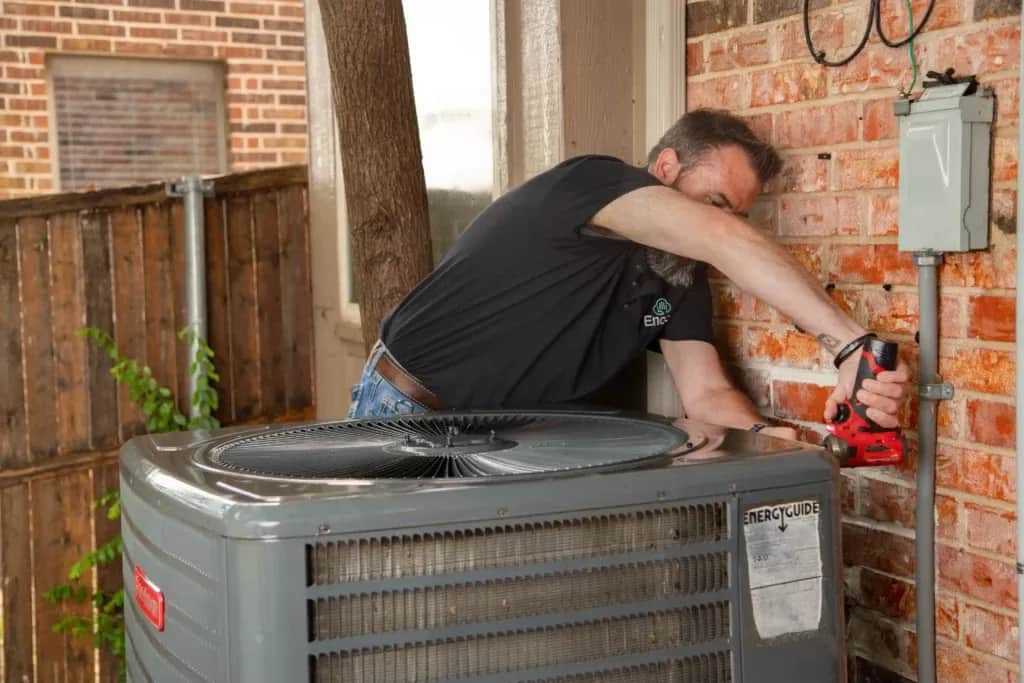
In Texas, a dependable HVAC system isn't a luxury, it's survival gear. Our summers run long and brutal, attic temperatures routinely blow past 130°F, and the humidity puts stress on your equipment that homeowners in cooler states never deal with. On top of that, 2026 brings a new wrinkle: the refrigerant that's cooled Texas homes for two decades is being phased out, which is quietly changing what repairs cost.
The good news is that most Texas AC failures come down to the same short list of culprits, and a lot of them you can catch (or even fix) yourself with a monthly visual check. Below are the 9 problems we see most, why they happen here specifically, how to handle them, and the point where you should stop and call a licensed technician.
Quick Symptom Lookup
What you're noticing | Most likely cause | DIY-friendly? |
|---|---|---|
AC runs constantly, house won't cool | Dirty filter, low refrigerant, or undersized unit | Partly |
Warm/room-temp air from vents | Low refrigerant or frozen coil | No |
Ice on the coils or copper lines | Airflow blockage or low refrigerant | Partly (thaw only) |
Outdoor unit hums or clicks, won't start | Failed capacitor | No |
Water stains on ceiling / drip near indoor unit | Clogged condensate drain line | Yes |
System turns on and off every few minutes | Short cycling (thermostat or sizing) | Partly |
Banging, screeching, or rattling | Loose part, worn belt, or failing motor | Partly |
What's Different in 2026: The Refrigerant Change You Should Know About
If your system is more than a few years old, this affects you. As of January 1, 2025, the EPA's AIM Act phased down production of R‑410A, the refrigerant most Texas AC units have relied on. New residential systems built in 2025 and later now use lower-global-warming A2L refrigerants, primarily R‑454B and R‑32.
Your existing R‑410A system is still perfectly legal to run and repair. But as production winds down, R‑410A is getting more expensive, which makes a refrigerant recharge on an older unit pricier than it used to be. If a tech tells you your 12–15 year old system has a major leak, this is a big reason the "repair vs. replace" math now leans toward replacement more often than it did a couple of years ago.
Regulations in this area are still evolving, so confirm current specifics with a licensed installer before making a replacement decision.
1. Clogged Air Filters & Frozen Coils
The problem: Because Texas systems run almost non-stop for months, filters clog far faster here than in cooler climates. A dirty filter chokes off airflow, and starved airflow makes the indoor evaporator coil drop below freezing. Once ice forms, cooling stops completely — and running the system in that state can damage the compressor, one of the most expensive parts to replace.
Why it happens in Texas: near-constant runtime, heavy pollen and dust seasons, and low-quality filters that clog quickly.
How to fix it:
- Inspect filters monthly and replace them every 30–60 days during peak summer.
- If you already see ice on the coil or the copper refrigerant lines, turn the AC off and set the fan to "ON" to melt the ice.
- Never run the system while the coils are iced over, that's how compressors die.
- Choose a filter with a sensible MERV rating (roughly 8–11 for most homes) that traps particles without strangling airflow.
Clean filters aren't just about comfort. According to the U.S. Department of Energy, keeping filters clean can cut a system's energy use by 5% to 15%, which shows up directly on your summer electric bill.
2. Refrigerant Leaks
The problem: If your filters are clean but the vents are blowing room-temperature or only slightly cool air, you may be low on refrigerant. Low charge forces the system to overwork, spikes your energy bills, and often freezes the indoor coil.
Why it happens: corrosion in the refrigerant lines, loose fittings, or physical damage to the coils or lineset.
How to fix it: Refrigerant work isn't a DIY job. Handling it requires EPA certification and specialized gauges. A licensed tech will locate the leak, seal or replace the damaged section, and recharge the system to the correct level.
Don't put this off. Running an AC low on refrigerant is a leading cause of compressor failure, and with R‑410A prices climbing (see the 2026 section above), a small leak caught early is far cheaper than the alternative.
3. Burnt-Out Capacitors
The problem: Start and run capacitors give your motors and compressor the jolt they need to kick on. In Texas attics that top 130°F in summer, these electrical components degrade fast. A failing capacitor is one of the most common single-part failures we see.
The tell-tale sign: the outdoor unit hums loudly or clicks repeatedly but the compressor won't start.
How to fix it:
- If the compressor won't start, shut the unit off so it doesn't overheat trying.
- Replacing a capacitor means handling stored electrical charge that can be dangerous even with the power off. This one is worth a call to a licensed technician — it's usually a quick, affordable repair for a pro.
- Installing a whole-home surge protector helps shield these parts from the power surges that come with Texas storms.
4. Blocked Condensate Drain Lines
The problem: Pulling moisture out of our famously humid air produces a steady stream of water that has to drain outside. Algae, mold, and dust build up inside the PVC drain line, the water backs up, and you get leaks, musty odors, or a full shutdown. Most modern systems have a safety float switch that shuts the AC off to prevent ceiling damage when a backup happens — so a "dead" AC on a humid day is often just a clogged drain.
How to fix it (this one is very DIY-friendly):
- Find the PVC drain line near your indoor unit, then attach a wet/dry shop vac to the end of the pipe outside your home to suck out the clog.
- To prevent it, pour about ¼ cup of household bleach (or white vinegar) down the condensate access tee every couple of months to kill algae before it blocks the line.
- If your system doesn't already have a float switch, ask your tech to add one — it's cheap insurance against a water-stained ceiling.
5. Dirty Condenser Coils (Outdoor Unit)
The problem: Your outdoor unit works like a radiator, dumping your home's heat into the Texas air. When dust, grass clippings, and cottonwood clog the metal fins, it can't shed heat efficiently, so it runs longer, costs more, and wears out sooner.
How to fix it:
- Keep at least 2 feet of clearance around the unit — trim back weeds, bushes, and anything crowding it.
- Gently rinse the outside of the unit with a garden hose to wash away dust and pollen.
- Never use a pressure washer. The fins are thin aluminum and will bend, permanently reducing efficiency.
6. Not Cooling Enough During Peak Heat
The problem: When it's 100°F+ outside and the AC runs all day but the house barely cools, you may be dealing with inadequate cooling — often from an undersized unit, blocked vents, dirty filters, or low refrigerant.
How to fix it:
- Replace filters and clear furniture or debris away from vents.
- Close blinds during the hottest part of the day to cut heat gain.
- If it still can't keep up, have a pro check refrigerant charge and system sizing.
Know the "20-degree rule": most AC systems can only pull the indoor temperature about 20°F below the outdoor temperature. If it's 100°F outside, cooling to around 80°F inside is normal — not necessarily a malfunction. On triple-digit days, set realistic expectations and let the system maintain, rather than cranking the thermostat down to 68°F.
7. Thermostat Malfunctions
The problem: A bad or poorly placed thermostat causes uneven temperatures, short cycling, or a system that won't start at all.
Why it happens: dead batteries, programming errors, failing sensors, or a thermostat mounted in direct sun or near a vent.
How to fix it:
- Confirm it's set to "cool" and set below the current room temperature.
- Replace the batteries if the display is dim or unresponsive.
- If problems continue, upgrade to a smart thermostat.
A modern smart thermostat is one of the highest-value upgrades for a Texas home, it manages runtime during peak-rate hours, learns your schedule, and reminds you when to change filters. Many models also qualify for utility rebates or federal energy-efficiency tax credits, so check what's available in your area before you buy.
8. Short Cycling
The problem: The system turns on and off every few minutes. It never reaches a comfortable temperature, wastes energy, and puts hard wear on the compressor.
Why it happens: an oversized system, a thermostat in a bad spot (sun or drafts), or restricted airflow from dirty filters and coils.
How to fix it:
- Make sure the thermostat isn't in direct sun or near a supply vent.
- Clean filters and coils to restore airflow.
- If the unit is genuinely oversized, a pro can discuss zoning or a right-sized replacement. Short cycling often points to an installation problem, not just maintenance.
9. Noisy HVAC Units
The problem: Banging, screeching, rattling, or buzzing signals a mechanical issue that tends to get worse — and more expensive — the longer it's ignored.
Why it happens: loose screws or panels, worn fan belts, debris in the outdoor unit, or failing blower motors and bearings.
How to fix it:
- Tighten loose screws and panels, and clear debris from the outdoor unit.
- Replace worn belts.
- A grinding or screeching motor needs professional attention before it seizes.
Preventive Maintenance Checklist
Routine care is the cheapest way to avoid every repair on this list:
- Change filters every 30–60 days during heavy-use months
- Flush the condensate drain line with bleach or vinegar every few months
- Rinse the outdoor coil and keep 2 feet of clearance around the unit
- Book a professional tune-up in spring (before cooling season) and fall
- Seal leaky ductwork to stop cooled air from escaping into the attic
- Install a smart thermostat to trim runtime and flag problems early
Consistent professional maintenance can add years to your system's life and knock a meaningful amount off your summer energy bills.
When to Call a Professional
Filters, drain lines, and coil rinsing are fair game for homeowners. Call a licensed Texas HVAC technician when you notice:
- Warm air despite clean filters and correct settings
- Ice on the coils or refrigerant lines that keeps coming back
- The outdoor unit humming or clicking but not starting (likely capacitor)
- Repeated breaker trips or any burning smell — cut the power and call immediately
- Uneven temperatures room to room, or short cycling that won't stop
Catching a small problem early is almost always cheaper than replacing a compressor — especially now that refrigerant costs are climbing.
Frequently Asked Questions
What are the most common HVAC repairs in Texas?
The most frequent are clogged filters causing frozen coils, low refrigerant, burnt-out capacitors, and blocked condensate drain lines. Most trace back to the near-constant runtime and high humidity Texas systems endure, and regular maintenance prevents the majority of them.
How often should I service my Texas HVAC system?
At least once a year, and ideally twice, a cooling tune-up in spring and a heating check in fall. Annual service catches small issues before they become expensive breakdowns.
Which HVAC problems can I fix myself?
Replacing filters, clearing the condensate drain line with a shop vac, and rinsing the outdoor coil are all homeowner-friendly. Anything involving refrigerant, capacitors, or wiring should go to a licensed pro for safety and warranty reasons.
Why is my AC running but blowing warm air?
The usual suspects are low refrigerant or a frozen indoor coil (often caused by a dirty filter). If your filter is clean and you're still getting warm air, shut the system off and call a technician — running it low on refrigerant risks the compressor.
Do I need to replace my R‑410A system in 2026?
Not automatically. Existing R‑410A systems are legal to run and repair. But because R‑410A production is being phased down, recharges on older units are getting more expensive, so a major refrigerant leak on an aging system now tips the decision toward replacement more often than it used to.
How can I lower my summer AC energy bills in Texas?
Keep filters clean (the DOE estimates this alone can cut energy use 5–15%), rinse the outdoor coil, seal your ductwork, and use a smart thermostat to ease off during peak-rate hours. Closing blinds during the hottest part of the day also reduces how hard the system has to work.
Sources: U.S. Department of Energy (filter efficiency), U.S. EPA AIM Act (refrigerant phase-down)