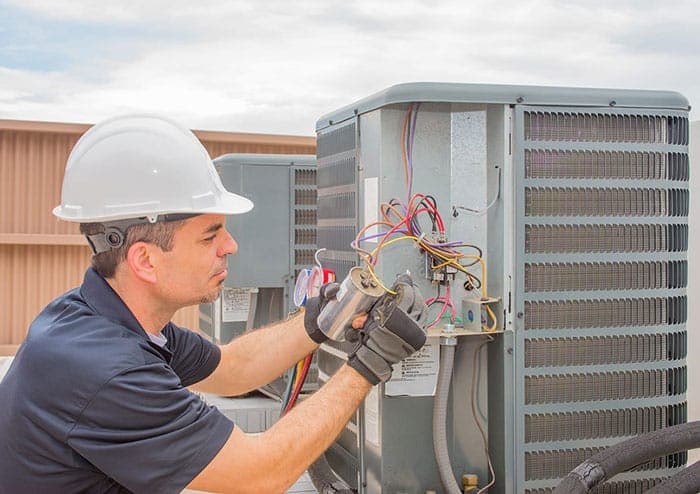
Selecting the right commercial AC system is one of the most critical investments you'll make for your business. With commercial HVAC costs ranging from $10,000 to $50,000 or more, and systems lasting 15-20 years on average, making an informed decision now will impact your bottom line for decades to come.
Whether you're replacing an aging unit, upgrading for better efficiency, or installing a system in a new facility, this comprehensive 2026 guide covers everything you need to know about commercial AC systems, from costs and tax considerations to brand recommendations and installation requirements.
Table of Contents
- Understanding Your Business's Cooling Needs
- How Much Does a Commercial AC System Cost in 2026?
- What is the Average Lifespan of a Commercial HVAC System?
- Types of Commercial AC Systems
- Which is the Best AC Brand for Commercial Use?
- 6 Steps to Choose the Right Commercial AC System
- Commercial HVAC Tax Considerations for 2026
- Key Factors to Consider When Choosing a Commercial AC Unit
- Frequently Asked Questions
Understanding Your Business's Cooling Needs
Before exploring specific commercial AC options, assess your facility's unique requirements. Every business has different cooling demands based on:
- Building size and square footage - The primary determinant of system capacity
- Occupancy levels - More people generate more heat load
- Operational hours - 24/7 operations require more durable systems
- Heat-generating equipment - Data centers, kitchens, and manufacturing facilities have higher cooling demands
- Local climate conditions - Regional temperature extremes affect system sizing
- Building insulation and layout - Poor insulation increases cooling requirements
Commercial HVAC professionals calculate cooling needs in BTUs (British Thermal Units) or tons of refrigeration. A rough estimate is dividing your building's square footage by 500, then multiplying by 12,000 BTUs. However, professional load calculations account for ceiling height, window placement, insulation quality, and equipment heat generation.
How Much Does a Commercial AC System Cost in 2026?
Commercial HVAC system costs vary significantly based on type, size, and complexity. Here's what to expect in 2026:
Commercial HVAC System Cost by Type
Rooftop Units (RTUs)
- Small systems (3-5 tons): $10,000 - $20,000
- Medium systems (7.5-12.5 tons): $20,000 - $35,000
- Large systems (15+ tons): $35,000 - $50,000+
Split Systems
- Small commercial: $7,000 - $15,000
- Medium commercial: $15,000 - $30,000
- Large commercial: $30,000 - $45,000
Variable Refrigerant Flow (VRF) Systems
- Installation cost: $20,000 - $60,000+
- Best for multi-zone buildings with varying cooling needs
Chilled Water Systems
- Large-scale installations: $50,000 - $200,000+
- Common in hospitals, universities, and large office buildings
Cost Per Square Foot (2026 Pricing)
According to the latest industry data, commercial HVAC installation costs average:
- Office buildings: $20 - $33 per square foot
- Retail stores: $18 - $28 per square foot
- Restaurants: $25 - $35 per square foot
- Warehouses: $15 - $25 per square foot
- Sports/recreational buildings: $22 - $27 per square foot
What Affects Commercial AC Unit Cost?
- System capacity and size - Larger tonnage costs more
- Energy efficiency ratings - Higher SEER2 systems have higher upfront costs but lower operating expenses
- Brand and quality - Premium brands like Trane and Carrier cost 15-30% more than economy brands
- Installation complexity - Rooftop installations, structural modifications, and extensive ductwork increase costs
- Labor rates - Vary by region, typically $75-$150 per hour
- Additional components - UV lights, air purifiers, smart controls, and zoning systems add to total cost
Important Note: With the commercial HVAC market projected to reach $70 billion by 2030, now is a critical time to invest in efficient systems that will provide long-term savings despite higher upfront costs.
What is the Average Lifespan of a Commercial HVAC System?
According to industry standards and the American Society of Heating, Refrigerating and Air-Conditioning Engineers (ASHRAE), commercial HVAC systems last 15-20 years with proper maintenance. However, individual component lifespans vary:
Commercial HVAC Component Lifespan
- Rooftop units (RTUs): 15-20 years
- Air conditioners: 15-20 years
- Heat pumps: 15-20 years
- Gas furnaces: 18-25 years
- Boilers: 20-35 years
- Chillers: 20-30 years
- Compressors: 10-15 years
- Air handlers: 15-20 years
- Ductwork: 20-25 years
Factors That Extend Commercial HVAC Lifespan
1. Regular Preventive Maintenance
- Quarterly inspections and tune-ups
- Spring and fall system start-ups
- Filter replacements every 1-3 months
- Annual coil cleaning
- Refrigerant level checks
2. Quality Installation
- Proper sizing for your building's cooling load
- Correct ductwork design and installation
- Professional commissioning
- Adherence to manufacturer specifications
3. Usage Patterns
- Building automation systems reduce wear and tear
- Optimized runtime schedules
- Proper thermostat settings
4. Climate Conditions
- Coastal areas experience shorter lifespans (7-12 years) due to salt corrosion
- Extreme climates require more robust systems
Pro Tip: A well-maintained system can last over 25 years, while neglected systems often fail before 15 years. Investing in a comprehensive maintenance contract can extend your system's life by 5-10 years and improve efficiency by 15-20%.
Types of Commercial AC Systems
Commercial cooling systems come in several configurations, each designed for specific applications:
1. Rooftop Units (RTUs)
Best for: Retail stores, restaurants, small-to-medium offices, warehouses
Features:
- Self-contained systems installed on rooftops
- House all components (compressor, condenser, evaporator) in one package
- Save indoor space and simplify maintenance access
- Easy to replace without disrupting business operations
Cost Range: $10,000 - $50,000+
2. Split Systems
Best for: Multi-zone offices, buildings with aesthetic requirements
Features:
- Separate indoor and outdoor components
- Flexible installation options
- Multiple temperature zones possible
- Quieter indoor operation
Cost Range: $7,000 - $45,000
3. Variable Refrigerant Flow (VRF) Systems
Best for: Multi-story buildings, hotels, large office complexes
Features:
- Precise temperature control for individual zones
- Simultaneous heating and cooling capabilities
- Energy-efficient operation
- Reduced ductwork requirements
Cost Range: $20,000 - $60,000+
4. Chilled Water Systems
Best for: Large commercial buildings, hospitals, universities
Features:
- Central chiller produces cold water
- Water circulated through pipes to air handling units
- Excellent for very large facilities
- Complex installation and maintenance
Cost Range: $50,000 - $200,000+
5. Ductless Mini-Split Systems
Best for: Retrofits, buildings without existing ductwork, targeted cooling
Features:
- No ductwork required
- Individual zone control
- Quick installation
- Energy-efficient operation
Cost Range: $2,000 - $14,500
6. Packaged Systems
Best for: Small-to-medium commercial buildings with limited mechanical room space
Features:
- All components housed in one cabinet
- Can be installed on roof or adjacent to building
- Simplified maintenance
- Efficient space utilization
Cost Range: $8,000 - $35,000
Which is the Best AC Brand for Commercial Use?
Choosing a reputable manufacturer ensures reliability, warranty coverage, and service availability. Here are the top commercial HVAC brands for 2026:
Premium Tier (Best Overall Quality)
1. Trane
- Strengths: Industry-leading durability, rigorous testing standards, excellent warranty coverage
- Best for: Long-term reliability and performance
- Popular models: Trane IntelliPak rooftop units
- Warranty: Comprehensive 10-year parts and labor coverage
2. Carrier
- Strengths: Innovation leader, advanced controls, strong dealer network
- Best for: Cutting-edge technology and energy efficiency
- Popular models: Carrier WeatherMaker rooftop systems
- Notable: Founder of modern air conditioning, extensive R&D investment
3. Daikin Applied
- Strengths: Global HVAC leader, VRF technology expertise, large-scale systems
- Best for: Complex multi-zone buildings and industrial applications
- Notable: World's largest HVAC manufacturer by volume
Mid-Range Tier (Best Value)
4. Lennox
- Strengths: Energence and Landmark series, easy installation and maintenance
- Best for: Balance of performance and cost
- Notable: Energy Star-certified options, excellent contractor support
5. York
- Strengths: Comprehensive commercial line, competitive pricing
- Best for: Budget-conscious businesses seeking reliable performance
- Products: Rooftop units, chillers, air handlers, VRF systems
6. Rheem
- Strengths: Strong sustainability focus, smart home compatibility
- Best for: Businesses prioritizing green initiatives
- Notable: EcoNet technology platform for remote monitoring
Specialty Tier
7. Mitsubishi Electric
- Strengths: Ductless and VRF technology leader, energy efficiency
- Best for: Retrofits and buildings with unique cooling requirements
- Notable: Excellent for zoned comfort control
8. American Standard
- Strengths: Reliable performance, quieter operation, Trane Technologies backing
- Best for: Businesses seeking proven performance at accessible prices
How to Choose the Right Brand
Consider these factors when selecting a commercial HVAC brand:
- Authorized dealer availability in your area
- Parts availability for service and repairs
- Warranty terms and coverage
- Energy efficiency ratings (SEER2, EER2)
- Service network and technical support
- Brand reputation and longevity in the market
- Total cost of ownership (upfront + operating costs)
Expert Recommendation: Work with Factory Authorized Dealers like Carrier Factory Authorized Dealers who receive specialized training and have access to genuine parts. This ensures proper installation, maintains warranty coverage, and provides reliable service throughout your system's lifespan.
6 Steps to Choose the Right Commercial AC System
Follow this strategic approach to select the optimal system for your business:
Step 1: Calculate Your Cooling Load
Professional HVAC technicians perform detailed cooling load calculations using industry-standard methods like Manual N (Commercial Load Calculation). This process determines:
- Exact cooling capacity required (measured in tons or BTUs)
- Heating requirements (if applicable)
- Ventilation needs for air quality
- Dehumidification capacity
Why it matters:
- Undersized systems struggle to maintain temperatures, run constantly, and fail prematurely
- Oversized systems cycle on/off frequently, waste energy, don't control humidity properly, and have higher operating costs
Is it Better to Oversize or Undersize an AC Unit?
Neither. Proper sizing is critical. However, if forced to choose, slightly under sizing (within 5-10%) is preferable to oversizing. Oversized systems short-cycle, leading to:
- Poor humidity control
- Uneven temperatures
- Higher energy consumption
- Increased wear on components
- Shortened equipment lifespan
Step 2: Evaluate Your Budget
Consider both upfront and long-term costs:
Initial Investment:
- Equipment purchase price
- Installation labor ($1,500 - $5,000+)
- Building modifications (structural reinforcement, electrical upgrades)
- Ductwork installation or modifications ($1,000 - $5,000)
- Permits and inspections ($200 - $1,000)
Long-Term Operating Expenses:
- Monthly energy costs (varies by efficiency rating)
- Annual maintenance contracts ($500 - $2,000)
- Filter replacements ($50 - $300/year)
- Potential repair costs
ROI Consideration: High-efficiency systems typically cost 15-30% more upfront but can reduce energy bills by 20-40%, paying for themselves in 5-8 years through energy savings alone.
Step 3: Assess Installation Requirements
Work with qualified HVAC professionals to evaluate:
Structural Considerations:
- Rooftop mounting - May require structural reinforcement
- Equipment access - Adequate space for installation and future maintenance
- Electrical capacity - Sufficient power supply and potential upgrades
- Ductwork condition - Existing ducts may need replacement or repair
Installation Timeline:
- Simple replacements: 1-3 days
- Complex installations with ductwork: 1-2 weeks
- Large commercial projects: 2-4 weeks
Minimizing Business Disruption:
- Schedule installation during off-hours or weekends
- Phase installation in sections
- Provide temporary cooling if needed
- Clear communication with employees and customers
Step 4: Research Energy Efficiency Ratings
Understanding efficiency ratings helps you compare systems and estimate operating costs:
SEER2 (Seasonal Energy Efficiency Ratio 2)
- Measures cooling efficiency over an entire season
- Higher numbers = better efficiency
- Minimum standard: 13-14 SEER2
- High-efficiency commercial: 16-21 SEER2
- Energy savings: Each SEER point increase saves approximately 7% on cooling costs
EER2 (Energy Efficiency Ratio 2)
- Measures efficiency at peak operating conditions
- Important for hot climates
- Commercial systems: 11-14+ EER2
AFUE (Annual Fuel Utilization Efficiency)
- For gas furnaces
- Measures heating efficiency
- High-efficiency commercial: 95-98% AFUE
Cost vs. Savings Example: A 16 SEER2 system may cost $5,000 more than a 13 SEER2 system but can save $800-$1,200 annually in energy costs, recovering the premium in 4-6 years.
Step 5: Consider Smart Controls and Building Automation
Modern commercial HVAC systems integrate with building management systems for:
- Remote monitoring and control - Adjust settings from anywhere
- Automated scheduling - Optimize runtime based on occupancy
- Real-time diagnostics - Early problem detection
- Energy tracking - Detailed consumption reports
- Multi-zone control - Independent temperature settings per area
Popular Control Systems:
- Honeywell Building Controls
- Johnson Controls
- Carrier Automated Logic
- Trane Tracer
- Schneider Electric EcoStruxure
ROI Impact: Smart controls can reduce HVAC energy consumption by 20-30% through optimized scheduling and real-time adjustments.
Step 6: Plan for Professional Installation and Maintenance
Professional Installation is Non-Negotiable:
- Improper installation voids warranties
- Reduces efficiency by 20-40%
- Leads to premature failures
- Creates safety hazards
Maintenance Contract Options:
- Full-Service Contracts - 100% coverage of labor, parts, materials, and emergency service
- Labor-Only Contracts - All labor for repairs and maintenance; you purchase parts
- Maintenance-Only Contracts - Annual or bi-annual inspections, filter changes, coil cleaning
- Inspection-Only Contracts - Periodic inspections only
Recommended Maintenance Schedule:
- Quarterly inspections - Check all system components
- Spring startup - Prepare cooling system for summer
- Fall startup - Prepare heating system for winter
- Monthly filter checks - Replace as needed
- Annual coil cleaning - Maintain peak efficiency
Cost of Maintenance:
- Basic maintenance contracts: $500 - $1,000/year
- Comprehensive contracts: $1,500 - $3,000/year
- Emergency repair costs (without contract): $200 - $2,000+ per incident
Value Proposition: Regular maintenance extends system life by 5-10 years and maintains efficiency, potentially saving $2,000-$5,000 annually in energy costs and avoiding expensive emergency repairs.
Commercial HVAC Tax Considerations for 2026
Important Update: Federal Tax Credits Ended December 31, 2025
What Changed: The federal Energy Efficient Home Improvement Tax Credit (Section 25C) expired on December 31, 2025. This credit previously offered:
- Up to $2,000 for heat pumps
- Up to $600 for high-efficiency air conditioners and furnaces
- 30% of qualifying costs
Homeowners who installed qualifying systems in 2025 can still claim the credit on their 2025 tax return (filed in 2026).
What About Commercial Businesses?
Section 179 Deduction Still Available:
- Businesses can potentially deduct the full cost of commercial HVAC equipment in the year of purchase
- Subject to annual limits and phase-outs
- Consult a tax professional for eligibility
Other Tax Benefits for Commercial Properties:
- Depreciation
- Energy-Efficient Commercial Buildings Deduction (Section 179D)
- Available for energy-efficient building improvements
- Up to $5.00 per square foot for qualifying improvements
- Must meet specific energy reduction thresholds
- State and Local Utility Rebates
- Many utilities offer rebates for high-efficiency commercial equipment
- Varies by location and utility provider
- Can offset 5-15% of equipment costs
Action Item: Consult with a tax professional specializing in commercial real estate to maximize available deductions and incentives for your 2026 HVAC investment.
Key Factors to Consider When Choosing a Commercial AC Unit
1. Size and Capacity
Critical Importance: Proper sizing is the #1 factor for system performance and longevity.
What to Consider:
- Professional cooling load calculation (Manual N)
- Building square footage
- Ceiling height (systems sized for 8-foot ceilings need adjustment for taller spaces)
- Insulation quality
- Window surface area and orientation
- Number of occupants
- Heat-generating equipment
- Geographic location and climate
Consequence of Poor Sizing:
- Undersized: Inadequate cooling, constant operation, high energy bills, premature failure
- Oversized: Short-cycling, poor humidity control, uneven temperatures, wasted energy
2. Energy Efficiency
Why It Matters: HVAC typically accounts for 40-60% of commercial building energy consumption.
Efficiency Ratings to Consider:
- SEER2: Seasonal cooling efficiency (higher is better)
- EER2: Peak cooling efficiency
- AFUE: Heating efficiency for gas systems
- IPLV/NPLV: Chiller efficiency at part-load conditions
Long-Term Savings: A system with a 16 SEER2 vs. 13 SEER2 can save a medium-sized business $1,500-$3,000 annually in energy costs.
Energy Star Certification: Look for Energy Star-certified equipment, which meets strict energy efficiency guidelines set by the EPA and typically uses 15-30% less energy than standard models.
3. Maintenance Requirements
Regular Maintenance is Essential:
- Systems require service 2-4 times per year
- Filter changes every 1-3 months
- Annual coil cleaning
- Refrigerant level checks
- Belt and bearing lubrication
Maintenance Costs:
- DIY filter changes: $50-$300/year
- Professional maintenance contracts: $500-$3,000/year
- Emergency repairs (no contract): $200-$5,000+ per incident
Choose Systems with:
- Easily accessible filters and components
- Comprehensive manufacturer support
- Local authorized service providers
- Good parts availability
4. Noise Levels
Why It Matters: Excessive HVAC noise impacts employee productivity, customer experience, and tenant satisfaction.
Noise Considerations by Business Type:
- Offices: Quiet operation essential (60-65 dB maximum)
- Retail: Moderate noise acceptable (65-70 dB)
- Warehouses: Less critical (70-80 dB acceptable)
- Restaurants/Hotels: Very quiet operation required (55-65 dB)
Quieter System Options:
- Variable-speed systems operate more quietly than single-stage
- Ductless systems typically quieter indoors
- Proper installation reduces vibration and noise
- Sound-dampening enclosures available
5. Indoor Air Quality Features
Post-Pandemic Priority: Indoor air quality is now a top concern for businesses.
IAQ Enhancements:
- MERV-rated filters (MERV 13+ recommended for commercial)
- UV-C germicidal lights ($400-$800 installed)
- Bipolar ionization systems
- HEPA filtration (medical/cleanroom applications)
- Proper ventilation (ASHRAE Standard 62.1)
- Humidity control (40-60% relative humidity optimal)
Business Benefits:
- Reduced employee sick days
- Improved productivity
- Better customer experience
- Compliance with health regulations
6. Cost and Warranty
Total Cost of Ownership Includes:
- Purchase price
- Installation costs
- Energy consumption over lifespan
- Maintenance and repairs
- Expected lifespan
Warranty Considerations:
Manufacturer Warranties:
- Parts warranty: 5-10 years standard
- Compressor warranty: 10-12 years common
- Labor warranty: 1-2 years (often optional extension available)
Extended Warranty Options:
- Available from manufacturers and dealers
- Cover parts and/or labor beyond standard terms
- Cost: $500-$2,000 depending on coverage
Premium Brands vs. Budget Brands:
- Premium (Trane, Carrier): Higher upfront cost, better reliability, longer warranties
- Mid-range (Lennox, York, Rheem): Good balance of cost and quality
- Budget (Goodman, Amana): Lower initial investment, shorter warranties, may have higher repair costs
Decision Framework:
- High-use facilities: Invest in premium brands for longevity
- Moderate use: Mid-range brands offer excellent value
- Budget-conscious or low-use: Economy brands can be cost-effective
Making the Right Investment for Your Business in 2026
Choosing the right commercial AC system requires careful consideration of your specific needs, budget, and long-term goals. Here's what to remember:
Key Takeaways
- Proper sizing is critical - Neither oversized nor undersized systems perform well
- Consider total cost of ownership - Not just purchase price, but energy costs and maintenance over 15-20 years
- Energy efficiency pays off - Higher SEER2 ratings reduce operating costs significantly
- Professional installation is essential - Protects your investment and maintains warranty coverage
- Regular maintenance extends lifespan - Can add 5-10 years to system life and maintain peak efficiency
- Choose reputable brands - Better reliability, warranty coverage, and service availability
- Plan for the future - Smart controls and building automation provide ongoing benefits
2026 Market Outlook
The commercial HVAC market continues to experience robust growth, particularly in:
- Data centers (driving unprecedented demand)
- Healthcare facilities (focus on IAQ and ventilation)
- Educational institutions (air quality mandates)
- Mixed-use developments (requiring flexible zoning)
Industry Projection: The U.S. commercial HVAC market is expected to reach $70 billion by 2030, up from $45-50 billion in 2025.
Next Steps
- Schedule a professional cooling load calculation
- Get quotes from 3-5 qualified HVAC contractors
- Compare equipment options from top manufacturers
- Verify contractor licensing and insurance
- Review warranty terms and maintenance requirements
- Plan installation timeline to minimize business disruption
- Establish a preventive maintenance schedule
Ready to find the right commercial AC system for your business? Contact qualified HVAC professionals in your area to schedule a consultation and take the first step toward better comfort, efficiency, and long-term savings for your facility.
Frequently Asked Questions
Can I write off my new AC unit on my taxes?
For commercial businesses, yes, potentially through:
- Section 179 Deduction - Immediate expensing of qualifying equipment
- Depreciation - Spreading the cost over the system's useful life (typically 39 years for commercial building systems)
- Section 179D - Energy-efficient commercial buildings deduction (up to $5.00 per square foot)
For homeowners, the federal tax credit expired December 31, 2025. Any qualifying systems installed in 2025 can still be claimed on 2025 tax returns.
Always consult a tax professional for guidance specific to your situation.
What HVAC qualifies for tax credit in 2026?
For residential properties: The federal tax credit expired December 31, 2025. No residential HVAC tax credits are currently available for 2026 installations.
For commercial properties: Section 179 deductions and Section 179D energy-efficient building deductions remain available, subject to qualifying criteria.
What is the 3-minute rule for AC?
The "3-minute rule" refers to the recommended minimum time between HVAC system on/off cycles. This protects the compressor from damage caused by rapid cycling. Modern systems have built-in delay timers that:
- Prevent short-cycling
- Protect compressor lifespan
- Maintain system efficiency
- Reduce wear on components
Never manually override this delay when restarting your system.
What is the most common commercial HVAC system?
Rooftop Units (RTUs) are the most common commercial HVAC systems, accounting for approximately 50-60% of commercial installations. They're popular because they:
- Save indoor space
- Simplify installation and maintenance
- Work well for various building types
- Are cost-effective for most applications
- Allow easy replacement without business disruption
Which HVAC system is best for commercial buildings?
The "best" system depends on your specific needs:
For most retail/office buildings: Rooftop units (RTUs) For multi-story buildings: VRF systems or split systems For large facilities: Chilled water systems For buildings without ductwork: Ductless mini-splits For precise zone control: VRF or advanced split systems For budget-conscious projects: Packaged units or split systems
What are the six types of HVAC systems for commercial buildings?
- Rooftop Units (RTUs) - Self-contained systems installed on roofs
- Split Systems - Indoor and outdoor components connected by refrigerant lines
- Variable Refrigerant Flow (VRF) - Advanced multi-zone systems
- Chilled Water Systems - Central chiller with distributed air handlers
- Ductless Mini-Splits - Individual zone units without ductwork
- Packaged Systems - All components in one cabinet (rooftop or ground-mounted)
Which is better, 410A or R32?
R32 is generally better and represents the future of HVAC refrigerants:
R32 Advantages:
- Lower global warming potential (GWP of 675 vs. 2,088 for R-410A)
- More environmentally friendly
- Better energy efficiency (3-5% improvement)
- Easier to recycle
- Required by evolving EPA regulations (AIM Act)
R-410A:
- Currently more widely available
- Most existing systems use it
- Being phased out due to environmental concerns
2026 Reality: New systems increasingly use R32 or other low-GWP refrigerants (R-454B, R-32) due to EPA regulations phasing out R-410A.
How long should a commercial AC last?
With proper maintenance, commercial AC systems typically last:
- Rooftop units: 15-20 years
- Split systems: 15-20 years
- VRF systems: 15-20 years
- Chillers: 20-30 years
Factors affecting lifespan:
- Maintenance quality - Regular service can extend life by 5-10 years
- Usage intensity - 24/7 operations wear faster
- Climate conditions - Coastal areas see 30-40% shorter lifespans due to corrosion
- Installation quality - Proper installation is critical
- Environmental factors - Dust, humidity, and temperature extremes affect longevity
Does commercial insurance cover AC units?
Typically yes, but with conditions:
Commercial Property Insurance usually covers HVAC systems for:
- Fire damage
- Storm damage
- Vandalism
- Theft
- Certain types of water damage
Not Usually Covered:
- Normal wear and tear
- Lack of maintenance
- Mechanical breakdown (unless you have equipment breakdown coverage)
- Gradual deterioration
Equipment Breakdown Coverage (Boiler and Machinery Insurance):
- Optional add-on to commercial property policies
- Covers mechanical and electrical failures
- Includes HVAC systems
- Highly recommended for commercial properties
Check with your insurance agent to understand your specific coverage and consider equipment breakdown insurance for comprehensive protection.
How to estimate commercial HVAC costs?
Quick Estimation Method:
- Calculate building square footage
- Multiply by cost per square foot for your building type:
- Offices: $20-$33/sq ft
- Retail: $18-$28/sq ft
- Restaurants: $25-$35/sq ft
- Warehouses: $15-$25/sq ft
Professional Estimation Includes:
- Detailed cooling load calculation
- Equipment specifications and pricing
- Installation labor costs
- Ductwork requirements
- Electrical upgrades
- Permits and inspections
- Project management
Best Practice: Get quotes from 3-5 qualified commercial HVAC contractors for accurate pricing specific to your facility.
What is the price of a 5.5-ton industrial AC unit?
A 5.5-ton commercial AC unit typically costs:
Equipment only: $4,000 - $8,000 Installed (complete system): $8,000 - $15,000
Price varies based on:
- Brand and efficiency rating
- Type of system (rooftop, split, etc.)
- Installation complexity
- Location and labor rates
- Additional features (smart controls, IAQ enhancements)
A 5.5-ton unit is suitable for approximately 2,200-3,300 square feet depending on insulation, ceiling height, and heat load.