Your Project Starts Here
Ready to get started?
Team Enoch is your one-stop shop for heating, cooling, electrical, plumbing, and roofing services.
Get a Quote
High humidity levels create different issues throughout your household which include mold growth, allergies and uncomfortable environment. The temperature regulation functions of your HVAC system cannot match its limited capability to manage humidity levels in your home space. That's where dehumidifiers come in. The purpose of dehumidifiers is to control indoor air moisture and create healthier environments with considerable comfort improvements. In this article, you will get to know what dehumidifiers are, how dehumidifiers work and when to use them in your home. Because understanding dehumidifiers can greatly assist in addressing numerous indoor issues within your home.
Dehumidifiers maintain room humidity levels by drawing air from the room over a coil cooled to a very low temperature by a refrigeration system. This way dehumidifiers produce extreme living environments where allergen-causing organisms and dust mites and mold cannot survive thus preventing damage to home structures and furniture. Dehumidifiers are also effective in discouraging pests like roaches and silverfish that thrive in moist conditions. They can also improve breathing conditions for people with colds or respiratory issues.
Dehumidifiers utilize two fundamental approaches for extracting moisture from air distribution. First one is cooling, where air is cooled to condense moisture, and desiccant, where absorbent materials draw moisture from the air, commonly used in industrial or low-temperature settings.
Refrigerant Dehumidifiers are the most common type found in homes. Dehumidifiers use a refrigeration cycle similar to air conditioners, using a fan to draw moist air over cool coils, causing water vapor to condense and drip into a collection tank. They're most effective in warmer environments (above 65°F/18°C) and are generally more energy-efficient for removing excess moisture from the air.
Instead of refrigeration, desiccant dehumidifiers use a desiccant material (similar to the silica gel packets found in product packaging) to absorb moisture in the air. They perform well in cooler temperatures and can operate effectively down to 33°F/1°C, making them ideal for dehumidifying unheated spaces in winter. They tend to use more energy but can reach lower humidity levels than refrigerant models.
These systems integrate with your HVAC system and can control humidity throughout the entire house. While more expensive initially, a whole-house dehumidifier provides consistent humidity control without the need for multiple portable dehumidifiers and often operate more efficiently in the long run.
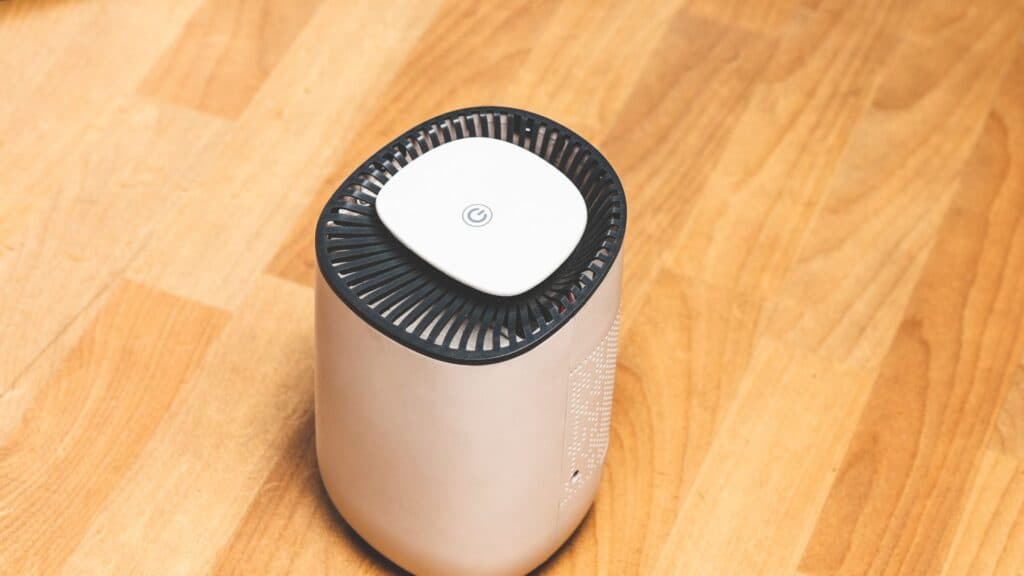
These smaller units can be moved from room to room as needed. Many dehumidifiers come with wheels for easy transport. A portable dehumidifier is ideal when you need to dehumidify your home one room at a time or focus on particularly damp areas of your home like a bathroom or basement.
Type | Best For | Temperature Range | How Dehumidifiers Use Energy | Initial Cost |
|---|---|---|---|---|
Refrigerant | Warm, very damp areas | 65°F+ | Moderate | Moderate |
Desiccant | Cooler areas, precise humidity control | 33°F+ | Higher | Moderate |
Whole-Home |
Certain living conditions naturally lead to higher humidity, such as humid climates, areas with high rainfall, and flood-prone regions. According to the Environmental Protection Agency (EPA), indoor humidity levels should be maintained between 30% and 50%. When relative humidity rises above 60%, conditions become ideal for dust mite reproduction, mold, and mildew growth that can affect the structural integrity of your home.
Properties with poor drainage, newly constructed homes (due to moisture from building materials), and homes with limited ventilation also tend to have higher humidity. A simple hygrometer can help you check indoor humidity levels, and if readings are consistently high, a dehumidifier may be the solution.
You may need a dehumidifier if you notice:
The water removal capacity during a twenty-four hour period represents the primary measurement method to determine dehumidifier capacity. A dehumidifier of small capacity measuring between 20-30 pints serves as a perfect solution for managing moisture in spaces of different sizes. A medium capacity dehumidifier with 30 to 50 pints handles spaces between medium and large sizes that have high humidity while large capacity models exceeding 50 pints operate in both big rooms with excessive moisture and total home dehumidification situations.
Customers need to determine the area size before purchasing a dehumidifier to decide its suitable functioning capacity. Larger machines need selection based on room dampness levels and ceiling height requirements because higher heights require bigger machines.
Features to Consider When You Buy a Dehumidifier:
Look for dehumidifiers with helpful features like automatic shut-off (to turn off when the tank is full), a continuous drainage option (to avoid emptying the tank), and a built-in humidistat (to maintain your desired humidity). Digital controls allow for precise settings, while an air filter removes particles. Noise levels vary, but for bedrooms, aim for models that operate under 45 decibels.
While these appliances all affect indoor humidity, they serve different primary purposes:
Air conditioners focus on cooling the air while secondarily removing some humidity. They're most efficient when you need both temperature and humidity control.
Dehumidifiers focus only on removing excess moisture without cooling the air. In fact, they can slightly warm the air due to their operation. Additionally, dehumidifiers are more efficient than air conditioners at removing moisture.
Humidifiers do the opposite of dehumidifiers. They add moisture to the air when it becomes too dry, typically during the winter heating season.
For many homeowners, the ideal solution is using different appliances seasonally: air conditioning during hot, humid weather, a dehumidifier during cool, damp periods, and a humidifier during dry winter months.
Sizing Errors
Maintenance Oversights
Operation Errors
Seasonal Adjustments
Many homeowners fail to adjust their dehumidifier settings seasonally. Indoor humidity levels fluctuate throughout the year, requiring different settings:
If you are located in Dallas / Fort Worth area and you're looking for a plumbing inspection there’s one smart place to call. At Team Enoch, we have the expertise and trained professionals you need to diagnose, fix, and correct problems, small or large, so that your HVAC system is always in good repair. And when you’re ready for improvements and upgrades, we’re ready to help as well!
Contact us for all your plumbing, HVAC, electrical and all commercial service needs. Remember, estimates are always free!.
Entire homes, high humidity issues
Any (indoor) |
Lower per square foot |
High |
Portable | Specific rooms, targeted dehumidification | Any | Varies by size | Low to Moderate |
|---|
How Are Newer ACs More Efficient Than Older Ones?
March 30, 2026
Simple DIY AC Maintenance to Avoid Costly Repairs
April 11, 2026
Why Poor Attic Insulation Makes Your AC Work Harder
April 10, 2026
Good, Better, Best: How Smart Pricing Helps You Maximize ROI
April 10, 2026
The Truth About AC Burnouts: It's Usually Not the Brand
April 10, 2026
Before You Replace Your AC for $12,000, Read This
April 10, 2026
How to Keep Your A/C Running Strong This Summer
April 6, 2026
Key Facts You Need to Know About Your Home Ductwork
January 1, 2026
How to Reduce Humidity in Texas Homes?
December 4, 2025
How to Test & Improve Indoor Air Quality at Home (2026 Complete Guide)
September 3, 2025