
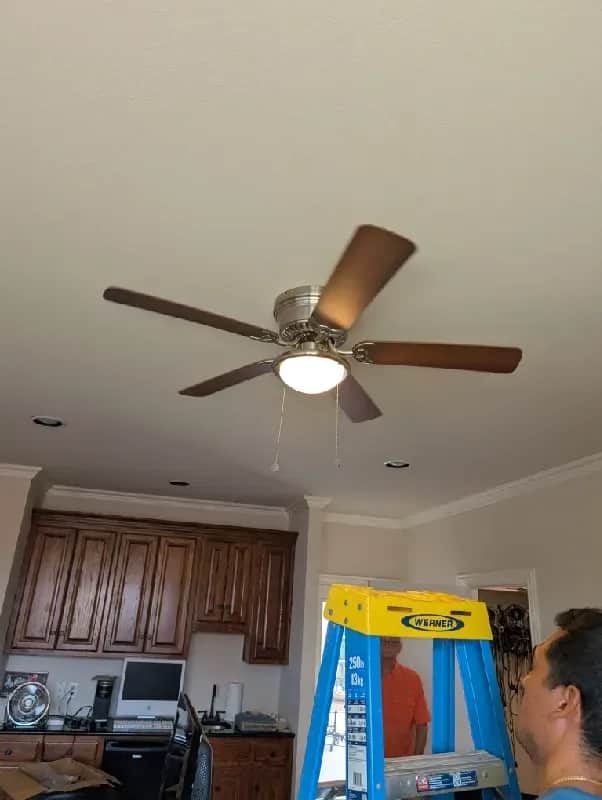
You've probably heard it from a parent, a landlord, or a home improvement show: "Don't forget to flip your ceiling fan for summer and winter." But does that little switch actually do anything, or is it one of those home maintenance myths that's been repeated so many times it just sounds true?
At Team Enoch, we field questions about ceiling fan direction almost as often as we field questions about AC repair here in Arlington. So let's clear the air, literally, and look at what's fact, what's fiction, and what it means for your comfort and your energy bill.
The Myth: What People Believe About Fan Direction
Ceiling fan direction tends to get misunderstood in one of two directions (no pun intended).
Some homeowners assume flipping the switch dramatically changes the temperature of a room, as if the fan is doing the AC's job. Others swing the opposite way and assume the whole "summer setting vs. winter setting" thing is a myth with zero real effect, since a fan is just a fan — it moves air, full stop.
Neither take is quite right. Ceiling fan direction is real and does something measurable — it's just not what most people think.
The Science: Does Direction Actually Change the Airflow?
A ceiling fan's blades are pitched at an angle, which means the direction they spin determines which way they push air.
- Counterclockwise (looking up from the floor) pushes air straight down, creating a direct downdraft you can feel on your skin.
- Clockwise pulls air upward and gently redistributes it, pushing it back down along the walls instead of straight down on you.
Here's the part that actually clears up the myth: a ceiling fan doesn't change the actual temperature of a room. It has no thermostat, no refrigerant, no heating element — it's just moving air around. What changes is how that air feels against your skin, and how evenly warm air gets distributed through the room.
So the direction switch is a real, physical difference in airflow. The myth isn't that direction matters — it's the assumption that it's heating or cooling anything.
Summer vs. Winter: The Correct Direction for Each Season
Summer: Counterclockwise, High Speed
In summer, you want that direct downdraft. Air moving across your skin speeds up evaporation and creates a wind-chill effect, which is why a room can feel several degrees cooler than the thermometer actually reads, even though the air temperature hasn't changed at all.
Winter: Clockwise, Low Speed
Warm air naturally rises and collects near the ceiling, which is why upstairs rooms and vaulted ceilings often feel stuffy on top and chilly at floor level. Running the fan clockwise at a low speed gently pulls that stagnant warm air up and pushes it back down along the walls — recirculating heat that would otherwise just sit at the ceiling doing nothing for you.
How to Check and Change Your Ceiling Fan's Direction
- Turn the fan on and look up at the blades while they're spinning to see which way they're currently rotating.
- Turn the fan off and wait for the blades to come to a complete stop.
- Find the switch. Most fans have a small toggle switch on the motor housing just below the blades. Newer fans may control direction through a remote, wall control, or smart home app instead.
- Flip it, turn the fan back on, and check that it's now spinning the direction you want for the season.
If the switch is stuck, the wiring looks questionable, or your fan is old enough that it doesn't have a reverse switch at all, that's an electrical job worth having a licensed pro handle rather than troubleshooting yourself. Team Enoch's electricians install and rewire ceiling fans across Arlington and can swap an outdated fan for a new one with modern speed and direction controls.
Does It Actually Lower Your AC Bill? (Fact-Check)
This is where the myth-busting gets useful. The U.S. Department of Energy notes that a ceiling fan's wind-chill effect can let you raise your thermostat by around 4°F in summer without any noticeable loss of comfort. Since your AC runs less when the thermostat is set higher, that can add up to real savings over a Texas summer and a ceiling fan costs pennies a day to run compared to a central AC compressor cycling on and off.
The catch: fans cool people, not rooms. If you leave a fan running in an empty room, you're not saving anything, you're just paying for a breeze nobody's feeling. The habit that actually saves money is turning the fan off when you leave and adjusting the thermostat to take advantage of the effect while you're in the room.
In winter, the savings are usually smaller but still real, especially in homes with high or vaulted ceilings where warm air pools and your heating system works harder than it should to keep the lower half of the room comfortable.
If you've got the fan direction right, the thermostat set smart, and your AC is still struggling to keep up with the Arlington heat, that's usually a sign the system itself needs attention, not the fan.
FAQs
What direction should a ceiling fan turn in summer?
Counterclockwise, at a higher speed, to create a direct downdraft and wind-chill effect.
What happens if my ceiling fan is spinning the wrong direction?
Nothing gets damaged, you just lose the comfort benefit. In summer, a clockwise-spinning fan won't give you that cooling breeze; in winter, a counterclockwise fan won't help redistribute warm air.
Why does ceiling fan direction matter?
Because the direction determines the airflow pattern, straight down versus redistributed along the walls, which changes how the room feels, even though the actual air temperature stays the same.
Can the wrong ceiling fan direction affect my AC?
Indirectly, yes. Without the wind-chill assist in summer, you're less likely to raise the thermostat, which means your AC runs more to hit the same comfort level.
How do I know which direction my fan is currently spinning?
Turn it on and look up. If the blades are pushing air straight down that you can feel below the fan, it's set to counterclockwise (summer mode).
Does ceiling fan direction make a noticeable difference?
Yes, especially in summer, the direct downdraft is easy to feel. The winter effect is more subtle but still helps even out temperature in rooms with high ceilings.
Beat the Heat With Team Enoch
A ceiling fan set the right direction is a great first step, but it's not a substitute for a healthy AC system. If your home still isn't holding a comfortable temperature, or if you need a new fan installed or rewired the right way, Team Enoch's licensed, insured technicians serve Arlington and the surrounding DFW area for HVAC, electrical, and plumbing needs.
Call (817) 769-3712 to schedule AC repair, a tune-up, or ceiling fan and electrical work with a team over 15,000 Arlington-area homeowners trust every year.