Call Us
Charlie’s Corner – Stop Valves
The most common valves a homeowner will encounter are stop valves. Stop valves are found under the sink and behind our toilets. They are created to isolate specific fixtures in our house and turn the water off. When changing out a kitchen faucet or a toilet with a stop valve in place there is not a need to turn the main water valve off for the entire house. The main valve for the entire house is important and every homeowner should know where (usually in the front of the yard) and how to operate.
Stop valves come in two different types – compression valve and ball valve. The difference is how they function. Also, the materials that are used in making the valves is also important.
Call Us
Compression Valve
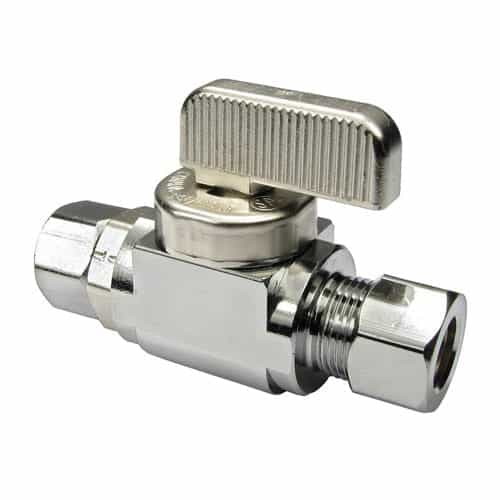
A compression valve works by turning the handle to lower a stem with a washer to stop the flow of water. The stem with washer will compress against a seat to seal off the valve. Over time the washer can wear out due to the sediments in the water and the pressure from the actual compression of the valve. A compression valve will take several turns to turn it off and on. When they are old, they can be difficult to turn off and on. The construction of the valve varies with some using a plastic stem. The plastic can break and wear out and is not desirable for the long term. If you are using the compression make sure it is made of brass.
Call Us
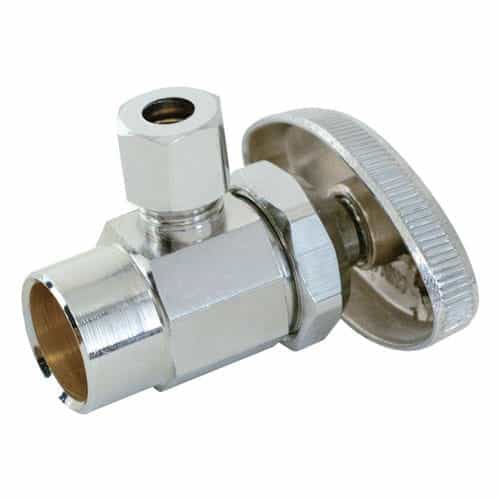
Ball valve
A ball valve is also referred to as a 1/4 turn. The valve uses a ball that has a hollowed-out tube section that when turned, will allow the water to flow through. When the lever is pointing in the direction of the pipe the water is on, when it is perpendicular to the pipe it is off. A ball valve is easy to visually inspect and know if it is on or off. The ball valve is a little more expensive than the compression but only by a little.
Our preference is the ball valve for the ease of use, visual identification of off/on, and the longevity.
10 Types of Home Heating Systems: Complete 2026 Guide
December 6, 2025
Guide to Choosing a New HVAC System For Your Home
December 4, 2025
Central Air Conditioner Replacement Cost in 2025
December 4, 2025
Electrical Basics: A Beginner's Guide to Electrical Work
December 5, 2025
AMERICAN STANDARD HVAC INCENTIVES
September 11, 2025
How to Prepare for a New Roof Installation
September 16, 2025
Charlie’s Reminders for Winterizing in Dallas and Fort Worth
September 16, 2025
Electric Vehicle Charging in Your Home – DFW
September 16, 2025
Are All Stop Valves Created Equal?
September 16, 2025
Aluminum Wiring Repair – Tyco Certified Copalum
September 18, 2025