
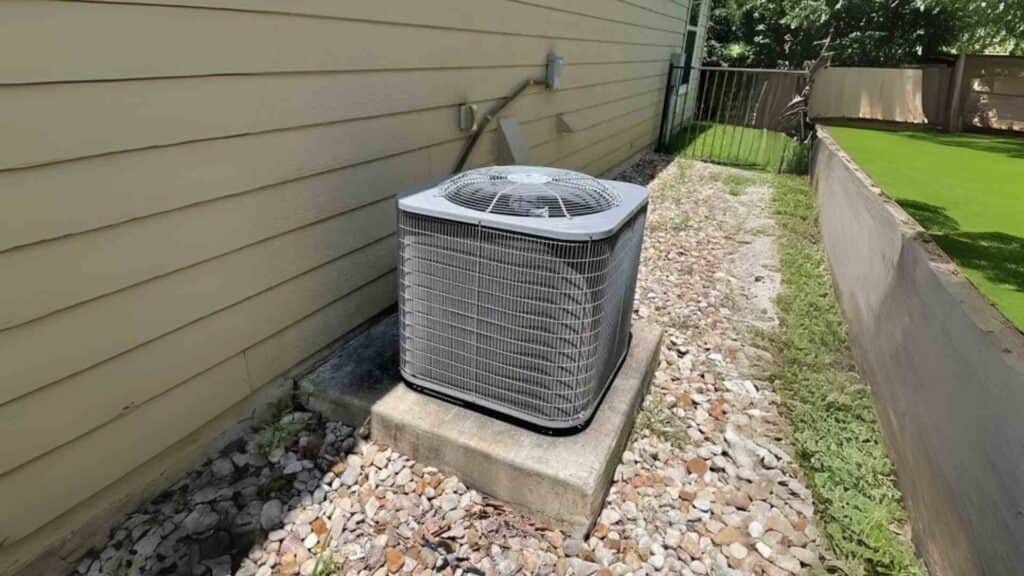
AC Tune-Up, Repair, or Replacement? How to Tell What Your System Needs
Not sure if your AC needs a tune-up, a repair, or a full replacement? Learn the key signs, costs, and age factors that help you make the right call.
September 30, 2026

"It's perfectly fine." That's what most homeowners say about their air conditioner until the day it stops cooling in July.
When an AC starts struggling, most people frame it as two choices: get a tune-up or buy a new system. The real decision has three options. A tune-up is preventive maintenance that keeps a healthy system healthy. A repair fixes a specific failed part. A replacement makes sense when the system itself is worn out. Picking the wrong one costs money either way. You might replace a system that only needed a $300 part, or keep paying for repairs on one that's done.
This guide walks through the signs for each option, what the fixes typically cost, and when to repair or replace an air conditioner. The examples come from real service calls our technicians have handled in Arlington, Texas.
[VIDEO EMBED]
Tune-Up vs. Repair vs. Replacement at a Glance
Factor | Tune-Up | Repair | Replacement |
|---|---|---|---|
What it is | Preventive maintenance on a working system | Fixing one failed or failing part | Installing a new matched system |
Typical signs | No symptoms yet, or a small efficiency drop | Not cooling, fan not spinning, clogged drain, tripped float switch, one-off noise | Age plus a major failure, R-22 leak, coil leaks, repeat breakdowns |
System age | Any age | Any age; best value under about 12 years or under warranty | Usually 12–15+ years |
Typical cost | Low, flat-rate visit | About $150 to $3,500+, depending on the part (see below) | About $6,000–$12,000 for a full system |
What it fixes | Lost efficiency, dirty coils and filters, early warning of failing parts | The specific failed part | Chronic problems, obsolete refrigerant, high energy use |
What it can't fix | A failed part, a refrigerant leak, a worn-out system | An aging system that keeps failing | Leaky or undersized ductwork, unless it's addressed during the install |
What an AC Tune-Up Includes
A tune-up is a checkup for a system that's working. It keeps efficiency up and catches worn parts before they fail. It won't fix a part that has already broken. A thorough tune-up should cover:
- Checking and replacing air filters
- Flushing condensate drain lines and testing the float switch
- Recording return and supply air temperatures to measure delta T
- Testing capacitors and measuring motor and compressor amp draws
- Inspecting the contactor for pitting or burn marks
- Tightening electrical connections
- Checking thermostat operation and calibration
- Checking refrigerant pressures, superheat and subcooling
- Rinsing the outdoor condenser coil
On a spring maintenance visit to an Arlington home with three systems, our technician replaced filters, checked delta T, flushed drains, measured amp draws and rinsed all three condensers. Everything was cooling properly, with no issues found. That's the ideal outcome: a tune-up that confirms nothing needs fixing.
What a Healthy Delta T Looks Like
Delta T is the difference between the air entering your system (return) and the air leaving your vents (supply). On healthy systems, our job notes consistently show 17–22°F. One 2023 American Standard system measured 71.6°F return and 50.5°F supply, a 21.1°F split.
A reading outside that range in either direction tells the technician where to look:
- Below about 17°F: often low refrigerant, a dirty coil or a failing compressor
- Above about 22°F: usually restricted airflow, such as a clogged filter, a dirty evaporator coil, closed vents or a blower problem
How Often to Schedule a Tune-Up
Plan on two visits a year: spring for cooling and fall for heating. In Texas, the spring visit matters most. It gets your system checked before weeks of near-100°F heat push it to full load.
Signs Your AC Needs a Repair (Not a New System)
Many "my AC is dying" calls turn out to be a single inexpensive part. These are the fixes homeowners worry about being talked out of, and they're often the right call.
The Outdoor Fan Isn't Spinning or the AC Blows Warm Air
The most common culprit is a failed capacitor, the part that gives motors a jolt to start. On one Arlington call, the homeowner said the AC was blowing hot air. The indoor unit was running, but the outdoor fan wasn't spinning. Our technician found a bad capacitor and hard-start kit, replaced them with a Turbo XL capacitor for $395, and the system came back with a 21°F delta T. On another call, a weak run capacitor was keeping the condenser from running. A new capacitor fixed it.
A burned or pitted contactor, the switch that turns the outdoor unit on, causes similar symptoms and is also a modest repair.
Water Leaking Around the Indoor Unit
Leaks usually come from a clogged condensate drain. When the drain backs up, the float switch shuts the system off to prevent water damage. On one call, clearing the drain and resetting the switch got the system cooling again with a 20°F delta T.
A dirty filter can also cause leaks. Restricted airflow lets the indoor coil get cold enough to freeze. When the ice melts, more water hits the drain pan than it can handle, and it overflows. At one Arlington home, water had leaked from under the unit, but the drain and float switch both checked out. The cause was a dirty filter, and replacing it was the fix.
New Noises
Not every noise is a failing compressor. One homeowner's noise came from a bent, dirty filter, and a new filter made it go away. Another came from a fan blade rubbing against plastic. Realigning and securing it solved the problem.
A Small, Accessible Refrigerant Leak
A leak on an accessible fitting or a short section of line can often be repaired. On one install, we replaced about 10 feet of exposed copper line in an attic because of a hairline leak. Leaks inside a coil are a different story, covered below.
Typical AC Repair Costs
These approximate ranges help you judge whether a repair is worth it. Your actual price depends on the part, the system and the brand.
Repair | Typical cost range |
|---|---|
Capacitor or hard-start kit | $150–$450 |
Contactor | $150–$400 |
Condensate drain clearing | $100–$300 |
Condenser fan motor | $350–$800 |
Blower motor (ECM motors cost more) | $450–$1,800 |
Accessible refrigerant leak repair plus recharge | $300–$1,500 |
Evaporator coil replacement | $1,500–$3,000 |
Compressor replacement, out of warranty | $1,800–$3,500+ |
Symptoms That Need a Diagnosis Before Any Decision
Some symptoms can point to either a cheap repair or a major failure. Don't let anyone recommend a new system based on these alone.
- Short-cycling (turning on and off every few minutes). Common causes include an oversized system, low refrigerant, a thermostat problem, a clogged filter or a tripping pressure switch. A failing compressor is only one possibility. On one Arlington call, a system had locked out on low pressure. The fix was a replacement low-pressure switch.
- A humming outdoor unit that won't start. This is often a bad capacitor or hard-start kit, not a dead compressor.
- A tripping breaker. A shorted compressor can cause it, but so can a bad contactor, damaged wiring or a worn breaker. On one call, the AC's main breaker itself kept tripping and needed replacing.
- A sudden jump in your electric bill. This can mean a refrigerant leak or a struggling compressor. It can also mean a dirty coil or a failed fan motor.
The only way to know is to test. When our technician found a shorted compressor on one Arlington system, he confirmed it by unplugging only the compressor. With the compressor disconnected, the breaker stopped tripping. That kind of test is what separates a diagnosis from a guess.
Signs Replacement Makes More Sense Than Repair
Your System Is 12+ Years Old and Needs a Major Repair
Most central air conditioners in Texas last about 10–15 years. Age alone isn't a reason to replace a system that's running well. But once a system is past about 12 years, a major repair like a compressor, a coil or a blower motor usually isn't worth it. You'd be putting new parts into a system near the end of its life.
The same logic applies to heating. On one Arlington call, we replaced an inducer motor on a 2007 furnace and then found a faulty control board. We told the homeowner that a furnace that age would ideally be replaced, but to watch it and call if it kept tripping. Repair was still a reasonable choice, and the decision stayed with them.
It Uses R-22 Refrigerant and Has a Leak
Systems installed before about 2010 often use R-22, sometimes called Freon. U.S. production and import of R-22 ended January 1, 2020. What's left is recycled or reclaimed supply, so recharge prices are likely to remain high and unpredictable.
An R-22 system that's holding its charge can keep running. One that's leaking is a strong case for R22 AC replacement. We recently found an Arlington system low on R-22 and recommended replacement because of its age, condition and obsolete refrigerant. Another was completely flat on refrigerant, and we gave the same advice.
The Compressor Has Failed and It's Out of Warranty
A diagnosed compressor failure is where a tune-up can't help. Put simply, a tune-up will not fix a dying compressor. The question is whether to replace the compressor or the whole system.
Warranty coverage often decides it. Many manufacturers offer a 10-year limited parts warranty on registered equipment. On a 5-year-old system, a covered compressor means you pay mainly for labor and refrigerant, and repair is often the right call. We've done exactly that, replacing a compressor, cleaning the condenser coil and recharging with R-410A, bringing the system back to a 21°F delta T. On a 13-year-old system out of warranty, a $2,000–$3,500 compressor usually makes replacement the better value.
The Evaporator or Condenser Coil Is Leaking
Coil leaks are one of the most common repair-vs-replace triggers. After leak searches on several Arlington systems found multiple leaks around the condenser coil, we recommended replacement. Evaporator coil leaks, inside the indoor unit, are just as serious. A new coil can run $1,500–$3,000, and on an older system that money often goes further toward a new one.
You're Calling for Repairs More Than Once a Year
One repair a year is normal wear. Two or more major repairs in a year is a pattern. At one home, a broken blower motor belly band plus a damaged blower wheel, on a system already in poor condition, led us to recommend replacement.
Use the $5,000 Rule
Multiply the system's age by the repair cost. If the result is over $5,000, replacement is usually worth considering.
- A 6-year-old system needing a $395 capacitor: 6 × $395 = $2,370. Repair.
- A 13-year-old system needing a $2,000 evaporator coil: 13 × $2,000 = $26,000. Consider replacing.
It's a rule of thumb, not a verdict. Warranty coverage, refrigerant type and how long you'll stay in the home all matter too.
Other Factors in the Repair-or-Replace Decision
How long you'll stay in the home. If you're moving within a year or two, a reasonable repair usually makes more sense than a new system you won't benefit from. If you plan to stay 5–10 years, a new system's efficiency and warranty have time to pay off.
Whether a heat pump fits your home. If your furnace is also aging, replacement is a good time to compare a heat pump. It handles both cooling and heating with electricity, and it works well in the North Texas climate.
Ductwork condition. A new system can't perform well through leaky, crushed or undersized ducts. Ask for a duct inspection as part of any replacement quote. Sometimes adding or resizing a run fixes a room that has never cooled well. On one Arlington install, we added a new 10-inch fully insulated supply run to a room that needed more airflow.
Why You Usually Can't Replace Only the Outdoor Unit
On an older system, it's tempting to replace just the failed outdoor condenser. With R-22 systems, that's rarely an option. New condensers use R-454B, and an R-22 indoor coil isn't built for it. The two refrigerants use different oils and run at different pressures, and R-454B equipment must be matched with components rated for it. A mismatched system can lose efficiency, void the manufacturer's warranty and fail early. In most cases, the indoor coil and outdoor unit need to be replaced together as a matched system.
What AC Replacement Costs and How to Offset It
A full central AC system replacement typically runs about $6,000–$12,000. The price depends on system size, efficiency, whether you replace the furnace or air handler too, and any ductwork changes. Getting replacement quotes? [Here's how to compare them]([HVAC QUOTES POST LINK]).
Energy Savings With SEER2 Systems
SEER2 is the efficiency rating used since 2023. It comes from a tougher test than the old SEER rating, so the numbers aren't directly comparable. A 16 SEER2 system is roughly equal to about 17 on the old SEER scale.
As a rough estimate, replacing an old 10 SEER system with a 16 SEER2 system can cut the electricity used for cooling by about 40%. Replacing a 13 SEER system saves closer to 20–25%. Your actual savings depend on your usage, your home and your electric rate. Many of our recent Arlington installs are 16 SEER2 Trane and Carrier systems.
Newer Refrigerant
Our recent Trane and Carrier installs use R-454B, a newer refrigerant with a much lower global warming potential than R-410A. You won't face the supply problems R-22 owners deal with today.
Utility Incentives
Team Enoch partners with Oncor on an incentive for complete HVAC replacements with qualifying high-efficiency equipment. Incentive amounts and equipment requirements change from year to year, so your technician will confirm what's currently available for your home before you commit.
Financing
If paying all at once isn't practical, [see our financing options]([FINANCING PAGE LINK]).
Not Sure What Your AC Needs? Start With a Diagnostic
A proper diagnosis is the cheapest way to avoid the wrong decision. Team Enoch's HVAC diagnostic is $125, the same price as a tune-up. A technician inspects the indoor and outdoor units, tests capacitors, contactors, motors, the thermostat and power, measures delta T and refrigerant pressures, and searches for leaks when the readings call for it. You'll get a plain-language explanation and a recommendation to maintain, repair or replace, along with the reasons behind it.
Our technicians are Team Enoch employees, not subcontractors, and you pay after the work is done. We've served homeowners across Dallas–Fort Worth since 2015.
Get an online estimate for a new system.
Frequently Asked Questions
Should I repair or replace my air conditioner?
Repair is usually the better choice when the system is under about 12 years old, uses R-410A or R-454B, or the failed part is under warranty. Replacement usually makes more sense when an older system needs a major repair, uses R-22 and is leaking, or keeps breaking down. The $5,000 rule (age × repair cost) is a useful starting point.
How long does an AC unit last in Texas?
Most central air conditioners in Texas last about 10–15 years. Long, hot summers make them run harder than systems in milder climates. Regular tune-ups help a system reach the upper end of that range.
Can a tune-up fix a noisy compressor?
No. A tune-up can catch noises from a bent filter, a loose panel or a fan blade rubbing plastic. A humming or struggling compressor needs a diagnosis. The cause is often a bad capacitor or hard-start kit, which is a repair, and sometimes a failing compressor.
Is it worth repairing an AC that uses R-22?
If it's leaking, usually not. U.S. production and import of R-22 ended January 1, 2020, so recharges are expensive and supply is limited. An R-22 system that holds its charge can keep running, but plan for replacement.
How much does it cost to replace an AC?
A full central AC system replacement typically costs about $6,000–$12,000. The price depends on system size, efficiency, whether the furnace or air handler is replaced too, and ductwork changes.
How do I know if my AC is short-cycling?
Short-cycling means the AC turns on and off every few minutes without finishing a full cooling cycle. Signs include frequent starts and stops, uneven room temperatures and higher bills. Causes include an oversized system, low refrigerant, a thermostat problem, a clogged filter, a tripping pressure switch or a failing compressor. A diagnostic is needed to find which one.
What happens during an HVAC diagnostic?
A technician inspects the indoor and outdoor units, tests capacitors, contactors, motors, the thermostat and power, measures delta T and refrigerant pressures, and searches for leaks if needed. They then explain the problem and recommend maintenance, a repair or a replacement.
The Bottom Line
A tune-up keeps a healthy system healthy. A repair fixes a specific failed part, and capacitors, contactors, drains and fan motors are usually worth fixing. Replacement makes sense when an older system needs a major repair, uses leaking R-22, has coil leaks or keeps breaking down. When a symptom could go either way, get it tested before you decide.
Questions about your system? Call 817-769-3712 or book a diagnostic online.
FAQ Videos

Is your home ready to face the chill? Trey from Team Enoch is here to guide you through the must-do winter prep for your plumbing.
Read More
Good, better, best. Goodman vs. Carrier vs. Traine. And, what is a variable speed system?
Read More
It doesn't need a tune up! Does your system need a tune up or full replacement?
Read More
Do you know what's supposed to be in an AC quote? Most people don't, and that's how they get charged for things later.
Read More
Here's the $5,000 rule we use for every call.
Read More
AC For $8,180. That's everything. Here's exactly what's in a real AC install quote no hidden fees.
Read More
How much does AC replacement actually cost in DFW? Don't have time? Get your estimate online!
Read More