
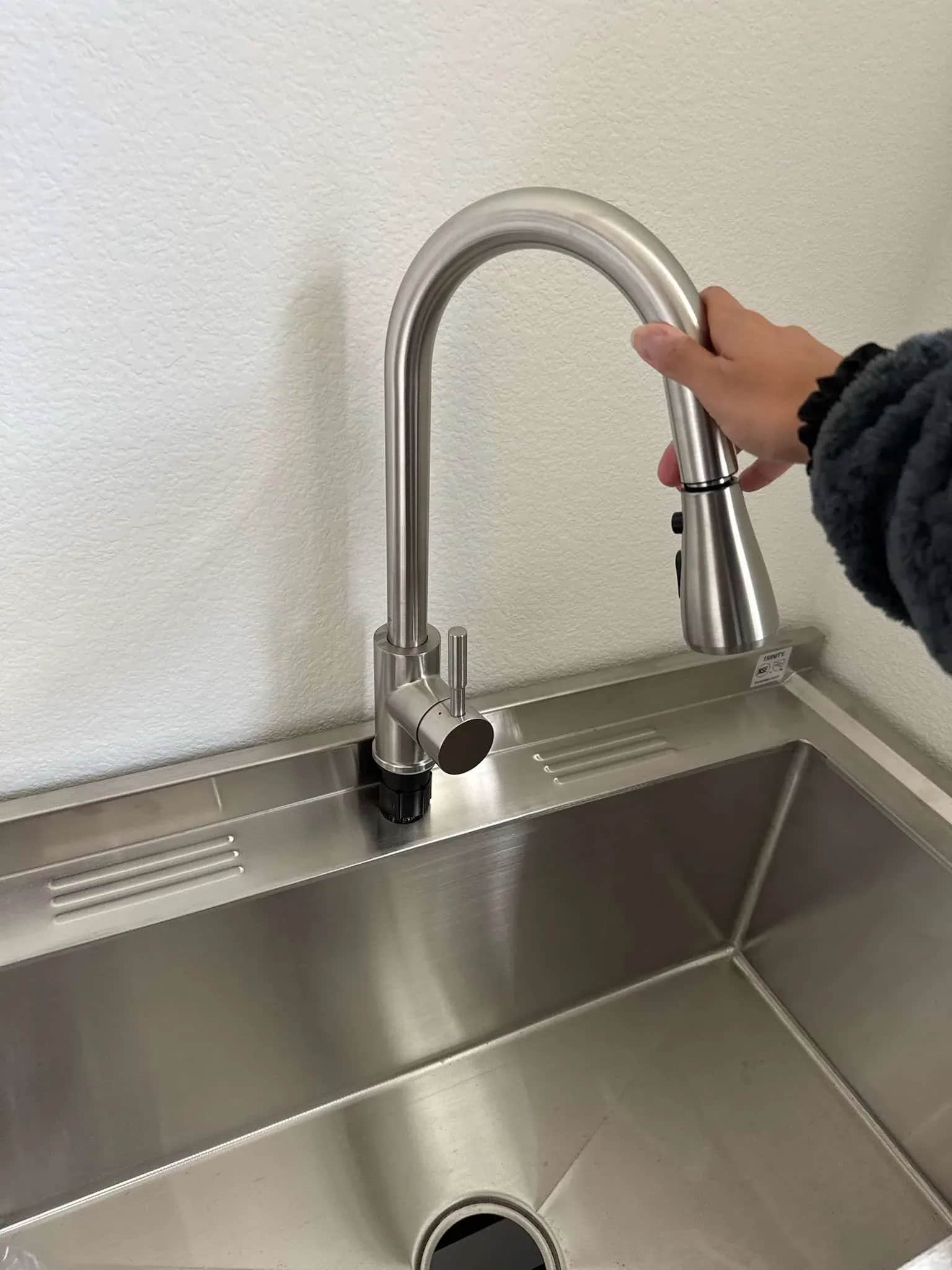
How to Winterize Your Outdoor Faucet in 5 Steps
Learn how to winterize your outdoor faucet in 10 minutes. Disconnect the hose, shut off the valve, drain and cover it to prevent burst pipes this winter.
September 28, 2026

Introduction
Learning how to winterize an outdoor faucet takes about 10 minutes, and it can save you from a burst pipe and a flooded wall. The most common mistake Texas homeowners make is simple: they leave the garden hose connected. When the first hard freeze hits, the water trapped in that hose has nowhere to go, and your faucet and the pipe behind it take the damage.
In this guide, the plumbers at Team Enoch walk you through exactly how to prepare your faucet for winter in five steps. You'll also learn what to do on hard-freeze nights, whether frost-free hose bibs need attention, and what to do if your outdoor faucet is already frozen.
Why Outdoor Faucets Freeze (and Why Texas Homes Are at Risk)
Water expands by roughly 9% when it freezes. Inside a faucet or pipe, that expansion builds pressure until something gives, usually a crack in the pipe just behind the wall. You often won't see the damage until the ice thaws and water starts leaking.
Texas homes face a few extra risks that homeowners in colder states don't:
- Exposed hose bibs. Many Texas homes have outdoor faucets mounted directly on exterior walls with little insulation behind them.
- Pipes in attics and exterior walls. Most DFW and Austin homes are built on slabs with no crawlspace, so plumbing often runs through attics and outer walls, the coldest parts of the house.
- Mild winters create false confidence. Because hard freezes are rare, many homes were never built for them, and many homeowners skip winter prep altogether.
Winter Storm Uri in February 2021 showed how costly that can be. Thousands of Texas homes dealt with burst pipes in a single week. A few minutes of prep each fall is the easiest way to protect your home before the next one.
Step 1: Disconnect Your Garden Hose (The Most Common Mistake)
If you only do one thing before winter, disconnect your garden hose. A connected hose traps water inside the faucet. When that water freezes, it can crack the spigot or the pipe inside your wall, even on a frost-free hose bib.
Here's how to do it:
- Unscrew the hose from the outdoor faucet.
- Stretch the hose out on a slight slope and let the water drain completely.
- Coil it loosely and store it in a garage or shed so it lasts for next spring.
- Remove any splitters, timers or quick-connect fittings from the spigot too.
This step takes two minutes and prevents most of the frozen-faucet calls we get after a Texas freeze.
Step 2: Shut Off the Indoor Valve to the Hose Bib
Many homes have a dedicated shut-off valve for each outdoor faucet. Closing it stops water from reaching the exposed section of pipe.
Where to look for the outdoor faucet shut-off inside your house:
- In the garage, on the wall behind the outdoor faucet
- Under a nearby sink, in a utility room or laundry room
- In a basement or crawlspace (less common in Texas slab homes)
Turn the valve handle clockwise until it stops. If you can't find a separate valve, your hose bib may be a frost-free model or may only be controlled by the main water shut-off. That's a good time to call a plumber and ask about adding one.
Step 3: Drain the Spigot and Leave It Open
Once the indoor valve is closed, go back outside and open the outdoor faucet all the way. Let any remaining water run out. If your shut-off valve has a small bleeder cap, open it too so air can enter and the line drains fully.
Leave the outdoor faucet open for the winter. An open spigot gives any leftover water room to expand without cracking the pipe. Just remember to close it again before you turn the indoor valve back on in spring.
Step 4: Insulate with an Outdoor Faucet Cover
An outdoor faucet cover adds a layer of insulation that holds in heat from your home's wall. Covers are inexpensive and sold at most Texas hardware stores.
Common options:
- Hard foam (styrofoam) dome covers. A cheap, reusable cover that loops over the faucet and seals against the wall.
- Soft insulated pouch covers. Easier to fit around oddly shaped spigots.
- DIY faucet cover. In a pinch, wrap the faucet in old towels, then cover with a plastic bag and secure it with duct tape.
Put covers on before the temperature drops below freezing, and make sure the seal sits flat against the wall. A cover only helps after you've disconnected the hose; it can't protect a faucet with water trapped behind it.
Step 5: Protect Indoor Pipes on Hard-Freeze Nights
Winterizing your outdoor faucet is the first line of defense. When a hard freeze is in the forecast for DFW or Austin, take a few extra steps inside to keep pipes from freezing:
- Let faucets drip. A slow drip from faucets on exterior walls relieves pressure and keeps water moving. Drip both hot and cold lines.
- Open cabinet doors under kitchen and bathroom sinks so warm air reaches the pipes.
- Keep the thermostat steady day and night, even if you're traveling.
- Close the garage door if water lines run through the garage.
- Know where your main water shut-off is, so you can act fast if a pipe bursts.
For a deeper dive, see our guide on how to keep pipes from freezing in Texas. [Link to follow-up post when published.]
Do Frost-Free Hose Bibs Need Winterizing?
Yes, but less of it. A frost-free hose bib has a long stem that shuts off water inside the warm part of your wall, and it drains itself when you close it. That design only works if the water can drain out. Leave a hose connected, and the water stays trapped in the stem, where it can freeze and split the pipe inside the wall.
For a frost-free spigot, disconnect the hose, check that it's angled slightly downward so it drains, and add a cover on hard-freeze nights.
If your home still has standard outdoor faucets, upgrading to frost-free hose bibs is one of the most effective freeze-protection projects for a Texas home. Our team can install them as part of our Texas plumbing repair services.
What to Do If Your Outdoor Faucet Is Already Frozen
If you turn on the faucet and nothing comes out, or only a trickle, the line may be frozen. Act quickly and carefully:
- Disconnect the hose if it's still attached.
- Shut off the indoor valve to that faucet so a crack won't flood your wall once the ice melts.
- Leave the outdoor faucet open so melting water and pressure can escape.
- Warm it gently with a hair dryer, a heating pad or warm towels. Never use an open flame or a propane torch.
- Watch for signs of a burst pipe as it thaws: water spraying or dripping, damp drywall, water stains, a spike in your water bill, or the sound of running water when everything is off.
If you see water inside your home, shut off your main water supply and call a plumber right away.
Frozen or burst pipe? Team Enoch offers emergency plumbing across Texas. DFW: (817) 888-8880 · Austin: (512) 882-8880
Frequently Asked Questions
Do I need to disconnect my garden hose in winter?
Yes. A connected garden hose traps water inside the faucet, and when that water freezes it can crack the spigot or the pipe behind your wall. Disconnect the hose before the first freeze, drain it, and store it indoors. This applies to standard and frost-free hose bibs alike.
Can a garden hose connected to a faucet cause a pipe to burst?
It can. Water in the hose freezes and expands back toward the faucet. That pressure has nowhere to go, so it pushes into the spigot and the pipe inside your wall. The crack often stays hidden until the ice thaws, when water starts leaking into the wall or foundation.
At what temperature should I cover my outdoor faucets?
Cover your outdoor faucets whenever the forecast calls for 32°F or below. Texas cold fronts can drop temperatures quickly overnight, so many homeowners put covers on in late fall and leave them on all winter. Always disconnect the hose first, since a cover can't protect a faucet with trapped water.
At what temperature do pipes freeze?
Water freezes at 32°F, but pipes in unheated areas are at the highest risk once outside temperatures fall to about 20°F or below for several hours. Exposed hose bibs, attic lines and pipes in exterior walls, common in Texas homes, can freeze sooner, especially with wind chill.
Do outdoor faucet covers actually work?
Yes, when used correctly. A cover traps warmth coming from your home's wall and shields the faucet from wind. It works best on a drained faucet with the hose removed and the seal flat against the wall. In a long, deep freeze like Winter Storm Uri, pair covers with the shut-off and drain steps.
How do I shut off water to my outdoor faucet?
Look for a small valve inside your home on the wall behind the outdoor faucet, often in the garage, a utility room or under a nearby sink. Turn it clockwise until it stops, then open the outdoor faucet to drain it. If you can't find a valve, a plumber can locate or install one.
Should I leave my outdoor faucet open or closed in winter?
After you close the indoor shut-off valve, leave the outdoor faucet open. An open spigot lets any leftover water drain and gives it room to expand if it freezes. If there's no indoor valve, keep the faucet closed, disconnect the hose and use a cover instead.
Do frost-free spigots need to be winterized?
They need less work, but yes. Frost-free spigots shut water off inside the warm wall and drain themselves, but only if the hose is removed. A connected hose traps water in the long stem, where it can freeze and burst the pipe inside your wall. Disconnect the hose and add a cover.
Should I drip my faucets when it freezes, and which ones?
Yes, on hard-freeze nights. Let a slow drip run from indoor faucets on exterior walls, especially sinks with pipes in outside walls or attics. Drip both hot and cold lines. Moving water is harder to freeze, and a drip relieves pressure if ice starts to form. Don't drip outdoor faucets you've winterized.
What do I do if my outdoor faucet is frozen?
Disconnect the hose, close the indoor shut-off valve and leave the outdoor faucet open. Warm it gently with a hair dryer, heating pad or warm towels, never an open flame. Watch for leaks as it thaws. If you see water inside your home, shut off the main supply and call a plumber.
How do I know if a pipe burst inside the wall?
Common signs include damp or bulging drywall, water stains, peeling paint, a musty smell, the sound of running water when nothing is on, low water pressure or a sudden jump in your water bill. If you notice any of these after a freeze, shut off your main water and call a plumber.
When should I winterize my plumbing in Texas?
Winterize before the first freeze of the season. In most of Texas, that means doing it in late October or early November, before cold fronts start reaching DFW and Central Texas. When a hard freeze is forecast, repeat your checklist: covers on, faucets dripping, cabinet doors open and thermostat steady.
Need Help? Call Team Enoch
Winterizing your outdoor faucet is a quick DIY job, but some problems need a pro: a missing shut-off valve, an old spigot that won't stop dripping, or a pipe that's already frozen or burst. Team Enoch's licensed plumbers serve homeowners across Arlington, Fort Worth, Dallas and Austin.
We can install frost-free hose bibs, add indoor shut-off valves, insulate exposed pipes and handle emergency freeze repairs. Want peace of mind every winter? Ask about our annual plumbing inspection with a Team Enoch membership.
Call Team Enoch today DFW: (817) 888-8880 · Austin: (512) 882-8880
Don't wait for the first hard freeze. Disconnect your hose, shut off the valve and cover your faucet this weekend, and call us if anything looks wrong.
FAQ Videos
Is your home ready to face the chill? Trey from Team Enoch is here to guide you through the must-do winter prep for your plumbing.
Read More
Good, better, best. Goodman vs. Carrier vs. Traine. And, what is a variable speed system?
Read More
It doesn't need a tune up! Does your system need a tune up or full replacement?
Read More
Do you know what's supposed to be in an AC quote? Most people don't, and that's how they get charged for things later.
Read More
Here's the $5,000 rule we use for every call.
Read More
AC For $8,180. That's everything. Here's exactly what's in a real AC install quote no hidden fees.
Read More
How much does AC replacement actually cost in DFW? Don't have time? Get your estimate online!
Read More
Do you know what's in your AC quote?
Read More