5 Signs Your AC Installation Was Done Right (or Very Wrong)
Not sure if your new AC was installed correctly? Learn the 5 key signs of a quality installation — from proper sizing to refrigerant charge — before it costs you.
Team Enoch
March 14, 2026
Most homeowners breathe a sigh of relief the moment a brand-new AC system kicks on and cool air starts flowing. The hard part's over, right? Not quite.
The truth is, a new air conditioner installation is only as good as the people who installed it. A rushed job, an undersized unit, or a few overlooked details during setup can quietly cost you hundreds, sometimes thousands, of dollars over the years ahead. Worse, many of these problems don't make themselves known until the Texas summer is already hammering your home and your system is struggling to keep up.
Here's the uncomfortable reality, not all AC installations are created equal. Some are done with precision, care, and the kind of attention to detail that makes a system last 15+ years. Others are cobbled together quickly, leaving you with a unit that runs constantly, breaks down prematurely, or never actually keeps your home comfortable.
So how do you know which one you got? Here are five signs to look for, both good and bad.
When you hire someone to install a new AC, you're trusting them with one of the most significant mechanical investments in your home. A quality central AC system costs anywhere from $4,000 to $12,000+ depending on size and efficiency. That's not a small check to write.
But unlike a bad haircut or a poorly painted wall, a bad AC installation isn't always obvious on day one. Sometimes the problems are buried in the details, the size of the unit, the quality of the refrigerant charge, whether the ductwork was sealed properly. These things don't announce themselves. They whisper, slowly, through high energy bills, uneven temperatures, and a system that just never seems to work as well as it should.
The goal of this guide is to give you the knowledge to evaluate your own installation, whether it just happened or happened a few years ago, so you're not left guessing.
Before a single screw is turned on a new AC installation, a proper technician should perform what's called a Manual J Load Calculation, an engineering assessment that accounts for your home's square footage, ceiling height, insulation levels, window placement, local climate data, and more.
When this is done correctly, your system cycles on, runs for a reasonable stretch (typically 15–20 minutes), reaches the set temperature, and shuts off. Your home cools evenly, rooms don't feel drastically different from one another, and your energy bills align with what the manufacturer advertises.
One of the most common shortcuts in the HVAC industry is simply replacing an old 3-ton unit with a new 3-ton unit, no questions asked. The problem is your old system may have been the wrong size to begin with, or your home may have changed (added insulation, new windows, an addition).
Oversized units are actually a bigger problem than most people realize. An AC that's too large for your home will short-cycle, it kicks on, blasts cold air, hits the thermostat target quickly, and shuts off before it's had a chance to properly dehumidify the air. The result? Your house feels cold but clammy. Humidity stays high. The system cycles on and off constantly, wearing out the compressor faster and driving up your electricity bill.
Undersized units have the opposite problem, they run nonstop trying to reach a temperature they physically can't hit on a 105°F Texas afternoon.
What to watch for after installation:
Refrigerant is the lifeblood of your air conditioning system. It's the substance that absorbs heat from inside your home and releases it outside. The right amount matters, not too much, not too little.
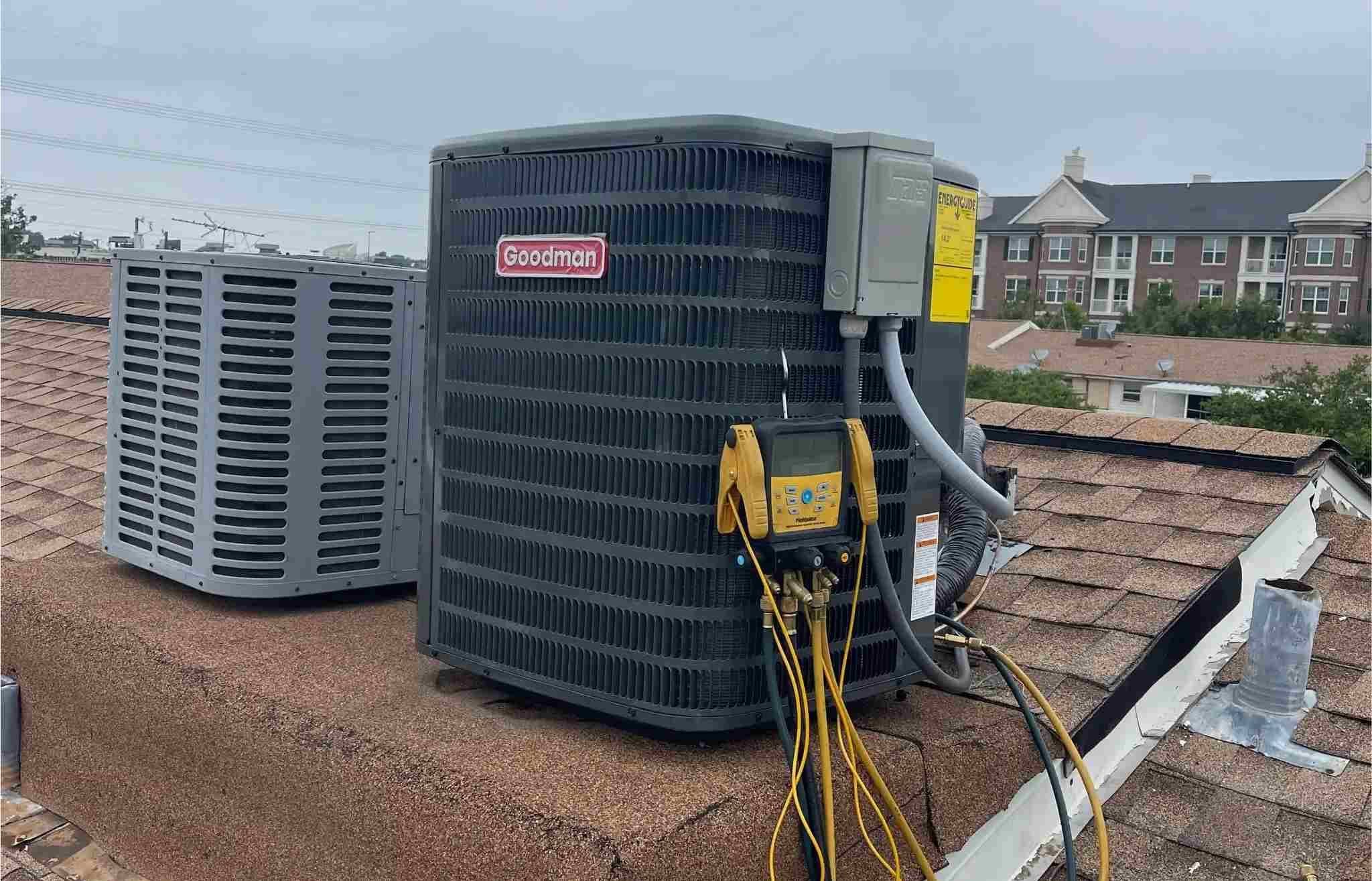
A properly done installation includes verifying the refrigerant charge using actual pressure measurements (and often a process called superheat and subcooling testing) to confirm the system is operating at the exact specification the manufacturer requires. The technician should be able to show you the readings and tell you the delta T, the temperature difference between air entering and leaving your system, which should typically fall between 16°F and 22°F for a properly running unit.
Some installers, particularly those cutting corners on time, skip the verification step. They charge the system based on experience or intuition, or they simply don't check at all, assuming the factory charge in the equipment is sufficient. (It often isn't, because refrigerant can shift during transportation and installation.)
An improperly charged system doesn't just run less efficiently, it can actively damage itself over time. Low refrigerant causes the evaporator coil to freeze over. High refrigerant causes liquid slugging in the compressor, which can destroy it. Either way, you're looking at expensive repairs down the road for a problem that should have been caught on day one.
What to watch for:
Installing a new air conditioner on old, leaky ductwork is like pouring fresh water into a bucket with holes in it. A quality installation includes a ductwork inspection, and when leaks are found, proper sealing with mastic sealant or metal tape (not the cloth "duct tape" you'd find at a hardware store, which degrades quickly).
In an attic installation especially, which is common in Texas homes, the duct connections, plenums, and returns should be verified for both airflow and airtightness. A technician who cares about the outcome of their work won't just hook up the new equipment and leave without making sure the air it produces actually gets where it's supposed to go.
It's estimated that the average home loses 20–30% of conditioned air through leaky ductwork. That means if your system is producing $200 worth of cooling in a given month, up to $60 of that is bleeding into your attic, not your living room.
An installer who doesn't address this is leaving a major performance gap that you'll pay for every month. And when the new system underperforms, it's easy to blame the equipment rather than the installation.
What to watch for:
A complete AC installation involves more than just the mechanical unit. The electrical disconnect, the breaker size, the wiring gauge, the thermostat wiring, the condensate drain line, all of these are part of the system, and all of them need to be installed correctly.
The condensate drain line in particular is something many homeowners don't think about until water is dripping from their ceiling. A properly installed drain line runs at the right slope, is clear of obstructions, and has a functioning float switch, a safety device that shuts the system off if the drain backs up before water overflows into your home. A good installer tests the drain before they leave.
On the electrical side, the disconnect switch should be properly rated, the breaker should match the unit's requirements, and any exposed wiring, especially in an attic, should be properly secured and protected.
Electrical shortcuts are dangerous and illegal. Using an undersized breaker, the wrong wire gauge, or skipping the disconnect entirely are code violations that can cause fires or void your equipment warranty. Similarly, a drain line installed without adequate slope, without a secondary drain, or without a float switch is an accident waiting to happen, especially in a humid Texas summer when your system is producing gallons of condensate every day.
What to watch for:
A professional installation ends with more than a handshake and an invoice. It ends with documentation, the model and serial numbers of the equipment installed, the manufacturer warranty details, any utility rebate applications that were filed on your behalf, and a walkthrough of how to operate your new thermostat, when to change filters, and what to watch for.
The best HVAC companies also register your equipment warranty with the manufacturer on your behalf, because many manufacturers require registration within a specific window to activate the full warranty term. Skip that, and you might think you have a 10-year parts warranty when you actually only have 5.
If the crew finished up, handed you a receipt, and left without explaining anything, that's a yellow flag. If you can't find documentation of the equipment that was installed, don't have the model and serial numbers, and aren't sure whether your warranty was registered, that's a red flag.
This matters because when something goes wrong two years down the road (and with a poor installation, something often does), you'll need that documentation to make a warranty claim. Without it, you're paying out of pocket for a repair that should have been covered.
What to ask before the crew leaves:
To bring it all together, a properly done AC installation is a process, not just a product swap. It starts before any equipment arrives (load calculation), includes careful handling of refrigerant and electrical work during installation, involves testing and verification before the crew leaves, and ends with the homeowner feeling informed and confident about what they now have.
It's also worth noting that the quality of the installation matters as much as the quality of the equipment. A mediocre installer putting in a premium unit will often underperform compared to a skilled installer working with mid-tier equipment. The craftsmanship is what makes the difference.
At Team Enoch, our technicians are regularly called out to diagnose systems that aren't performing the way they should, systems that, in many cases, were installed by someone else and left with problems baked in from day one. We've found units running on refrigerants they're not designed for, drain pans that were never properly leveled, ductwork connections that were never sealed, and thermostats wired incorrectly from the start.
We share this not to criticize competitors, but because we think homeowners deserve to know what to look for. An informed customer is one who gets better service, and one who holds their contractors accountable.
If your system is running and you're unsure whether it was installed correctly, a professional diagnostic visit is worth it for a year round smooth functioning of you system. The cost of catching a problem early is almost always far less than the cost of a compressor replacement, water damage, or a decade of elevated electricity bills.
A new AC is a significant investment. Don't let it be undermined by a rushed or careless installation. The five signs above, proper sizing, correct refrigerant charge, sealed ductwork, proper electrical and drainage setup, and thorough documentation, are your checklist for knowing whether the job was done right.
If something on that list raises a concern about your existing system, don't wait. The earlier a problem is caught, the easier and less expensive it is to fix.