
How to Clean a Gas Furnace: A Step-by-Step DIY Guide
How to Clean a Gas Furnace: A Step-by-Step DIY Guide
July 30, 2026

A dirty gas furnace works harder, costs more to run, and is likelier to fail on the coldest night of the year. Most of a routine gas furnace cleaning is DIY-friendly, though. The filter, burners, flame sensor, blower, and igniter can all be handled in an afternoon with common tools. This guide covers how to clean a gas furnace step by step, plus the safety steps that come first. Because a furnace involves gas, electricity, and carbon monoxide, read the safety section before you start, and stop and call a licensed HVAC technician the moment something looks wrong.
Safety First: Shut Off Power and Gas
Do these three things before you open the furnace. None of them are optional.
- Cut the electrical power. Most furnaces have a dedicated on/off switch mounted on or next to the unit that looks like a regular light switch. Flip it off. If you can't find it, switch off the furnace's breaker in your electrical panel.
- Shut off the gas. Find the manual gas valve on the supply pipe running to the furnace. When the handle is in line with the pipe, gas is on; give it a quarter turn so the handle sits crosswise to shut it off.
- Let everything cool. If the furnace has been running, wait until the burners and metal parts are cool to the touch.
Also confirm you have a working carbon monoxide detector and replace the battery if needed. If you ever smell gas (a rotten-egg odor) or your CO alarm sounds, don't investigate. Leave the house and call your gas utility or 911 from outside.
Tools and Materials You'll Need
- Nut driver or screwdriver set (a 1/4-inch hex driver fits most furnace panel screws)
- Shop vacuum with a soft brush attachment
- Soft brush or clean paintbrush
- Microfiber cloths
- Fine emery cloth, fine steel wool, or a Scotch-Brite pad (for the flame sensor only)
- A new furnace filter in the correct size (check the size printed on the old one)
- Flashlight
- Compressed air (optional, for burners and dust)
- Your furnace's owner's manual
Tip: drop every screw you remove into a cup so nothing gets lost, and take a phone photo of any wiring before you disconnect it.
How Often Should You Clean a Gas Furnace?
Clean or inspect your gas furnace at least once a year, ideally in fall before heating season starts. Check the air filter every month and replace it every one to three months. Homes with pets, heavy dust, or allergy concerns should change filters more often and book a professional tune-up annually.
Skipping this catches up with you: a neglected furnace loses efficiency, short cycles, strains its parts, and is far more likely to quit mid-winter.
How to Clean a Gas Furnace: Step by Step
This is the full job at a glance. The component sections below go deeper on the parts that matter most.
- Shut off power and gas (see the safety section above).
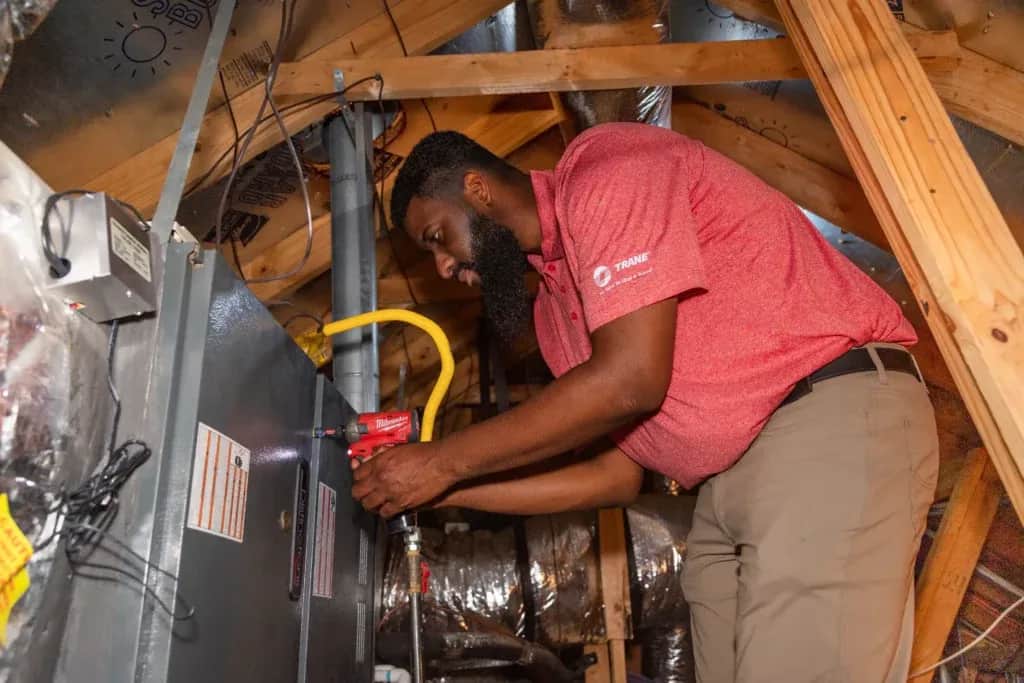
- Open the furnace. Remove the front access panels, usually two, one over the blower compartment and one over the burners. They typically lift off or come free with a couple of screws.
- Replace the air filter. Slide out the old filter, note the airflow arrow printed on its frame, and slide the new one in pointing the same direction.
- Vacuum the interior. Using the soft brush attachment, clear dust from the base of the cabinet, around the burners, and the blower area.
- Clean the burners (details below).
- Clean the flame sensor (details below). This is the highest-payoff step in the whole job.
- Clean the blower assembly (details below).
- Inspect the igniter or pilot (details below). Dust it gently; never scrub it.
- Check the drain line. On high-efficiency (condensing) furnaces, flush the condensate trap and line with a 1:1 vinegar-and-water mix to clear algae and sludge.
- Inspect the heat exchanger and flames. Look for cracks or heavy rust on the heat exchanger. Once the furnace is running again, the burner flames should be steady and blue. Anything else means it's time to call a pro.
- Reassemble. Put the access panels back on.
- Restore gas, then power. Turn the gas valve back on, then switch the power on. Relight the pilot only if you have an older standing-pilot furnace, following the instructions on the unit's label.
- Test it. Set the thermostat to heat and watch a full cycle. The furnace should ignite smoothly and blow warm air within a minute or two.
How to Clean the Flame Sensor
The flame sensor is the single most common reason a gas furnace short cycles or won't stay lit, so if you clean only one thing, clean this. It's a thin metal rod that sits in the burner flame and confirms the burner actually lit. Over a season it builds up a thin film of carbon and oxidation that insulates it, so the control board reads "no flame" and shuts the gas off as a safety measure, often just seconds after ignition.
To clean it:
- Find it. Look for a single metal rod with a white porcelain base and one wire, mounted near the burners.
- Remove it. Take out the screw holding it in place (usually one 1/4-inch hex screw) and pull it out. Note or unclip the wire.
- Scuff off the film. Lightly go over the metal rod with fine emery cloth, fine steel wool, or a Scotch-Brite pad. Use light pressure (you're polishing, not grinding), and skip coarse sandpaper, which scratches the rod and lets deposits build back faster.
- Wipe it clean. Use a dry cloth so no residue or skin oil is left on the rod.
- Reinstall. Put it back and reconnect the wire.
If the furnace still short cycles after a thorough flame-sensor cleaning, the sensor may simply be worn out (they're inexpensive to replace), or the problem lies elsewhere.
[Suggested image: cleaning a gas furnace flame sensor with a fine abrasive pad. Alt text: "cleaning a gas furnace flame sensor with fine steel wool"]
How to Clean the Burners
The burners are the metal tubes where gas ignites and produces the flame. Dust, debris, and rust flakes can partially block them and cause uneven, yellow, or noisy flames.
- With the power and gas off, vacuum around and between the burners using the soft brush attachment.
- Blow out remaining dust with short bursts of compressed air, aiming across the burner ports (the small holes or slots).
- Don't shift, bend, or realign the burners.
Clean burners produce a crisp blue flame, which signals complete, efficient combustion. If the burners are heavily rusted, or the flames later burn yellow instead of steady blue, have a technician inspect them.
How to Clean the Blower and Blower Motor
The blower is a squirrel-cage fan that pushes heated air through your ducts. When its blades cake with dust, airflow drops and the furnace runs longer to reach temperature.
- Locate the blower in the lower compartment. On many furnaces it slides out after you remove a couple of screws and disconnect a wiring plug; photograph the wiring first.
- Vacuum and brush dust off the fan blades and housing. A cotton swab or narrow brush helps reach between the blades.
- Wipe the motor housing. Do not oil the motor. Modern furnace motors are sealed and permanently lubricated. Only very old motors have oil ports, and only if the manual specifically calls for it.
- Leave the balancing clips alone. Don't knock off the small weights on the blower wheel; they keep it balanced.
- Reinstall the blower and reconnect the wiring exactly as it was.
If the blower is packed with dust or you're not comfortable pulling it, a deep blower cleaning is a good task to hand to a professional.
How to Clean the Igniter or Pilot Assembly
How you handle this part depends on your furnace's age, and getting it wrong can destroy the part or create a hazard.
Modern furnaces (hot surface igniter): The igniter is a small element (light gray or black ceramic) that glows red-hot to light the gas. It is extremely fragile and fails if handled wrong. Do not sand it, scrub it, or touch the element with your fingers. Skin oil creates hot spots that burn it out. At most, gently remove dust with a soft brush or a light puff of compressed air, holding only the ceramic base or the wire. If it's cracked or won't glow, replace it, handling the new one by the base only.
Older furnaces (standing or intermittent pilot): Clean the pilot orifice and the thermocouple. A weak, dirty pilot flame or a sooty thermocouple is a common reason a pilot won't stay lit. Gently clean the thermocouple tip with fine abrasive and clear the pilot opening with compressed air or a thin non-metallic pick.
The key difference to remember: you clean a flame sensor by lightly abrading it, but you never abrade a hot surface igniter.
When to Call a Professional
A DIY cleaning covers routine maintenance. Stop, leave the furnace off, and call a licensed HVAC technician if you notice any of the following:
- A gas smell or a carbon monoxide alarm (leave the house first, then call from outside).
- Cracks, holes, or heavy rust on the heat exchanger, which is a serious carbon-monoxide hazard.
- Burner flames that are yellow, flickering, or lifting off the burner instead of steady blue.
- Short cycling that continues after you've cleaned the flame sensor.
- Repeated ignition failures, a tripped breaker, or scorched wiring.
- Any repair involving the gas line, gas valve, or electrical components.
A professional tune-up also includes combustion testing, gas-pressure checks, and a full heat-exchanger inspection that go beyond a DIY clean. And if your furnace is more than 15 to 20 years old and needs frequent repairs, it's worth asking about replacement.
Frequently Asked Questions
How often should you clean a gas furnace?
Clean or inspect your gas furnace at least once a year, ideally in fall before heating season. Replace or check the air filter every one to three months. Homes with pets, heavy dust, or frequent use benefit from more frequent filter changes and a professional annual tune-up.
Can I clean my gas furnace myself?
Yes. Basic tasks like changing the filter and cleaning the flame sensor, burners, and blower are DIY-friendly as long as you shut off the power and gas first. Leave gas-line work, wiring repairs, and internal combustion issues to a licensed HVAC technician for safety.
Do I need to turn off the gas to clean my furnace?
Yes. Always shut off both the electrical power (at the furnace switch or breaker) and the gas supply valve before cleaning. This prevents accidental ignition, gas leaks, and electric shock. Restore the gas and power only once everything is reassembled and secure.
What happens if you don't clean your furnace?
A neglected furnace runs less efficiently, raising energy bills. Dust buildup can cause short cycling, a tripped flame sensor, weak heating, and premature part failure. In serious cases, blocked combustion or a cracked heat exchanger can create a carbon-monoxide risk, which makes regular maintenance a safety issue, not just a comfort one.
How long does it take to clean a gas furnace?
A DIY cleaning usually takes one to two hours, depending on the furnace's condition and your experience. A professional tune-up typically runs one to one and a half hours. Budget extra time the first time you do it, and don't rush the reassembly or the safety checks.
Is furnace cleaning worth it?
Yes. Regular cleaning improves efficiency, lowers heating bills, extends the furnace's lifespan, and reduces the risk of a winter breakdown. Most importantly, it supports safe combustion and lowers carbon-monoxide risk, a strong return for a small annual effort or service cost.
FAQ Videos

Is your home ready to face the chill? Trey from Team Enoch is here to guide you through the must-do winter prep for your plumbing.
Read More
Good, better, best. Goodman vs. Carrier vs. Traine. And, what is a variable speed system?
Read More
It doesn't need a tune up! Does your system need a tune up or full replacement?
Read More
Do you know what's supposed to be in an AC quote? Most people don't, and that's how they get charged for things later.
Read More
Here's the $5,000 rule we use for every call.
Read More
AC For $8,180. That's everything. Here's exactly what's in a real AC install quote no hidden fees.
Read More
How much does AC replacement actually cost in DFW? Don't have time? Get your estimate online!
Read More
Do you know what's in your AC quote?
Read More