
Short answer: yes, your AC will run. But within hours, you're setting off a chain reaction of damage that gets more expensive the longer you ignore it.
Whether you pulled the filter out to check it and forgot to put it back, bought the wrong size at the hardware store, or are wondering if it even matters, this guide covers exactly what happens, how fast it happens, and what to do right now.
What Does the Air Filter Actually Do?
Before getting into what goes wrong, it helps to understand what the filter is doing in the first place.
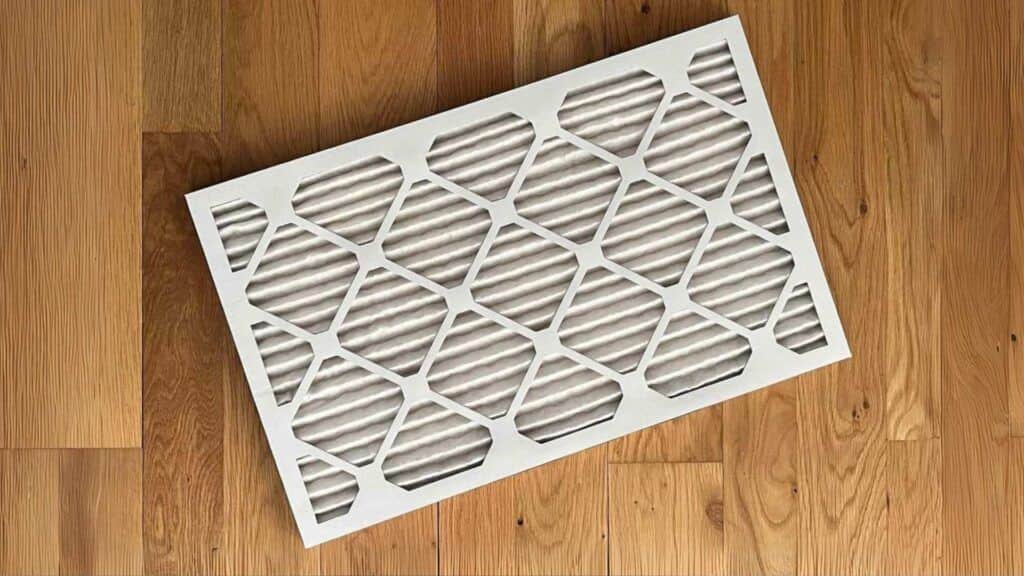
Your AC filter sits in the return air path, the point where warm indoor air gets pulled into the system to be cooled. Its job is to catch dust, pollen, pet dander, mold spores, and debris before that air passes over the evaporator coil and blower components.
It protects two things: your equipment and your air quality. Remove it, or compromise its fit, and both suffer immediately.
What Happens When You Run AC Without a Filter?
1. Dust and Debris Coat the Evaporator Coil
This is the most damaging consequence, and it starts within the first few hours of running without a filter.
The evaporator coil is constantly wet from condensation. Without a filter, every particle of dust, pet hair, and debris in your home's air gets pulled directly onto that wet coil surface. The buildup acts as an insulating layer — the coil can no longer absorb heat efficiently, which means your AC works harder, runs longer, and cools less effectively.
Left long enough, this leads to a frozen coil, reduced airflow, and eventually compressor damage — the most expensive component in your system.
In DFW and Arlington, where systems run 6–8 months per year, a single week without a filter can cause weeks' worth of coil buildup.
2. The Blower Motor Ingests Debris
The blower motor and fan blades sit downstream from the filter. Without filtration, dust and debris accumulate on the fan blades, throwing them off balance. An unbalanced blower puts mechanical stress on the motor bearings, shortening the motor's lifespan significantly.
Motor replacement runs $300–$700. Coil cleaning after unfiltered operation runs $100–$400. Neither bill is worth the few days of running filter less.
3. Your Air Ducts Become a Dust Reservoir
Unfiltered air passes through every inch of your ductwork, coating interior duct walls with dust and debris. That buildup becomes a long-term source of poor indoor air quality, and a feeding ground for mold if any moisture is present in the ducts.
Professional duct cleaning runs $300–$700 and is rarely needed in well-maintained systems. Running without a filter is one of the fastest ways to need it.
4. Indoor Air Quality Drops Immediately
Without the filter catching airborne particles, everything that should be trapped — dust, pollen, pet dander, mold spores — recirculates directly into your living space. For anyone with allergies, asthma, or respiratory sensitivities, the impact is felt within hours.
In 2026, with indoor air quality becoming an increasing health focus, this isn't a minor concern. The EPA ranks indoor air pollution among the top 5 environmental health risks, and your AC filter is your first line of defense against it.
What Happens With the Wrong-Size Filter?
A wrong-size filter is more common than most homeowners realize, and it causes different problems depending on which way it's wrong.
If the Filter Is Too Small (Gaps Around the Edges)
This is the more damaging scenario. A filter that doesn't fully seal the filter slot leaves gaps, and unfiltered air bypasses the filter entirely through those gaps, flowing straight to the coil and blower.
All the same damage as running with no filter applies, just slightly slower. The filter itself gives you a false sense of security because it looks like it's there and doing its job.
Even a ¼-inch gap around the filter frame allows significant unfiltered airflow. If you can see light or feel airflow around the edges of the filter when the system runs, the filter is too small.
If the Filter Is Too Thick or Too Large (Won't Seat Properly)
A filter that's too large or too thick for the slot creates a different problem: it bends, buckles, or doesn't seat flush. A buckled filter restricts airflow more than intended, starving the coil of the airflow it needs.
Restricted airflow causes the evaporator coil to get too cold and freeze. A frozen coil blocks airflow completely, and in some cases causes liquid refrigerant to flow back to the compressor, which can cause permanent compressor damage.
Compressor replacement runs $1,500–$3,000. This is the repair that makes most homeowners decide to replace the entire unit instead.
The MERV Rating Mismatch Problem
Using a filter with too high a MERV rating for your system is its own version of wrong-size, wrong for your system's airflow capacity even if the physical dimensions are correct.
Most residential systems are designed for MERV 8–11 filters. Using a MERV 13+ filter in a standard system restricts airflow significantly, mimicking the same frozen coil and compressor stress described above.
Stick to MERV 8–11 for standard residential systems. Only upgrade to higher MERV ratings if your HVAC technician confirms your system's blower can handle the increased resistance.
How Long Can You Run AC Without a Filter?
Technically, a few hours in an emergency won't destroy your system. If you're replacing a filter and need to run the AC for a short period while waiting for the right filter to arrive, these are reasonable precautions:
- Keep runtime to under 6–8 hours total
- Run the fan on low to reduce debris ingestion
- Inspect the coil immediately after and clean if any dust buildup is visible
- Replace with the correct filter as soon as possible
Beyond that window — and especially beyond 24 hours, you're taking on real risk of coil contamination, blower damage, and duct buildup.
If your system has been running without a filter for more than a few days, a professional coil inspection is worth scheduling before the damage compounds.
How to Find the Right Filter Size
The correct filter size is printed on your existing filter frame, three numbers separated by x, like 16x25x1 or 20x25x4. The first two numbers are width and height; the third is thickness.
If you don't have an old filter to reference:
- Check the filter slot on your air handler, the slot dimensions are usually labeled
- Look in your system's manual or look up the model number online
- Measure the slot opening directly with a tape measure
One important note: nominal size vs. actual size. Filter packaging lists nominal (rounded) dimensions. The actual filter is typically ½ inch smaller in each direction. A "16x25x1" filter actually measures about 15.5 x 24.5 x 0.75 inches. As long as you're buying the same nominal size as what was there before, the fit will be correct.
DIY vs. Call a Pro: Filter Damage Assessment
Situation | What to Do |
|---|---|
Ran without filter for under 6 hours | Replace filter, monitor for unusual smells or reduced cooling |
Ran without filter for 1–3 days | Replace filter, inspect coil with flashlight for visible dust buildup |
Ran with wrong-size (gaps) for a week+ | Replace filter with correct size, schedule professional coil cleaning |
AC not cooling well after filterless run | Call a technician — coil may be dirty or frozen |
AC freezing up or shutting off | Call a technician immediately — possible coil or compressor issue |
Prevention: Set It and Forget It
The only reason most homeowners end up running without a filter is because they forgot to replace it or grabbed the wrong size in a rush. Both are easy to prevent:
- Subscribe to filter delivery. Services like Amazon Subscribe & Save, FilterEasy, or Second Nature deliver the exact right filter to your door on a schedule. Set it once, never run filterless again.
- Write the filter size on a piece of tape stuck inside the filter door. No more guessing at the hardware store.
- Set a phone reminder for the same date every 60–90 days during cooling season.
- Buy two filters at once so there's always a replacement on hand when you pull the old one out.
When to Call a Professional
Call Team Enoch if:
- Your AC is running but not cooling as well as it should after a filterless period
- You see visible dust or debris on the evaporator coil
- The system is freezing up or shutting off unexpectedly
- It's been more than 12 months since your last professional tune-up
A quick coil inspection and cleaning can catch and reverse early damage before it becomes a compressor problem.
Call (817) 769-3712 or get a free quote online, same-day service across Arlington, Fort Worth, and greater DFW.
Quick FAQ
Can a missing filter damage my AC?
Yes. Within hours, unfiltered air coats the evaporator coil with dust and debris, reducing efficiency and risking a frozen coil or blower motor damage. Replace it as soon as possible.
Is it OK to run AC with a slightly wrong size filter?
If the filter is too small and leaves gaps, it provides almost no protection, unfiltered air bypasses it entirely. If it's too large and buckles, it restricts airflow and can cause the coil to freeze. Neither is safe long-term.
What's the best filter size for Texas homes?
The best filter is the one that matches your system's slot size exactly, rated MERV 8–11. The size is printed on your existing filter frame. For DFW homes with pets or allergy sufferers, MERV 11 is a solid choice that balances filtration and airflow.
How often should I change my AC filter in Arlington, TX?
Every 60–90 days during the cooling season at minimum. Arlington and DFW systems run far longer than average, check your filter monthly during peak summer months (June–September) and replace when it's visibly gray or clogged.