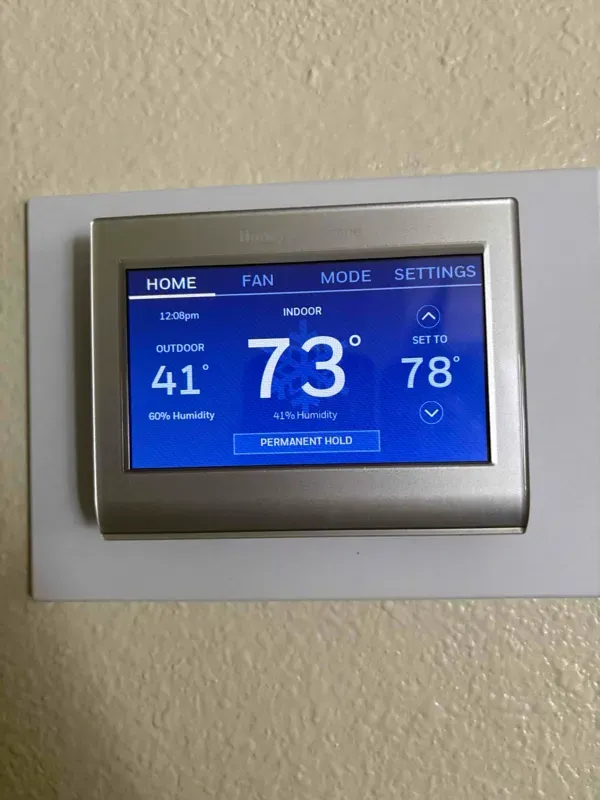
Have you ever been adjusting your thermostat and noticed a setting labeled "Emergency Heat" or "EM Heat"? If you're like most homeowners, you probably wondered what it does and whether you should ever use it. Don't worry, you're not alone! This mysterious button confuses a lot of people, but once you understand it, everything makes perfect sense.
Let's dive into what emergency heat really is, how it works, and most importantly, when you should (and shouldn't) use it. https://www.youtube.com/shorts/FKhyqwZgXeQ
Does Your Home Even Have Emergency Heat?
Here's the first thing you need to know: not every home has emergency heat. This feature only exists if you have a heat pump system. If your home uses a gas furnace, oil furnace, or electric baseboard heaters, you can stop reading here, emergency heat doesn't apply to you!
Heat pumps are special because they don't create heat the traditional way. Instead, they work like a reverse air conditioner, pulling warmth from the outside air and bringing it inside. Pretty cool, right? But here's the catch: when it gets really cold outside, this process becomes much harder and less efficient.
That's where emergency heat comes in.
So What Exactly Is Emergency Heat?
Think of emergency heat as your heating system's backup plan. Inside your heat pump system, there are electric heating strips, imagine them as giant, powerful space heaters built right into your unit. These strips use electricity to generate heat directly, just like the space heater you might use in your bedroom or office.
When your heat pump can't keep up with the cold (usually when temperatures drop to around 30-40 degrees Fahrenheit), these electric strips kick in to help warm your home. They're incredibly effective at heating, but there's one major downside: they're expensive to run. We're talking about a potentially significant increase in your electricity bill if they're running constantly.
What is the emergency heat setting on my thermostat for? The emergency heat setting allows you to manually override your heat pump and run only on the backup heating system. This setting exists specifically for situations where your primary heat pump has malfunctioned or stopped working entirely. It's not designed for everyday use or even for extremely cold weather, it's truly meant for heating emergencies only.
How Does It All Work Automatically?
Here's some good news: under normal circumstances, you don't have to do anything! Your heating system is smarter than you might think. Modern heat pumps have two stages of heating:
Regular Heat Pump Mode: This is the normal, energy-efficient way your system operates most of the time. Your heat pump pulls warmth from outside air and brings it inside.
Auxiliary Heat Mode: When it gets really cold outside, your system automatically brings in those electric heat strips to help out. You might see "AUX" or "Auxiliary Heat" on your thermostat when this happens. This is totally normal and expected during cold snaps.
Your thermostat and heat pump communicate with each other constantly, deciding when backup heat is needed. You don't need to flip any switches or push any buttons, it all happens behind the scenes to keep you comfortable.
What's the Difference Between Heat and Emergency Heat?
This is one of the most common questions homeowners ask. The difference is simple but important:
Regular Heat Mode: Your heat pump runs as the primary heating source, and auxiliary heat kicks in automatically only when needed (typically when outdoor temperatures drop below 35°F or when the heat pump cycles into defrost mode). This is the most energy-efficient way to heat your home.
Emergency Heat Mode: When you manually activate emergency heat, you're completely bypassing your heat pump. The system shuts down the outdoor unit entirely and runs only on the electric heat strips or backup heating source. This is far less efficient and significantly more expensive to operate.
Think of it this way: regular heat mode is like driving a hybrid car that switches between gas and electric for optimal efficiency. Emergency heat mode is like forcing that hybrid to run only on the less efficient power source all the time.
When Should You Actually Use the Emergency Heat Setting?
Now we get to the important part: that emergency heat button on your thermostat. Despite its dramatic name, it's actually quite simple. The emergency heat setting is there for one specific situation: when your heat pump breaks down.
Let's say it's the middle of January, and your outdoor heat pump unit suddenly stops working. Maybe it's frozen solid, has a mechanical failure, or the compressor has died. Without that heat pump running, you'd normally have no heat at all. But by switching to emergency heat mode, you're telling your system to bypass the broken heat pump entirely and run only those electric heating strips.
This keeps your home warm while you wait for an HVAC technician to come fix your heat pump. It's a temporary solution, a safety net that prevents you from freezing while repairs are being made.
Specific Situations When You Should Use Emergency Heat:
Your heat pump has completely stopped working: If your outdoor unit isn't running at all and your home is getting cold, switch to emergency heat and call a technician immediately.
The heat pump is frozen and won't defrost: Normally, heat pumps go through automatic defrost cycles. If yours is covered in ice and hasn't defrosted after several hours of running, there's likely a malfunction. Turn off the regular heat, switch to emergency heat, and contact a professional.
You hear unusual grinding, squealing, or banging sounds: These noises often indicate mechanical failure in the compressor or fan motor. Switch to emergency heat to maintain warmth while waiting for repairs.
The outdoor unit is visibly damaged: After a storm or other incident, if you notice physical damage to your outdoor heat pump unit, use emergency heat until it can be inspected and repaired.
Why You Shouldn't Use Emergency Heat Unless You Have To
Here's the crucial warning: don't use emergency heat just because it's cold outside! Some people mistakenly think they should switch to emergency heat during winter storms or when temperatures plummet. That's actually a costly mistake.
Remember, those electric heating strips are expensive to operate, sometimes two or three times more expensive than running your regular heat pump. When you manually switch to emergency heat, you're forcing your system to use only the most expensive heating method available. Your electricity bill could skyrocket!
Your system is already programmed to use auxiliary heat automatically when needed. It knows exactly when to bring in those backup strips, and it uses them as little as possible to keep your costs down while maintaining comfort.
At What Temperature Should You Use Emergency Heat in Winter?
Here's the truth: there is no outdoor temperature that should trigger you to manually turn on emergency heat. Your heat pump system is designed to handle cold weather automatically. Modern heat pumps can operate efficiently in temperatures well below freezing, and they'll automatically engage auxiliary heat when needed.
At what temperature should a heat pump switch to auxiliary heat? Most heat pumps automatically switch to auxiliary heat when outdoor temperatures drop below 35-40°F, though this varies by model and manufacturer. Some newer, high-efficiency heat pumps can operate effectively down to 5-10°F before needing significant auxiliary heat support. This switching happens automatically, you don't need to intervene.
How cold is too cold to run a heat pump? While older heat pumps struggled below 25-30°F, modern heat pumps can operate efficiently in temperatures as low as -15°F to 5°F, depending on the model. Even in extreme cold, your heat pump will keep running; it just relies more heavily on automatic auxiliary heat. The only time you should manually use emergency heat is if the heat pump itself has failed, not because of cold outdoor temperatures.
What If You Have a Gas Furnace?
If your home has a gas heating system instead of a heat pump, you can completely ignore the emergency heat discussion. Gas furnaces work on a totally different principle, they burn natural gas to create heat directly. They don't have the temperature-related efficiency issues that heat pumps do, and they don't need electric backup strips.
Gas systems are pretty straightforward: they're either on and heating, or they're off. No emergency heat required!
How Much Does Emergency Heat Cost?
Is it expensive to run emergency heat? Yes, emergency heat is significantly more expensive than running your heat pump normally. Electric resistance heat strips use anywhere from 5,000 to 20,000 watts of electricity, depending on your system size. In comparison, a heat pump typically uses only 1,500 to 5,000 watts to produce the same amount of heat.
How much does emergency heat cost per day? This depends on your electricity rates and how large your home is, but here's a real-world example: If you're paying $0.13 per kilowatt-hour (the national average) and running a 15,000-watt emergency heat system for 8 hours a day, you're looking at approximately $15.60 per day, or about $468 per month. Compare that to running your heat pump, which might cost $5-8 per day for the same heating output.
How much more expensive is using emergency heat? Emergency heat typically costs 2-3 times more to operate than your regular heat pump system. The exact difference depends on your local electricity rates, your home's insulation, and outdoor temperatures, but most homeowners see their heating bills double or triple when running emergency heat continuously.
Does emergency heat use a lot of electricity? Absolutely. Emergency heat strips are some of the most electricity-intensive appliances in your home, comparable to running multiple electric ovens simultaneously. This is why it's critical to use emergency heat only during actual emergencies.
How Long Can You Run Emergency Heat?
How long can I run emergency heat? Technically, you can run emergency heat indefinitely, the system is designed to keep your home warm as long as needed. However, you should only run it as briefly as possible due to the high operating costs.
Is it okay to run your unit on emergency heat? Yes, it's safe to run emergency heat for extended periods if necessary, but it's not ideal. Your system won't be damaged by running emergency heat for days or even weeks, but your electricity bill will be extremely high. The goal should be to get your heat pump repaired as quickly as possible.
How long is it okay to use emergency heat? Use emergency heat only until your heat pump can be repaired, ideally within 1-3 days. If repairs will take longer, consider whether the high electricity costs might exceed the cost of a hotel or temporary housing, especially for larger homes.
How much to run emergency heat for a week? Using our earlier example of a 15,000-watt system running 8 hours daily at $0.13/kWh, you'd pay approximately $109 for one week. In colder climates where the system runs 12-16 hours per day, costs could reach $165-220 per week. Over a month, you could easily see $400-800 added to your electricity bill.
What Happens If I Accidentally Turn On Emergency Heat?
Accidentally turned on emergency heat on your thermostat? Don't panic! You haven't damaged anything. The emergency heat setting is just a switch that changes which part of your heating system is active. Simply switch your thermostat back to the regular "Heat" setting, and your system will return to normal operation.
The only consequence of accidentally running emergency heat is a higher electricity bill for the time it was on. If you catch it quickly (within a few hours or a day), the impact will be minimal. Just make sure to double-check your thermostat settings, especially after adjusting the temperature or changing batteries.
How to disable emergency heat on thermostat: Most thermostats have a dedicated emergency heat switch or button. Simply press it again to turn it off, or switch your system mode back to "Heat" instead of "Emergency Heat" or "EM Heat." On digital thermostats, you may need to navigate through the settings menu to find the system mode option. If you're unsure, consult your thermostat's manual or look for a physical switch labeled "EM Heat" that you can flip back to the normal position.
Understanding Your Thermostat's Emergency Heat Indicators
Emergency heat light on thermostat: Many thermostats have a light or indicator that illuminates when emergency heat is active. This might be labeled "EM," "Emergency Heat," or show a different color than your normal heating indicator. If you see this light on and you didn't manually activate emergency heat, it could indicate a problem with your heat pump that's causing the system to default to backup heat.
Emergency heat flashing on thermostat: A flashing emergency heat indicator often means your system is trying to communicate a problem. On some models, flashing indicates the heat pump has failed and the system has automatically switched to emergency mode. On others, it might mean there's a sensor issue or the outdoor temperature is preventing normal heat pump operation. Check your thermostat's manual for model-specific meanings, and consider calling an HVAC technician if the flashing continues.
Emergency heat on thermostat not working: If you've switched to emergency heat but your home still isn't warming up, several issues could be at play. The backup heat strips themselves may have failed, there could be an electrical problem preventing them from activating, or there might be a blown fuse or tripped breaker. Check your electrical panel for any tripped breakers labeled for your heating system. If everything looks normal but emergency heat still isn't working, you need professional HVAC repair immediately, you're now without any heating source.
Will Emergency Heat Keep My House Warm?
Does emergency heat work when it's really cold? Yes, emergency heat is actually very effective at heating your home, even in extremely cold weather. Unlike heat pumps, which extract heat from outdoor air (becoming less efficient as temperatures drop), emergency heat strips generate heat directly through electrical resistance. This means they work equally well whether it's 30°F or -10°F outside.
Will emergency heat keep my house warm? Absolutely. In fact, emergency heat often heats your home more powerfully than your regular heat pump, especially during very cold weather. The trade-off is the significantly higher cost. Your backup heat system is sized to handle your home's entire heating load on its own, so you won't freeze, you'll just pay a premium for that warmth.
Is It Safe to Run Emergency Heat All the Time?
Is it safe to run emergency heat all the time? From a safety standpoint, yes, emergency heat won't harm your HVAC system or create a fire hazard when used as designed. The electric heat strips are built to run continuously if needed, and they include safety features like automatic shutoffs if they overheat.
However, running emergency heat all the time is a terrible idea from a financial and efficiency standpoint. You'd be paying 2-3 times more for heating than necessary, and you'd be wearing out your backup heating components faster than intended. Emergency heat is meant for temporary use during heat pump failures, not as a long-term heating solution.
Is it okay to use emergency heat on a thermostat? It's okay to use emergency heat when you have an actual emergency, a broken heat pump that needs repair. It's not okay to use it as a shortcut for faster heating, during cold weather, or because you think it will keep your house warmer. Trust your system's automatic auxiliary heat function for cold weather support.
What Are the Pros and Cons of Using Emergency Heat?
Pros:
- Keeps your home warm when your heat pump fails
- Works effectively in any outdoor temperature
- Prevents frozen pipes and other cold-weather damage to your home
- Provides immediate heat without the warm-up time a heat pump needs
- Can be activated with a simple switch when you need it
Cons:
- Extremely expensive to operate (2-3x the cost of normal heating)
- Uses significantly more electricity than heat pump operation
- Bypasses your energy-efficient primary heating system
- Can lead to surprisingly high utility bills if left on accidentally
- Wears out backup heating components faster with extended use
What is the biggest drawback of emergency heat? The cost. While emergency heat is safe and effective, the dramatic increase in electricity usage makes it impractical for anything other than true emergencies. This is why proper heat pump maintenance and quick repairs are so important, they help you avoid relying on this expensive backup system.
Red Flags to Watch For
While your system should handle heating automatically, there are some warning signs that might indicate a problem:
- Your thermostat constantly shows "Emergency Heat" or "EM Heat" even though you didn't switch it on manually
- Your electricity bills suddenly spike without explanation during winter
- Your home isn't staying warm even though the system is running
- You hear unusual noises or notice strange smells coming from your indoor unit
Any of these signs mean it's time to call an HVAC professional to check things out.
Emergency Heat vs. Auxiliary Heat: What's the Difference?
Many homeowners confuse these two terms because they sound similar and both involve backup heating. Here's the key difference:
Auxiliary Heat (AUX): This is automatic. Your system engages auxiliary heat on its own when outdoor temperatures drop too low for efficient heat pump operation, or when your heat pump goes through its defrost cycle. Auxiliary heat works alongside your heat pump, supplementing it when needed. This is normal, expected, and programmed into your system.
Emergency Heat (EM): This is manual. You activate emergency heat by flipping a switch or pressing a button on your thermostat. When active, emergency heat completely shuts down your heat pump and runs only the backup heating system. This should only be used when your heat pump has failed.
Both auxiliary and emergency heat typically use the same backup heating source (electric resistance strips, gas furnace, or oil furnace), but the critical difference is how they're activated and whether your heat pump continues operating.
Special Considerations for Different Thermostat Brands
Emergency heat setting on thermostat Honeywell: Honeywell thermostats typically show emergency heat as "Em Heat" on the display. To activate it, you usually need to press the "System" button until "Em Heat" appears. Some older Honeywell models have a physical emergency heat switch on the thermostat itself. To turn it off, simply press the "System" button again until it returns to "Heat" mode.
Most modern thermostats, regardless of brand, follow similar patterns, look for a "System Mode" menu where you can select between Heat, Cool, Auto, Off, and Emergency Heat. If you're unsure about your specific model, the user manual will have detailed instructions, or you can contact our team for guidance.
Is It Cheaper to Turn Up the Heat or Use a Space Heater?
This is a related question many homeowners ask when facing heating decisions. If your heat pump is working normally, it's almost always cheaper to use your central heating system than to rely on space heaters. A heat pump operating normally is much more efficient than electric space heaters.
However, if you're running on emergency heat (which uses electric resistance heating just like space heaters), the math changes. For heating a single room while you're in it, a space heater might actually be cheaper than running emergency heat throughout your entire home. But this is only a temporary solution, the real answer is to get your heat pump repaired so you can return to efficient whole-home heating.
The Bottom Line
Emergency heat is exactly what it sounds like: a backup system for emergencies. It's not an upgrade, a winter mode, or something you should use to heat your home faster. It's there to keep you from freezing if your heat pump fails during cold weather.
Your smart heating system already knows when to use auxiliary heat, so trust it to do its job. The emergency heat button should only be touched if your heat pump has completely stopped working and you're waiting for a repair technician.
Understanding this simple distinction can save you hundreds of dollars in unnecessary heating costs and help you make smarter decisions about your home comfort system.
Need Heating Repairs or Thermostat Installation? Don’t let a broken heat pump leave you in the cold. Our Arlington heating experts are available 24/7 for emergency HVAC repairs, thermostat installation installation, and system troubleshooting. Call us at 817-769-3712 or fill out the form above to get fast, professional service and restore your heating system to efficient operation.