What is the Most Common HVAC Problem?
Dirty air filters are the #1 most common HVAC problem, affecting 80% of service calls. A clogged filter restricts airflow, reduces efficiency by up to 15%, and can cause system failure. Replace filters every 1-3 months depending on usage, pets, and air quality.
Dirty air filters cause more HVAC issues than any other single component. When filters become clogged with dust, pet dander, and debris, your system has to work significantly harder to push air through, leading to:
- Reduced airflow and uneven heating/cooling
- 15-20% decrease in energy efficiency
- Frozen evaporator coils
- Premature system failure and expensive repairs
- Poor indoor air quality affecting health
MERV Rating Guide: Look for filters with MERV ratings between 8-13 for residential use. Higher MERV ratings (13+) filter smaller particles but may restrict airflow in older systems. MERV 8-11 provides the best balance of filtration and airflow for most homes.
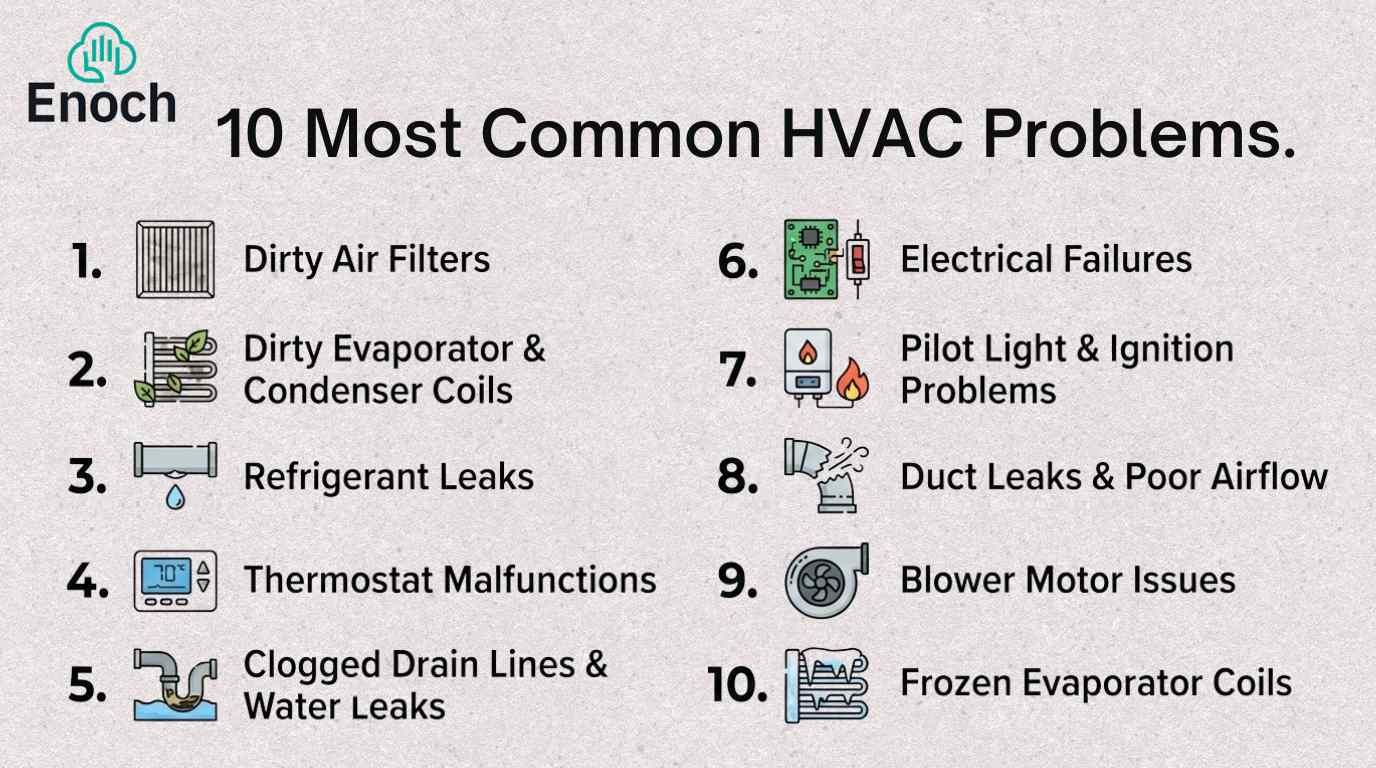
10 Most Common HVAC Problems
- Dirty Air Filters
- Dirty Evaporator and Condenser Coils
- Refrigerant Leaks
- Thermostat Malfunctions
- Clogged Drain Lines and Water Leaks
- Electrical Failures (Capacitors, Relays, Breakers)
- Pilot Light and Ignition Problems
- Duct Leaks and Poor Airflow
- Blower Motor Issues
- Frozen Evaporator Coils
Dirty Air Filters (The #1 Culprit)
As mentioned, dirty filters are responsible for approximately 80% of preventable HVAC issues. Your air filter should be changed every 1-3 months, but this varies based on:
- Pet ownership: Change monthly if you have pets
- Local air quality: Dusty areas or construction zones require more frequent changes
- System usage: Homes that run HVAC constantly need monthly filter changes
- Allergies or respiratory issues: Higher MERV filters changed more frequently improve air quality
Pro Tip: Dirty air filters can do make you sick so to prevent it you can set a recurring reminder on your phone for the first of each month to check your filter. If it looks gray or clogged, replace it immediately.
2. Dirty Evaporator and Condenser Coils
Dirty coils are the second most common HVAC problem. The evaporator coil (inside) and condenser coil (outside) can lose 30-40% efficiency when covered in dirt, dust, and debris.
DIY Outdoor Coil Cleaning:
- Turn off power to the unit at the breaker
- Remove leaves, grass clippings, and debris from around the unit
- Gently spray coils with a garden hose from inside-out (never use a pressure washer)
- Maintain 2-foot clearance around the unit (the 2-foot rule)
Important: Indoor evaporator coils should only be cleaned by HVAC professionals to avoid damaging sensitive components and refrigerant lines.
3. Refrigerant Leaks
Refrigerant leaks reduce cooling capacity and force your compressor to work harder, leading to premature failure. Common causes include:
- Corrosion in copper refrigerant lines
- Loose fittings and connections
- Factory defects in coils
- Physical damage from lawn equipment or hail
Warning Signs: Hissing sounds near refrigerant lines, ice buildup on coils, higher energy bills, and inability to cool your home indicate potential refrigerant issues. Always call a licensed technician—refrigerant handling requires EPA certification.
4. Thermostat Malfunctions
Modern smart thermostats can malfunction due to WiFi issues, dead batteries, incorrect settings, or sensor problems. If your home feels warmer or cooler than the set temperature, check these common issues:
Why Your AC Reads 78°F When Set to 74°F:
- Thermostat location: Placed in direct sunlight, near heat sources, or in drafty areas gives false readings
- Dirty sensor: Dust buildup affects temperature accuracy
- Calibration drift: Thermostats can lose calibration over time (typically 3-5 degrees)
- Undersized system: Your AC may not be powerful enough for your home's square footage
- Airflow restrictions: Dirty filters or blocked vents prevent proper cooling
2026 Smart Thermostat Tip: New smart thermostats with room sensors can detect actual room temperatures versus thermostat location, solving this common issue. Consider upgrading if you have persistent temperature discrepancies.
5. Clogged Drain Lines and Water Leaks
Your HVAC system produces condensation during operation. When drain lines become clogged with algae, mold, or debris, water backs up and can cause:
- Water puddles around indoor and outdoor units
- Musty odors throughout your home
- Water damage to ceilings, walls, and flooring
- Mold growth in ductwork and around the unit
- Automatic system shutdown (safety float switch activation)
DIY Prevention:
- Pour 1 cup of white vinegar or bleach down the drain line quarterly. Here is a video explaining this step more thoroughly.
- Use a wet/dry vacuum to clear clogs from the drain opening
- Install a drain pan tablet to prevent algae growth
6. Electrical Failures (Capacitors, Relays, and Breakers)
Electrical issues are among the most common reasons HVAC systems fail to start or run properly. The most frequently failing electrical components are:
Most Common Electrical Parts That Fail:
- Capacitors (start and run): Provide the electrical boost to start motors. Typically last 10-20 years but fail in extreme heat.
- Contactors: Switches that control power to the compressor and condenser fan. Wear out from repeated cycling.
- Relays: Control various electrical functions. Can stick or fail, causing constant fan operation.
- Circuit breakers: Protect your system from electrical overload. Frequent tripping indicates underlying problems.
- Wire connections: Corroded or loose wiring causes intermittent operation and potential fire hazards.
Safety Warning: Never attempt DIY electrical repairs on HVAC systems. Improper work can cause electrocution, fires, system damage, and voided warranties. Always hire licensed HVAC technicians for electrical issues.
Why Does My HVAC Keep Tripping the Circuit Breaker?
Frequent breaker trips indicate your system is drawing too much power. Common causes:
- Dirty air filters forcing the blower motor to work harder
- Failed capacitors preventing proper motor startup
- Short circuits in wiring or components
- Compressor mechanical failure drawing excessive current
- Undersized breaker for your system's requirements
7. Pilot Light and Ignition Problems
Gas furnaces can experience ignition failures that leave you without heat. Modern furnaces use electronic ignition systems, while older models use standing pilot lights. Common issues include:
- Dirty or damaged flame sensor preventing ignition
- Failed ignitor (hot surface or spark)
- Gas supply interruption or pressure issues
- Blocked burner orifices preventing proper combustion
- Faulty gas valve
Carbon Monoxide Safety: Improperly functioning gas furnaces can produce deadly carbon monoxide. Install CO detectors on every floor and schedule annual professional furnace inspections. Never ignore the smell of gas, evacuate and call your utility company immediately.
8. Duct Leaks and Poor Airflow
The average home loses 20-30% of conditioned air through duct leaks, costing hundreds of dollars annually in wasted energy. Duct problems include:
- Disconnected or poorly sealed joints
- Crushed or damaged flexible ductwork
- Improperly sized ducts for your system
- Dirty ductwork restricting airflow
- Blocked or closed supply vents reducing circulation
Professional Duct Cleaning: Have ducts professionally inspected and cleaned every 3-5 years, or annually if you have pets or live in dusty areas. Professional duct sealing can improve efficiency by 20% or more.
9. Blower Motor Running Excessively
If your blower fan runs constantly, check your thermostat settings first. Most thermostats have two fan settings:
- AUTO (recommended): Fan runs only when heating or cooling is active
- ON: Fan runs continuously, increasing energy costs and filter wear
If the fan runs constantly on AUTO mode, you likely have a faulty fan relay or limit switch. This requires professional diagnosis and repair to prevent motor burnout.
10. Frozen Evaporator Coils
Ice buildup on your indoor evaporator coils prevents proper cooling and can damage your compressor. Causes include:
- Restricted airflow from dirty filters or blocked vents
- Low refrigerant levels from leaks
- Dirty evaporator coils reducing heat transfer
- Running AC when outdoor temperature drops below 60°F
- Malfunctioning blower motor or fan
If You Find Frozen Coils: Turn off your AC immediately to prevent compressor damage. Let the ice thaw completely (4-6 hours), then check your air filter. If the problem persists after replacing a dirty filter, call a technician to check refrigerant levels and airflow.
The 3 R's of HVAC: Repair, Replace, or Maintain
When facing HVAC issues, you have three options. Understanding when to choose each can save thousands of dollars:
- Repair: Fix specific failed components (thermostats, capacitors, fan motors). Best for systems under 10 years old with minor issues.
- Replace: Install a new system. Best when repair costs exceed half the replacement cost, or system is over 15 years old.
- Maintain: Prevent problems through regular service. The most cost-effective approach, maintenance costs $150-300 annually versus $3,000-8,000 for emergency repairs.
What is the 2-Foot Rule for HVAC?
The 2-foot rule states that you should maintain at least 2 feet of clearance around your outdoor HVAC unit on all sides. This clearance ensures:
- Proper airflow for efficient heat exchange
- Easy access for maintenance and repairs
- Prevention of debris accumulation on coils
- Adequate ventilation to prevent overheating
Trim shrubs, remove plants, and avoid storing items near your outdoor unit. Blocked units can reduce efficiency by 10-15% and cause premature compressor failure.
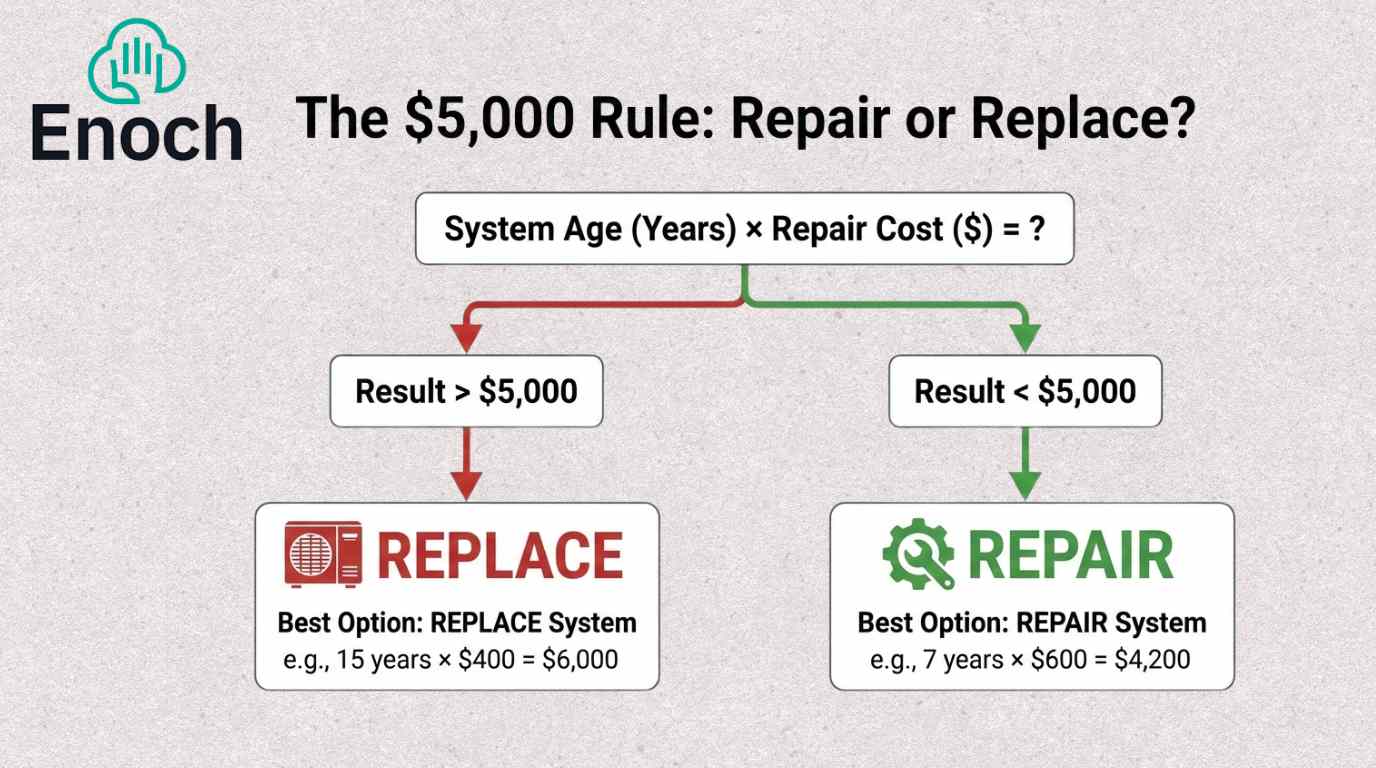
The $5,000 Rule: Repair or Replace Your HVAC System?
The $5,000 rule helps determine whether to repair or replace your HVAC system. Multiply your system's age by the repair cost. If the result exceeds $5,000, replacement is typically more cost-effective.
Examples:
- System age: 15 years | Repair cost: $400 | Calculation: 15 × $400 = $6,000 → REPLACE
- System age: 7 years | Repair cost: $600 | Calculation: 7 × $600 = $4,200 → REPAIR
- System age: 12 years | Repair cost: $500 | Calculation: 12 × $500 = $6,000 → REPLACE
Additional Replacement Factors: Also consider energy efficiency gains (new systems are 20-40% more efficient), frequency of repairs, R-22 refrigerant phase-out (if your system uses it), and available rebates/tax credits.
What is the Average Lifespan of an HVAC System?
The average HVAC system lifespan varies by component and maintenance:
- Central Air Conditioner: 15-20 years with proper maintenance
- Gas Furnace: 15-30 years (high-efficiency models may have shorter lifespans)
- Heat Pump: 10-15 years (works year-round, more wear and tear)
- Boiler: 15-30 years depending on maintenance and water quality
- Ductwork: 20-25 years, though sealing may be needed sooner
Lifespan Killers: Systems can fail prematurely due to poor installation, lack of maintenance, oversizing or undersizing, and harsh climates. Regular maintenance can extend lifespan by 5-10 years.
2026 HVAC Replacement Costs and Tax Credits
Average Cost to Replace an HVAC System in 2026
Complete HVAC system replacement costs in 2026 range from $5,500 to $15,000+ depending on:
- System size: Larger homes need bigger systems (3-5 ton units cost $6,000-$12,000)
- Efficiency rating: Higher SEER2 ratings (18+) cost $2,000-$4,000 more but save on energy
- Installation complexity: Ductwork modifications, electrical upgrades, or difficult access add costs
- Brand and features: Premium brands with variable-speed technology cost more
- Location: Urban areas and high-cost regions charge 20-30% more for labor
2026 Average Costs by System Type:
- Central AC only: $3,500-$7,500
- Gas furnace only: $2,800-$6,500
- Complete system (AC + furnace): $6,500-$12,000
- Heat pump system: $8,000-$15,000
- Mini-split ductless: $3,000-$10,000 (depending on zones)
What HVAC Systems Qualify for Tax Credits in 2026?
The Inflation Reduction Act provides substantial tax credits for high-efficiency HVAC systems installed in 2026. Here's what qualifies:
Energy Efficient Home Improvement Credit (25C):
- Central Air Conditioners: SEER2 ≥16, EER2 ≥12.5 = $600 credit
- Heat Pumps (Air Source): SEER2 ≥16, EER2 ≥12.5, HSPF2 ≥9 = $2,000 credit
- Gas Furnaces: AFUE ≥97% = $600 credit
- Annual limit: $1,200 total for most items, $2,000 for heat pumps
High-Efficiency Electric Home Rebate Program (HEEHRA) - State-Dependent:
- Heat pump rebates: Up to $8,000 for qualifying households
- Income-dependent: Larger rebates for low and moderate-income families
- State-specific: Check your state's program availability and requirements
Important: Tax credits require proper documentation including manufacturer certification statements. Rebate programs vary by state and may have limited funding. Visit IRS.gov and EnergyStar.gov for current requirements and your HVAC contractor for eligible models.
New HVAC Regulations in 2026
The Department of Energy updated HVAC efficiency standards that took effect January 1, 2025, which affect systems sold in 2026:
- SEER2 replaces SEER: New testing methodology provides more realistic efficiency ratings
- Minimum efficiency increases: Most regions now require SEER2 14-15 minimum (up from SEER 13-14)
- Regional standards: Northern states have lower requirements than southern states
- Refrigerant transition continues: R-410A being phased out for R-454B and R-32 (lower global warming potential)
These regulations mean 2026 HVAC systems are more efficient but may cost 5-10% more than pre-2025 models. However, energy savings typically offset the higher upfront cost within 3-5 years.
Your Complete HVAC Maintenance Checklist for 2026
Spring Maintenance (Prepare for Cooling Season)
- Replace air filters
- Clean outdoor condenser unit and remove debris
- Clear condensate drain line with vinegar
- Test thermostat operation and replace batteries if needed
- Ensure 2-foot clearance around outdoor unit
- Schedule professional AC tune-up (refrigerant check, electrical inspection, coil cleaning)
Fall Maintenance (Prepare for Heating Season)
- Replace air filters
- Inspect furnace heat exchanger for cracks
- Test ignition system and flame sensor
- Check gas connections for leaks (soapy water test)
- Clean burner assembly
- Test carbon monoxide detectors
- Schedule professional furnace inspection
Year-Round Monthly Tasks
- Check and replace air filters (monthly during peak use)
- Keep outdoor unit clear of leaves, snow, and debris
- Listen for unusual noises (grinding, squealing, banging)
- Monitor energy bills for unexpected increases
- Ensure all vents and registers are unblocked
Pro Maintenance Tip: Sign up for an HVAC maintenance plan that includes two annual tune-ups (spring and fall). These plans typically cost $150-300 annually and include priority service, discounts on repairs, and extended warranties.
Prevent HVAC Problems With Professional Maintenance
Most HVAC problems are preventable through regular maintenance and timely repairs. By changing filters monthly, keeping outdoor units clear, scheduling biannual professional tune-ups, and addressing small issues before they become major failures, you can:
- Extend your system's lifespan by 5-10 years
- Reduce energy bills by 15-25%
- Avoid emergency repairs costing $1,000-$5,000+
- Maintain consistent home comfort year-round
- Improve indoor air quality and health
Don't wait for a breakdown, invest in preventative maintenance today.
At Team Enoch, we specialize in preventing common HVAC problems through expert maintenance, repairs, and replacements. Our experienced technicians serve the Dallas-Fort Worth area with professional inspections, same-day emergency service, and comprehensive maintenance plans that keep your system running efficiently year-round.
Schedule Your HVAC Maintenance Today:
- Call us: 817-769-3712
- Service area: Dallas-Fort Worth, Arlington, and surrounding areas
- Maintenance plans: Annual and biannual options with priority service
- Emergency service: Available 24/7 for urgent HVAC problems
Invest in regular HVAC maintenance and enjoy reliable comfort, lower energy bills, and peace of mind knowing your system is in expert hands.