

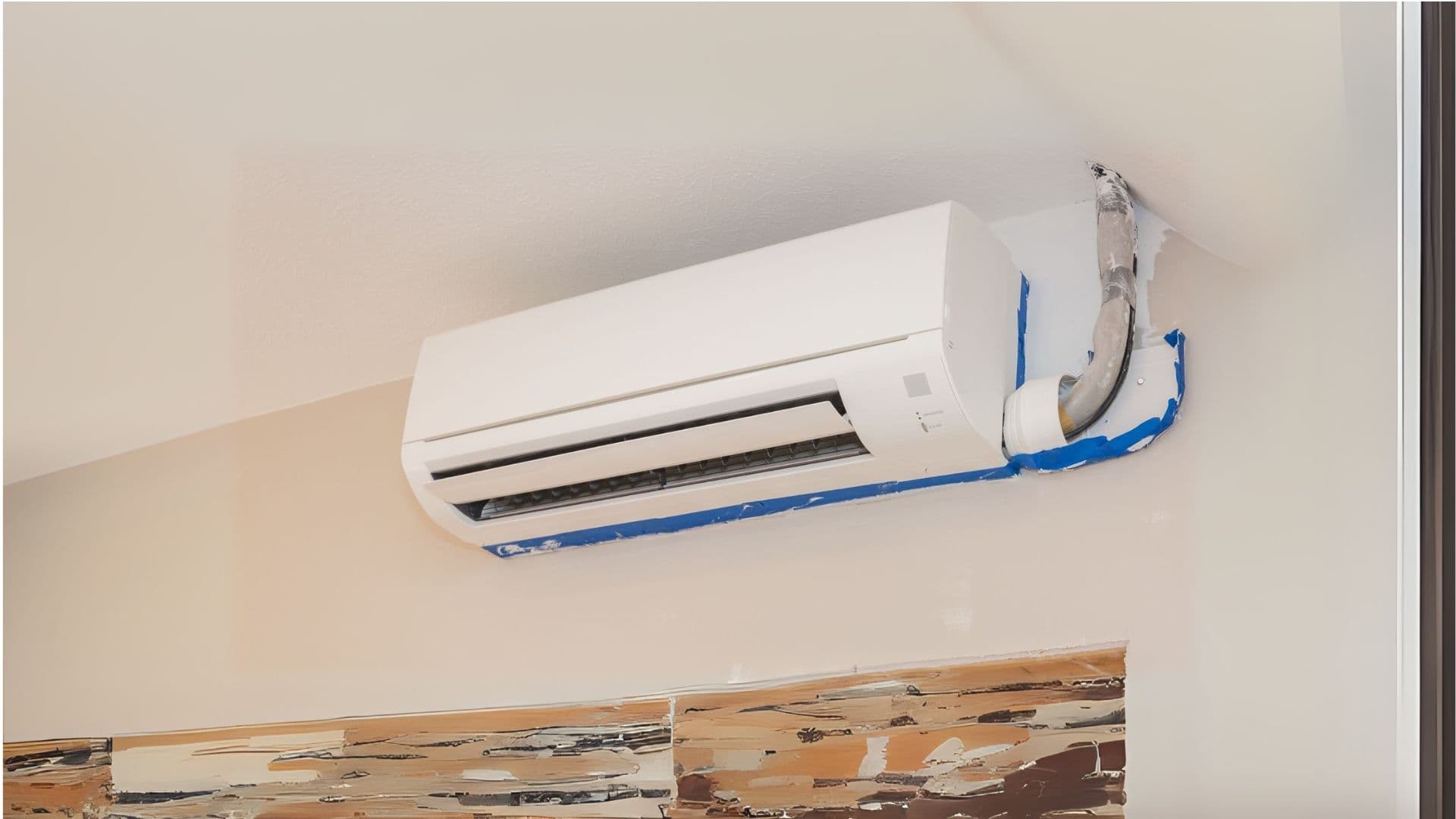
Struggling with uneven temperatures and sky-high energy bills? Mini split systems cut cooling costs by up to 30% compared to traditional HVAC—but only if you choose the right system and avoid common installation mistakes. This guide breaks down exactly what you'll pay to install and run a mini split in 2026, with real pricing data and a cost calculator to plan your budget.
How Much Does a Mini Split Cost to Install in 2026?
National Average Installation Cost: $3,500 to $13,500 (professionally installed)
System Type | Coverage | Total Installed Cost |
|---|---|---|
Single-zone (9,000-12,000 BTU) | 350-500 sq ft | $3,000-$5,800 |
Single-zone (18,000-24,000 BTU) | 750-1,000 sq ft | $4,500-$7,500 |
Dual-zone | 1,000-1,400 sq ft | $6,500-$10,000 |
Triple-zone | 1,500-2,000 sq ft | $8,500-$13,000 |
Quad-zone | 2,000-2,800 sq ft | $11,000-$16,500 |
Equipment alone: $1,000-$8,000
Professional installation labor: $1,500-$5,500 (typically 40-50% of total cost)
Mini Split Installation Cost Calculator 2026
How to Calculate Your Mini Split Cost:
- Square footage needed: _____ sq ft ÷ 50 = _____ BTU (approximate)
- Number of zones needed: _____ rooms/areas
- Base cost per zone: $3,000 (first zone) + $1,200-$2,500 per additional zone
- Add complexity factors:
- Long refrigerant lines (over 25 ft): +$300-$800
- Electrical panel upgrade: +$500-$2,000
- Difficult access/multi-story: +$400-$1,200
- Permits and inspections: +$100-$400
Example Calculation for 2,000 sq ft House:
- 2,000 sq ft ÷ 400 sq ft per zone = 5 zones (or 3-4 zones with larger units)
- 4-zone system base cost: $11,000-$15,000
- Electrical upgrade: +$800
- Permits: +$200
- Total estimated cost: $12,000-$16,000
Mini Split Cost by House Size (2026 Pricing)
How Much Does a Mini Split Cost for 1,000 Square Feet?
Best options for 1,000 sq ft:
- Single large zone: 24,000 BTU system = $4,500-$7,000 installed
- Dual-zone system: Two 12,000 BTU units = $6,000-$9,500 installed
Recommended configuration: One zone for living area (600 sq ft), one zone for bedroom area (400 sq ft)
How Much Does a Mini Split Cost for a 2,000 Sq Ft House?
Best options for 2,000 sq ft:
- 3-zone system: 30,000-36,000 BTU total = $8,500-$13,000 installed
- 4-zone system: 42,000-48,000 BTU total = $11,000-$16,500 installed
Typical setup for 2,000 sq ft:
- Master bedroom: 12,000 BTU
- Living room/kitchen: 18,000 BTU
- Two additional bedrooms: 9,000 BTU each
- Total capacity needed: 48,000 BTU
- Expected cost: $12,000-$15,500 installed
Alternative consideration: If you have good insulation and moderate climate, a 3-zone system may suffice with strategic placement, saving $2,000-$3,000.
How Many Mini Splits Do I Need for a 2,000 Square-Foot House?
Most efficient approach: 3-4 zones depending on:
- Layout (open concept vs. separated rooms)
- Insulation quality
- Climate zone
- Window exposure and shading
- Ceiling height
Common mistakes to avoid:
- Installing one unit per small room (over-complicates system)
- Using one massive unit for entire house (poor temperature control)
- Strategic zoning based on usage patterns and thermal zones
Mini Split Cost to Run: Monthly Operating Expenses
How Much Does a Mini Split Cost to Run Per Month?
Average monthly electricity costs (2026 rates):
System Size | Daily Usage (8 hrs) | Monthly Cost (moderate climate) | Monthly Cost (hot climate) |
|---|---|---|---|
9,000 BTU | 0.6 kWh | $15-$25 | $25-$40 |
12,000 BTU | 0.9 kWh | $20-$35 | $35-$55 |
18,000 BTU | 1.4 kWh | $30-$50 | $50-$80 |
24,000 BTU | 1.9 kWh | $40-$70 | $70-$110 |
Based on: $0.16/kWh national average (Jan 2026), SEER2 rating of 18-22
Mini Split Cost to Run Heat (Winter Operating Costs)
Heating is typically 2-3x more efficient than electric resistance heat:
Temperature | 9,000 BTU | 12,000 BTU | 18,000 BTU |
|---|---|---|---|
Mild (40-50°F outdoor) | $25-$40/month | $35-$55/month | $50-$80/month |
Cold (20-40°F outdoor) | $45-$70/month | $60-$95/month | $90-$140/month |
Very cold (0-20°F outdoor)* | $70-$110/month | $95-$145/month | $140-$220/month |
*Requires cold-climate heat pump model with auxiliary heat
Compared to other heating methods (for 1,000 sq ft):
- Electric baseboard: $150-$220/month
- Oil furnace: $180-$280/month
- Natural gas: $60-$110/month
- Mini split heat pump: $60-$95/month
Mini Split Cost to Operate vs. Other HVAC Systems (Annual Comparison)
Which System Costs Less to Run?
Annual cooling costs for 2,000 sq ft house (moderate climate):
System Type | SEER/EER Rating | Annual Cooling Cost | 10-Year Operating Cost |
|---|---|---|---|
Window AC units | 10-12 SEER | $850-$1,200 | $8,500-$12,000 |
Central AC (older) | 13-14 SEER | $700-$950 | $7,000-$9,500 |
Central AC (new) | 16-18 SEER | $550-$750 | $5,500-$7,500 |
Mini split | 20-27 SEER2 | $400-$600 | $4,000-$6,000 |
Savings breakdown:
- vs. window units: Save $250-$600/year ($2,500-$6,000 over 10 years)
- vs. old central AC: Save $100-$350/year ($1,000-$3,500 over 10 years)
- vs. new central AC: Save $50-$150/year ($500-$1,500 over 10 years)
Mini Split vs Central AC Cost Comparison 2026
Installation Costs
Factor | Mini Split | Central AC |
|---|---|---|
Equipment cost | $2,500-$8,000 | $3,000-$7,000 |
Installation labor | $1,500-$5,500 | $2,000-$4,500 |
Ductwork (if needed) | $0 (ductless) | $3,000-$12,000 (new ducts) |
Total (no existing ducts) | $4,000-$13,500 | $8,000-$23,500 |
Total (with existing ducts) | $4,000-$13,500 | $5,000-$11,500 |
When to Choose Mini Split Over Central AC:
- No existing ductwork (save $3,000-$12,000)
- Want zone control for different temperatures
- Historic home or renovation project
- Room additions or converted spaces
- Maximum energy efficiency (20-30% lower operating costs)
When Central AC Makes More Sense:
- Already have good existing ductwork
- Prefer hidden indoor units
- Uniform temperature throughout entire home
- Integration with existing forced-air heating
Extended Warranties and Maintenance Plans
Standard manufacturer warranty: 5-7 years parts, 1 year labor
Extended warranty options (2026 pricing):
- 5-year extended labor warranty: $300-$600
- 10-year parts and labor: $600-$1,200
- Annual maintenance plan: $150-$350/year
Maintenance plan typically includes:
- Annual filter cleaning/replacement
- Coil cleaning and inspection
- Refrigerant level check
- Condensate drain clearing
- Performance testing
Is It Better to Oversize or Undersize a Mini Split?
The Short Answer: Neither, Proper Sizing Is Critical
Consequences of oversizing:
- Short cycling (frequent on/off)
- Poor humidity control
- Higher upfront cost
- Reduced equipment lifespan
- Uncomfortable temperature swings
Consequences of under sizing:
- Struggles to cool/heat adequately
- Runs constantly at maximum capacity
- Higher energy bills than expected
- Premature compressor wear
- Uncomfortable temperatures during peak conditions
Proper Sizing Guidelines (2026 Standards)
Basic calculation: 20-25 BTU per square foot
Adjustment factors:
Factor | Increase BTU | Decrease BTU |
|---|---|---|
Poor insulation | +20% | - |
Excellent insulation | - | -15% |
Large windows (south-facing) | +15% | - |
High ceilings (>9 ft) | +10% per additional foot | - |
Hot climate (Southern US) | +10-20% | - |
Cool climate (Northern US) | - | -10% |
Kitchen or heat-generating room | +4,000 BTU | - |
Rarely used room | - | -20% |
Example for 400 sq ft bedroom:
- Base calculation: 400 × 20 = 8,000 BTU
- Good insulation: -15% = 6,800 BTU
- South-facing large windows: +15% = 7,820 BTU
- Recommended unit: 9,000 BTU (next size up)
Professional load calculation (Manual J): Most accurate method, costs $100-$300 but prevents costly mistakes.
What Are the Disadvantages of Mini Splits?
Common Drawbacks and How to Mitigate Them
1. Visible Indoor Units
- Issue: Wall-mounted units are noticeable
- Solutions: Recessed ceiling cassettes, floor consoles, or decorative unit covers
- Additional cost: Ceiling cassettes add $400-$800 per unit
2. Higher Upfront Cost
- Issue: $3,000-$15,000+ installed vs. $500 for window AC
- Mitigation: Federal tax credits (30% up to $2,000), utility rebates ($300-$1,500), 3-7 year payback through energy savings
3. Regular Maintenance Required
- Issue: Filters need monthly cleaning, annual professional service recommended
- Cost: DIY filter cleaning (free), professional service $150-$300/year
- Consequence of neglect: 25-40% efficiency loss, premature failure
4. Cold Weather Performance Limitations
- Issue: Standard models lose heating capacity below 25°F
- Solution: Cold-climate models work down to -13°F
- Additional cost: Cold-climate units cost 15-25% more
5. Noise Concerns
- Issue: Indoor units produce 19-35 dB (whisper to quiet conversation)
- Reality check: Much quieter than window ACs (50-60 dB) but noticeable in bedrooms
- Solution: Select units with "quiet mode" or "sleep mode" (reduces to 15-25 dB)
6. Not Ideal for Every Home Layout
- Challenging scenarios:
- Extremely open floor plans (no walls for mounting)
- Very high ceilings (>12 ft)
- Rooms with limited exterior wall access
- Alternatives: Ceiling cassettes, ducted mini splits, or hybrid approaches
Why Is My Electric Bill So High With Mini Split?
Top 7 Reasons and Fixes
1. Incorrect System Sizing (30% of complaints)
- Problem: Oversized units short cycle; undersized units run constantly
- Check: Compare BTU capacity to room size calculation
- Fix: Professional load calculation before replacement
2. Poor Installation (25% of complaints)
- Problem: Refrigerant leaks, improper vacuum, kinked lines
- Symptoms: Warm air, ice buildup, constantly running
- Fix: Pressure test and professional inspection ($150-$300)
3. Dirty Filters (20% of complaints)
- Impact: 25-40% efficiency loss when clogged
- Fix: Clean every 2-4 weeks (2 minutes, free)
- Savings: $30-$80/month
4. Thermostat Settings Too Aggressive (10% of complaints)
- Problem: Setting temp to 65°F when outdoor temp is 95°F
- Recommendation: 72-76°F for cooling, 68-72°F for heating
- Each degree adjustment: 3-5% energy savings
5. Leaving System in "Turbo" or "Jet" Mode
- Problem: Maximum fan speed uses 50% more electricity
- Fix: Use auto mode or eco mode
- Savings: $20-$50/month
6. Air Leaks and Poor Insulation
- Problem: Cool/warm air escaping, system working harder
- Check: Inspect windows, doors, attic access
- Fix: Weatherstripping ($50-$200), insulation ($500-$2,000)
- ROI: Pays back in 1-3 years
7. Running During Peak Rate Hours
- Problem: Electricity costs 2-3x more during peak hours (typically 2-7 PM)
- Fix: Pre-cool before peak, use programmable features
- Savings: $40-$120/month in time-of-use rate areas
Expected Monthly Bills (Reality Check)
For 1,000 sq ft in moderate climate:
- Realistic cost: $60-$110/month for cooling (June-September)
- If you're paying: $150-$200+/month → Something is wrong
- Troubleshooting checklist: Clean filters, check thermostat, schedule professional inspection
Do Mini Splits Work in 100 Degree Weather?
Short Answer: Yes, With Proper Sizing and Specifications
Modern mini splits (2026 models) operate effectively up to 115°F outdoor temperature.
Performance considerations:
Outdoor Temp | Standard Model Efficiency | High-Temp Model |
|---|---|---|
85°F | 100% rated capacity | 100% capacity |
95°F | 95% capacity | 100% capacity |
105°F | 85-90% capacity | 95-100% capacity |
115°F | 75-85% capacity | 90-95% capacity |
Best practices for extreme heat:
- Size up 10-20%: Account for reduced efficiency at peak temperatures
- Choose high-temp models: Look for max operating temp of 115°F+
- Shade the outdoor unit: Reduce direct sun exposure (improves efficiency 5-10%)
- Pre-cool strategy: Start cooling early morning, maintain throughout day
- Use ceiling fans: Allows 3-4°F higher thermostat setting
Real-world example (Phoenix, AZ - 110°F days):
- Properly sized 18,000 BTU unit
- 750 sq ft with good insulation
- Maintains 75°F indoor temp
- Monthly cost: $90-$130 (June-August 2026 rates)
Warning signs system is struggling:
- Indoor temp won't drop below 80°F on hot days
- Ice forming on outdoor unit
- Constantly running without cycling
- Solution: Professional inspection, possible system upgrade
What Is the Average Lifespan of a Mini Split?
Expected Longevity (2026 Data)
Component lifespans:
Component | Average Lifespan | Premium Brands | Budget Brands |
|---|---|---|---|
Outdoor compressor | 15-20 years | 18-25 years | 12-18 years |
Indoor air handlers | 15-20 years | 20-25 years | 12-18 years |
Inverter board | 12-15 years | 15-20 years | 10-15 years |
Fan motors | 15-20 years | 18-22 years | 12-18 years |
Factors that extend lifespan:
- Professional installation (adds 3-5 years)
- Annual maintenance (adds 2-4 years)
- Monthly filter cleaning (prevents 80% of failures)
- Proper sizing (prevents overwork)
- Quality brand (Mitsubishi, Daikin, Fujitsu last longest)
Factors that shorten lifespan:
- DIY installation mistakes (reduces by 5-8 years)
- Neglected maintenance (reduces by 3-6 years)
- Extreme climate without appropriate model (reduces by 2-4 years)
- Oversizing/undersizing (reduces by 2-5 years)
Replacement Cost Timeline
Typical replacement scenario (20-year lifespan):
- Years 1-10: Minimal repairs, mostly filter replacements
- Years 11-15: Occasional repairs ($200-$600), aging components
- Years 16-20: More frequent repairs ($400-$1,200), efficiency decline
- Year 20+: Replacement typically more cost-effective than continued repairs
When to replace vs. repair:
- If repair costs exceed 50% of replacement cost → Replace
- If system is 15+ years old with major failure → Replace
- If energy bills increasing despite maintenance → Consider replacement
Federal Tax Credits and Rebates for Mini Splits in 2026
Available Incentives (Updated January 2026)
Federal Tax Credit (Section 25C):
- Amount: 30% of equipment and installation costs
- Maximum: $2,000 for air-source heat pumps
- Expires: December 31, 2026 (check for extensions)
- Eligibility: Must meet ENERGY STAR requirements (SEER2 16+, HSPF2 7.8+)
Example savings:
- $10,000 mini split installation
- Federal credit: $2,000 (30% up to max)
- Out-of-pocket: $8,000
State and Utility Rebates (Varies by Location):
State Example | Rebate Amount | Additional Programs |
|---|---|---|
California | $3,000-$8,000 | TECH Clean California |
New York | $500-$2,000 | Clean Heat programs |
Massachusetts | $500-$10,000 | Mass Save incentives |
Colorado | $500-$1,500 | Xcel Energy rebates |
Texas | $0-$500 | Utility-specific |
Total potential savings example (California):
- Equipment + installation: $12,000
- Federal tax credit: -$2,000
- State rebate: -$3,000
- Final cost: $7,000 (42% savings)
How to claim:
- Federal credit: IRS Form 5695 with tax return
- State/utility rebates: Apply through program websites before or after installation
- Important: Keep all receipts, manufacturer certifications, and contractor documentation
Best Time To Buy a Mini Split in 2026
Fall (September-November):
- Discount range: 15-25% off MSRP
- Why: End of cooling season, contractors less busy
- Best deals: October typically strongest discounts
- Installation timing: Schedule before first freeze
Spring (March-early May):
- Discount range: 10-20% off
- Why: Pre-season promotions, contractor availability good
- Advantage: Ready for cooling season
- Drawback: Less aggressive than fall discounts
Worst Times to Buy:
Season | Why Avoid | Price Premium |
|---|---|---|
Summer (June-August) | Peak demand, limited availability | 10-20% higher |
Winter (December-February) | Emergency heating replacements | 15-25% higher |
Best strategy:
- Get quotes in fall (September-October)
- Negotiate aggressively using off-season leverage
- Schedule installation for spring if not urgent
- Lock in pricing with deposit
Manufacturer rebate periods:
- Most brands offer 2-3 promotional periods annually
- Typically coincide with seasonal transitions
- Can stack with contractor discounts for 20-35% total savings
The $5,000 Rule and Other HVAC Guidelines
What Is the $5,000 Rule for HVAC?
The rule: If your HVAC system requires repairs exceeding $5,000 and is more than 10-12 years old, replacement is typically more cost-effective than repair.
Mini split application:
Scenario | Age | Repair Cost | Recommendation |
|---|---|---|---|
Compressor failure | 6 years | $2,000 | Repair (under rule) |
Multiple component failures | 14 years | $3,500 | Consider replacement |
Refrigerant leak + compressor | 16 years | $4,500 | Replace (approaching rule) |
Updated for 2026: With mini split prices higher, some contractors use a $6,000-$7,000 threshold.
The 3-Minute Rule for AC
What it means: After your AC turns off, wait at least 3 minutes before turning it back on.
Why it matters:
- Prevents compressor damage from high-pressure starts
- Extends equipment lifespan
- Most modern mini splits have built-in 3-minute delay protection
Mini split specific: Inverter technology means less cycling stress, but rule still applies if manually turning system on/off.
Real Cost Comparison (1,500 sq ft home, moderate climate):
System | Summer Cooling | Winter Heating | Annual Total |
|---|---|---|---|
Window ACs | $180/month | (separate heating) | - |
Old central AC | $140/month | (separate heating) | - |
New central AC | $110/month | (separate heating) | - |
Mini split | $85/month | $120/month | ~$1,200-$1,600 |
Electric baseboard heat | - | $220/month | - |
Bottom line: Mini splits usually reduce total HVAC costs unless you're adding cooling/heating where it didn't exist before.
Do You Need a Mini Split in Every Room?
Strategic Zoning vs. Individual Room Units
Short answer: No, strategic multi-zone systems are more cost-effective than individual units in every room.
Recommended approach:
For 3-bedroom, 2,000 sq ft house:
- Don't do: 6+ units (one per room) = $18,000-$25,000
- Better: 3-4 strategic zones = $9,000-$14,000
Optimal zoning strategy:
- Master bedroom: Dedicated zone (sleep comfort priority)
- Living/dining/kitchen: One larger unit (open floor plan)
- Bedroom wing: One unit for 2-3 bedrooms (similar usage patterns)
- Bonus: Home office or problem room if needed
Exception scenarios where more zones make sense:
- Rooms with vastly different temperature needs
- Home office with different schedule than living areas
- Multi-generational homes with privacy needs
- Rooms far from other zones with poor air circulation
Cost-benefit analysis:
Approach | Equipment Cost | Installation | Operating Cost | Temperature Control |
|---|---|---|---|---|
Every room (6 zones) | $10,000-$14,000 | $8,000-$11,000 | Higher (more units) | Maximum precision |
Strategic (3-4 zones) | $6,000-$9,000 | $4,500-$7,500 | Lower (optimized) | Excellent balance |
Mini Split Running Cost Calculator
Formula to Calculate Your Monthly Cost
Step-by-step calculation:
- Find your unit's wattage: (BTU ÷ SEER2) = Watts
- Calculate hourly kWh: Watts ÷ 1,000 = kWh per hour
- Determine daily usage: kWh/hour × hours used per day = daily kWh
- Calculate monthly cost: Daily kWh × 30 days × your electricity rate
Example calculation (12,000 BTU, 20 SEER2, 8 hours/day):
- Wattage: 12,000 ÷ 20 = 600 watts
- Hourly kWh: 600 ÷ 1,000 = 0.6 kWh
- Daily usage: 0.6 × 8 hours = 4.8 kWh
- Monthly cost: 4.8 × 30 × $0.16 = $23/month
What Is the $5,000 Rule for HVAC?
The Traditional $5,000 Rule
Original guideline: If repair costs exceed $5,000 AND your system is 10+ years old, replacement is typically more cost-effective than repair.
2026 Update: Due to inflation and higher equipment costs, many contractors now use a $6,000-$7,000 threshold for mini splits.
Example calculations:
System Age | Repair Cost | Calculation | Recommendation |
|---|---|---|---|
6 years | $1,800 (compressor) | 6 × $1,800 = $10,800 | Still under; repair reasonable |
12 years | $2,500 (multiple issues) | 12 × $2,500 = $30,000 | Way over; replace |
14 years | $1,200 (refrigerant leak) | 14 × $1,200 = $16,800 | Over threshold; replace |
4 years | $3,500 (compressor) | 4 × $3,500 = $14,000 | Under; repair (likely warranty) |
Additional Replacement Considerations
Replace when:
- System efficiency has declined significantly (30%+ increase in bills)
- Refrigerant type being phased out (R-22)
- Multiple component failures within 2 years
- New efficiency standards offer 40%+ savings
- Repair costs exceed 50% of replacement cost
Repair when:
- System under 8 years old
- Single component failure
- Still under warranty
- High-efficiency unit worth maintaining
- Budget constraints prevent replacement
The 3-Minute Rule for AC: What It Means for Mini Splits
Understanding the 3-Minute Rule
The rule: After your AC shuts off, wait at least 3 minutes before turning it back on.
Why it exists:
- Prevents high-pressure starts that damage compressor
- Allows system pressure to equalize
- Extends equipment lifespan significantly
- Reduces energy spikes and electrical stress
How It Applies to Mini Splits
Good news: Most modern mini splits (2020+) have built-in 3-minute delay protection in their control boards.
What this means:
- Even if you rapidly turn the system on/off, the compressor won't restart immediately
- You'll notice a delay between pressing "on" and the outdoor unit starting
- This is normal and protecting your equipment
Manual override caution:
- Some units allow manual compressor restart
- Avoid using this feature unless absolutely necessary
- Frequent pressure starts can reduce lifespan by 30-40%
Related Mini Split Best Practices
Temperature changes:
- Make gradual adjustments (2-3°F at a time)
- Avoid dramatic thermostat swings (e.g., 60°F to 80°F)
- Use "auto" or "eco" mode instead of constant "turbo"
Seasonal startup:
- When starting after months of inactivity, allow system to run for 5-10 minutes
- Check for unusual noises or performance issues
- Schedule professional inspection before heavy-use season
Federal Tax Credits and State Rebates for 2026
Updated Federal Tax Credit (Extended Through 2026)
Energy Efficient Home Improvement Credit (25C):
- Credit amount: 30% of total cost (equipment + installation)
- Maximum: $2,000 for air-source heat pumps
- Eligibility requirements:
- SEER2 rating ≥ 16
- HSPF2 rating ≥ 7.8 (for heating models)
- Installed between January 1, 2023 and December 31, 2026
- Must be for existing home (not new construction)
How to claim:
- File IRS Form 5695 with your tax return
- Keep manufacturer certification statement (AHRI certificate)
- Save all receipts and installation invoices
- Credit applies to tax year when system is "placed in service"
Important notes:
- Credit currently set to expire December 31, 2026 (check for extensions)
- Can be claimed multiple times if under lifetime cap
- No income limits
- Cannot exceed your tax liability (non-refundable credit)
State and Utility Rebates by Region (2026)
Top rebate programs:
State/Program | Rebate Amount | Additional Requirements |
|---|---|---|
California (TECH Clean CA) | $3,000-$8,000 | Income-qualified, high efficiency |
New York (Clean Heat) | $500-$5,000 | ENERGY STAR certified |
Massachusetts (Mass Save) | $500-$10,000 | Energy audit required |
Colorado (Xcel Energy) | $500-$1,800 | SEER2 ≥ 18 |
Oregon (Energy Trust) | $700-$4,000 | Trade Ally installation |
Connecticut (Energize CT) | $500-$2,000 | HSPF2 ≥ 10 |
Maine (Efficiency Maine) | $800-$3,500 | Income-qualified tiers |
Washington (Puget Sound Energy) | $800-$2,500 | ENERGY STAR, ducted or ductless |
How to find your local rebates:
- Check Database of State Incentives for Renewables & Efficiency (DSIRE):
- Contact your electric utility company directly
- Ask your HVAC contractor (they often track local incentives)
Stacking Incentives: Maximum Savings Example
Scenario: $12,000 mini split installation in Massachusetts
- Installation cost: $12,000
- Federal tax credit (30%): -$2,000
- Mass Save rebate: -$5,000
- Utility company bonus: -$500
- Final out-of-pocket: $4,500 (62.5% savings!)
Best Times to Buy a Mini Split in 2026
Seasonal Pricing Patterns
Fall (September-November) - BEST TIME:
- Discount range: 15-30% off MSRP
- Why: End of cooling season, contractor availability high
- Peak savings: Mid-October
- Installation timing: Schedule before first freeze for optimal performance testing
Spring (March-early May) - GOOD TIME:
- Discount range: 10-20% off
- Why: Pre-season promotions, good contractor availability
- Best months: Late March through April
- Advantage: Ready for cooling season, test run in moderate weather
Summer (June-August) - WORST TIME:
- Price premium: 10-25% above baseline
- Why: Peak demand, limited equipment availability
- Contractor availability: Booked 2-4 weeks out
- Emergency surcharges: 15-30% additional for rush installation
Winter (December-February) - MIXED:
- Discount potential: 10-15% off
- Challenges: Cold weather installation complications
- Emergency heating: If your heating fails, expect 20-30% premium
- Best for: Planning ahead with spring installation
Manufacturer Rebate Periods (2026 Typical Schedule)
Most brands offer 2-3 promotional periods:
- Spring promotion: March 1 - May 31
- Fall promotion: September 1 - November 30
- Holiday promotion: December (limited, varies by brand)
Typical incentives:
- Instant rebates: $200-$1,000
- Extended warranties: Free upgrade from 5 to 10 years
- Installation credit: $300-$500
- Bundled smart thermostats or accessories
Brands with regular promotions:
- Mitsubishi: Typically 2-3 times per year
- Daikin: Spring and fall
- Fujitsu: Variable, check dealer
- LG: Frequent promotional periods
Money-Saving Strategy for 2026
Optimal buying timeline:
- June-July: Start researching models and getting quotes
- August: Narrow down contractors, negotiate pricing
- September: Lock in pricing with deposit during fall promotions
- October: Schedule installation for mild weather
- November-December: Installation complete, file for rebates
- April (next year): File taxes with federal credit
Negotiation leverage:
- "I'm getting quotes from 5 contractors"
- "Can you match this competitor's price?"
- "I'm flexible on timing - what's your slowest period?"
- "Can you include the permit costs?"
- "What's your cash discount?" (often 3-7%)
Need Help Choosing or Installing a Mini Split?
If you’re planning to install a mini split system and want to make sure you get the right size, best efficiency, and proper installation the first time, we can help. Also now that you understand the costs, are mini-split HVAC systems a smart choice for your home? Let’s help you decide.
From system selection and load calculations to full professional installation, our team makes the process simple and cost-effective, so you don’t overpay or end up with an inefficient setup.
📞 Call us today for expert mini split installation and service.
We’ll help you choose the right system for your home and budget.