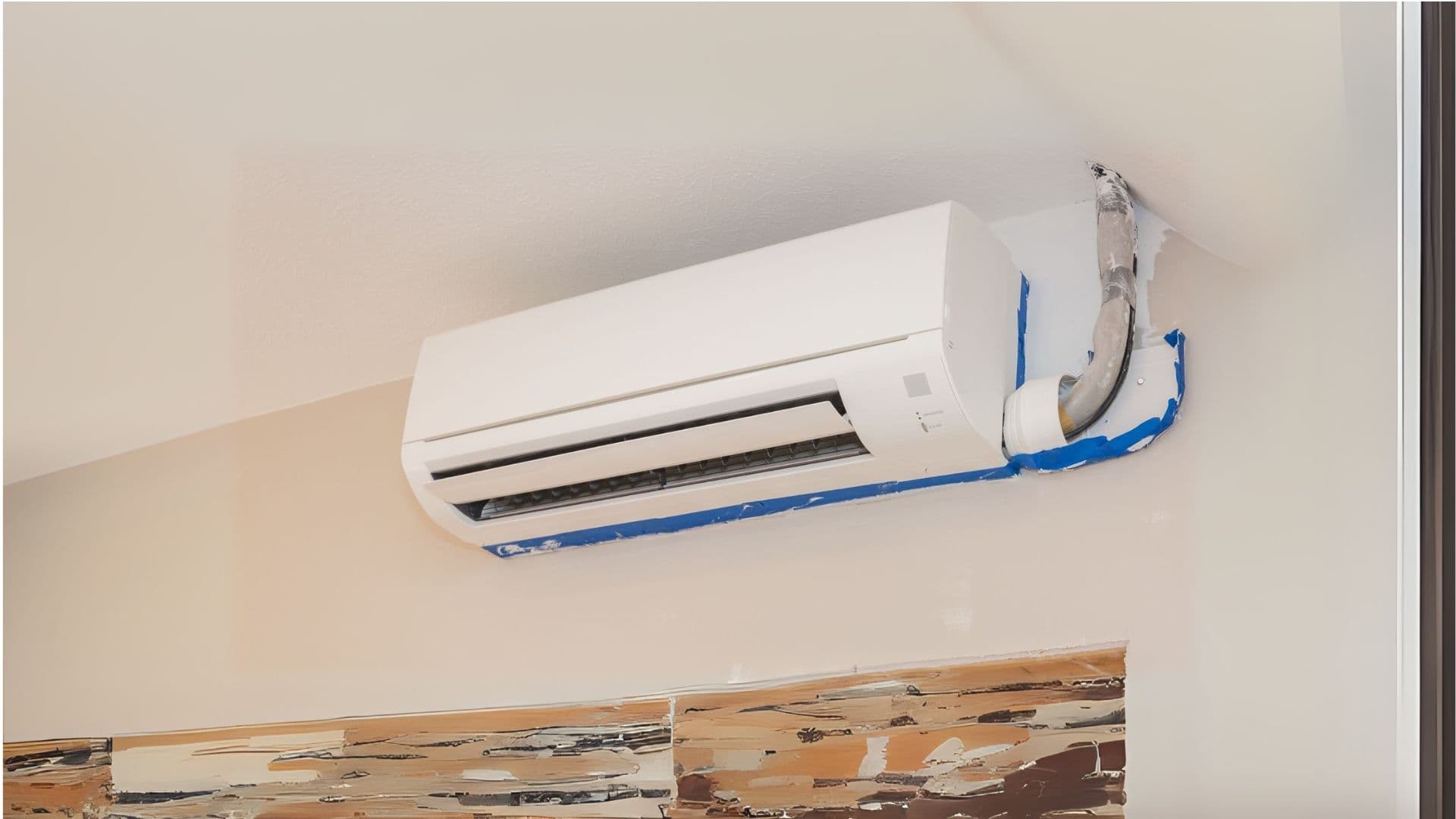
Struggling with uneven temperatures and sky-high energy bills? Mini split systems cut cooling costs by up to 30% compared to traditional HVAC—but only if you choose the right system and avoid common installation mistakes. This guide breaks down exactly what you'll pay to install and run a mini split in 2026, with real pricing data and a cost calculator to plan your budget.
How Much Does a Mini Split Cost to Install in 2026?
National Average Installation Cost: $3,500 to $13,500 (professionally installed)
Equipment alone: $1,000-$8,000
Professional installation labor: $1,500-$5,500 (typically 40-50% of total cost)
Mini Split Installation Cost Calculator 2026
How to Calculate Your Mini Split Cost:
- Square footage needed: _____ sq ft ÷ 50 = _____ BTU (approximate)
- Number of zones needed: _____ rooms/areas
- Base cost per zone: $3,000 (first zone) + $1,200-$2,500 per additional zone
- Add complexity factors:
- Long refrigerant lines (over 25 ft): +$300-$800
- Electrical panel upgrade: +$500-$2,000
- Difficult access/multi-story: +$400-$1,200
- Permits and inspections: +$100-$400
Example Calculation for 2,000 sq ft House:
- 2,000 sq ft ÷ 400 sq ft per zone = 5 zones (or 3-4 zones with larger units)
- 4-zone system base cost: $11,000-$15,000
- Electrical upgrade: +$800
- Permits: +$200
- Total estimated cost: $12,000-$16,000
Mini Split Cost by House Size (2026 Pricing)
How Much Does a Mini Split Cost for 1,000 Square Feet?
Best options for 1,000 sq ft:
- Single large zone: 24,000 BTU system = $4,500-$7,000 installed
- Dual-zone system: Two 12,000 BTU units = $6,000-$9,500 installed
Recommended configuration: One zone for living area (600 sq ft), one zone for bedroom area (400 sq ft)
How Much Does a Mini Split Cost for a 2,000 Sq Ft House?
Best options for 2,000 sq ft:
- 3-zone system: 30,000-36,000 BTU total = $8,500-$13,000 installed
- 4-zone system: 42,000-48,000 BTU total = $11,000-$16,500 installed
Typical setup for 2,000 sq ft:
- Master bedroom: 12,000 BTU
- Living room/kitchen: 18,000 BTU
- Two additional bedrooms: 9,000 BTU each
- Total capacity needed: 48,000 BTU
- Expected cost: $12,000-$15,500 installed
Alternative consideration: If you have good insulation and moderate climate, a 3-zone system may suffice with strategic placement, saving $2,000-$3,000.
How Many Mini Splits Do I Need for a 2,000 Square-Foot House?
Most efficient approach: 3-4 zones depending on:
- Layout (open concept vs. separated rooms)
- Insulation quality
- Climate zone
- Window exposure and shading
- Ceiling height
Common mistakes to avoid:
- Installing one unit per small room (over-complicates system)
- Using one massive unit for entire house (poor temperature control)
- Strategic zoning based on usage patterns and thermal zones
Mini Split Cost to Run: Monthly Operating Expenses
How Much Does a Mini Split Cost to Run Per Month?
Average monthly electricity costs (2026 rates):
Based on: $0.16/kWh national average (Jan 2026), SEER2 rating of 18-22
Mini Split Cost to Run Heat (Winter Operating Costs)
Heating is typically 2-3x more efficient than electric resistance heat:
*Requires cold-climate heat pump model with auxiliary heat
Compared to other heating methods (for 1,000 sq ft):
- Electric baseboard: $150-$220/month
- Oil furnace: $180-$280/month
- Natural gas: $60-$110/month
- Mini split heat pump: $60-$95/month
Mini Split Cost to Operate vs. Other HVAC Systems (Annual Comparison)
Which System Costs Less to Run?
Annual cooling costs for 2,000 sq ft house (moderate climate):
Savings breakdown:
- vs. window units: Save $250-$600/year ($2,500-$6,000 over 10 years)
- vs. old central AC: Save $100-$350/year ($1,000-$3,500 over 10 years)
- vs. new central AC: Save $50-$150/year ($500-$1,500 over 10 years)
Mini Split vs Central AC Cost Comparison 2026
Installation Costs
When to Choose Mini Split Over Central AC:
- No existing ductwork (save $3,000-$12,000)
- Want zone control for different temperatures
- Historic home or renovation project
- Room additions or converted spaces
- Maximum energy efficiency (20-30% lower operating costs)
When Central AC Makes More Sense:
- Already have good existing ductwork
- Prefer hidden indoor units
- Uniform temperature throughout entire home
- Integration with existing forced-air heating
Extended Warranties and Maintenance Plans
Standard manufacturer warranty: 5-7 years parts, 1 year labor
Extended warranty options (2026 pricing):
- 5-year extended labor warranty: $300-$600
- 10-year parts and labor: $600-$1,200
- Annual maintenance plan: $150-$350/year
Maintenance plan typically includes:
- Annual filter cleaning/replacement
- Coil cleaning and inspection
- Refrigerant level check
- Condensate drain clearing
- Performance testing
Is It Better to Oversize or Undersize a Mini Split?
The Short Answer: Neither, Proper Sizing Is Critical
Consequences of oversizing:
- Short cycling (frequent on/off)
- Poor humidity control
- Higher upfront cost
- Reduced equipment lifespan
- Uncomfortable temperature swings
Consequences of under sizing:
- Struggles to cool/heat adequately
- Runs constantly at maximum capacity
- Higher energy bills than expected
- Premature compressor wear
- Uncomfortable temperatures during peak conditions
Proper Sizing Guidelines (2026 Standards)
Basic calculation: 20-25 BTU per square foot
Adjustment factors:
Example for 400 sq ft bedroom:
- Base calculation: 400 × 20 = 8,000 BTU
- Good insulation: -15% = 6,800 BTU
- South-facing large windows: +15% = 7,820 BTU
- Recommended unit: 9,000 BTU (next size up)
Professional load calculation (Manual J): Most accurate method, costs $100-$300 but prevents costly mistakes.
What Are the Disadvantages of Mini Splits?
Common Drawbacks and How to Mitigate Them
1. Visible Indoor Units
- Issue: Wall-mounted units are noticeable
- Solutions: Recessed ceiling cassettes, floor consoles, or decorative unit covers
- Additional cost: Ceiling cassettes add $400-$800 per unit
2. Higher Upfront Cost
- Issue: $3,000-$15,000+ installed vs. $500 for window AC
- Mitigation: Federal tax credits (30% up to $2,000), utility rebates ($300-$1,500), 3-7 year payback through energy savings
3. Regular Maintenance Required
- Issue: Filters need monthly cleaning, annual professional service recommended
- Cost: DIY filter cleaning (free), professional service $150-$300/year
- Consequence of neglect: 25-40% efficiency loss, premature failure
4. Cold Weather Performance Limitations
- Issue: Standard models lose heating capacity below 25°F
- Solution: Cold-climate models work down to -13°F
- Additional cost: Cold-climate units cost 15-25% more
5. Noise Concerns
- Issue: Indoor units produce 19-35 dB (whisper to quiet conversation)
- Reality check: Much quieter than window ACs (50-60 dB) but noticeable in bedrooms
- Solution: Select units with "quiet mode" or "sleep mode" (reduces to 15-25 dB)
6. Not Ideal for Every Home Layout
- Challenging scenarios:
- Extremely open floor plans (no walls for mounting)
- Very high ceilings (>12 ft)
- Rooms with limited exterior wall access
- Alternatives: Ceiling cassettes, ducted mini splits, or hybrid approaches
Why Is My Electric Bill So High With Mini Split?
Top 7 Reasons and Fixes
1. Incorrect System Sizing (30% of complaints)
- Problem: Oversized units short cycle; undersized units run constantly
- Check: Compare BTU capacity to room size calculation
- Fix: Professional load calculation before replacement
2. Poor Installation (25% of complaints)
- Problem: Refrigerant leaks, improper vacuum, kinked lines
- Symptoms: Warm air, ice buildup, constantly running
- Fix: Pressure test and professional inspection ($150-$300)
3. Dirty Filters (20% of complaints)
- Impact: 25-40% efficiency loss when clogged
- Fix: Clean every 2-4 weeks (2 minutes, free)
- Savings: $30-$80/month
4. Thermostat Settings Too Aggressive (10% of complaints)
- Problem: Setting temp to 65°F when outdoor temp is 95°F
- Recommendation: 72-76°F for cooling, 68-72°F for heating
- Each degree adjustment: 3-5% energy savings
5. Leaving System in "Turbo" or "Jet" Mode
- Problem: Maximum fan speed uses 50% more electricity
- Fix: Use auto mode or eco mode
- Savings: $20-$50/month
6. Air Leaks and Poor Insulation
- Problem: Cool/warm air escaping, system working harder
- Check: Inspect windows, doors, attic access
- Fix: Weatherstripping ($50-$200), insulation ($500-$2,000)
- ROI: Pays back in 1-3 years
7. Running During Peak Rate Hours
- Problem: Electricity costs 2-3x more during peak hours (typically 2-7 PM)
- Fix: Pre-cool before peak, use programmable features
- Savings: $40-$120/month in time-of-use rate areas
Expected Monthly Bills (Reality Check)
For 1,000 sq ft in moderate climate:
- Realistic cost: $60-$110/month for cooling (June-September)
- If you're paying: $150-$200+/month → Something is wrong
- Troubleshooting checklist: Clean filters, check thermostat, schedule professional inspection
Do Mini Splits Work in 100 Degree Weather?
Short Answer: Yes, With Proper Sizing and Specifications
Modern mini splits (2026 models) operate effectively up to 115°F outdoor temperature.
Performance considerations:
Best practices for extreme heat:
- Size up 10-20%: Account for reduced efficiency at peak temperatures
- Choose high-temp models: Look for max operating temp of 115°F+
- Shade the outdoor unit: Reduce direct sun exposure (improves efficiency 5-10%)
- Pre-cool strategy: Start cooling early morning, maintain throughout day
- Use ceiling fans: Allows 3-4°F higher thermostat setting
Real-world example (Phoenix, AZ - 110°F days):
- Properly sized 18,000 BTU unit
- 750 sq ft with good insulation
- Maintains 75°F indoor temp
- Monthly cost: $90-$130 (June-August 2026 rates)
Warning signs system is struggling:
- Indoor temp won't drop below 80°F on hot days
- Ice forming on outdoor unit
- Constantly running without cycling
- Solution: Professional inspection, possible system upgrade
What Is the Average Lifespan of a Mini Split?
Expected Longevity (2026 Data)
Component lifespans:
Factors that extend lifespan:
- Professional installation (adds 3-5 years)
- Annual maintenance (adds 2-4 years)
- Monthly filter cleaning (prevents 80% of failures)
- Proper sizing (prevents overwork)
- Quality brand (Mitsubishi, Daikin, Fujitsu last longest)
Factors that shorten lifespan:
- DIY installation mistakes (reduces by 5-8 years)
- Neglected maintenance (reduces by 3-6 years)
- Extreme climate without appropriate model (reduces by 2-4 years)
- Oversizing/undersizing (reduces by 2-5 years)
Replacement Cost Timeline
Typical replacement scenario (20-year lifespan):
- Years 1-10: Minimal repairs, mostly filter replacements
- Years 11-15: Occasional repairs ($200-$600), aging components
- Years 16-20: More frequent repairs ($400-$1,200), efficiency decline
- Year 20+: Replacement typically more cost-effective than continued repairs
When to replace vs. repair:
- If repair costs exceed 50% of replacement cost → Replace
- If system is 15+ years old with major failure → Replace
- If energy bills increasing despite maintenance → Consider replacement
Federal Tax Credits and Rebates for Mini Splits in 2026
Available Incentives (Updated January 2026)
Federal Tax Credit (Section 25C):
- Amount: 30% of equipment and installation costs
- Maximum: $2,000 for air-source heat pumps
- Expires: December 31, 2026 (check for extensions)
- Eligibility: Must meet ENERGY STAR requirements (SEER2 16+, HSPF2 7.8+)
Example savings:
- $10,000 mini split installation
- Federal credit: $2,000 (30% up to max)
- Out-of-pocket: $8,000
State and Utility Rebates (Varies by Location):
Total potential savings example (California):
- Equipment + installation: $12,000
- Federal tax credit: -$2,000
- State rebate: -$3,000
- Final cost: $7,000 (42% savings)
How to claim:
- Federal credit: IRS Form 5695 with tax return
- State/utility rebates: Apply through program websites before or after installation
- Important: Keep all receipts, manufacturer certifications, and contractor documentation
Best Time To Buy a Mini Split in 2026
Fall (September-November):
- Discount range: 15-25% off MSRP
- Why: End of cooling season, contractors less busy
- Best deals: October typically strongest discounts
- Installation timing: Schedule before first freeze
Spring (March-early May):
- Discount range: 10-20% off
- Why: Pre-season promotions, contractor availability good
- Advantage: Ready for cooling season
- Drawback: Less aggressive than fall discounts
Worst Times to Buy:
Best strategy:
- Get quotes in fall (September-October)
- Negotiate aggressively using off-season leverage
- Schedule installation for spring if not urgent
- Lock in pricing with deposit
Manufacturer rebate periods:
- Most brands offer 2-3 promotional periods annually
- Typically coincide with seasonal transitions
- Can stack with contractor discounts for 20-35% total savings
The $5,000 Rule and Other HVAC Guidelines
What Is the $5,000 Rule for HVAC?
The rule: If your HVAC system requires repairs exceeding $5,000 and is more than 10-12 years old, replacement is typically more cost-effective than repair.
Mini split application:
Updated for 2026: With mini split prices higher, some contractors use a $6,000-$7,000 threshold.
The 3-Minute Rule for AC
What it means: After your AC turns off, wait at least 3 minutes before turning it back on.
Why it matters:
- Prevents compressor damage from high-pressure starts
- Extends equipment lifespan
- Most modern mini splits have built-in 3-minute delay protection
Mini split specific: Inverter technology means less cycling stress, but rule still applies if manually turning system on/off.
Real Cost Comparison (1,500 sq ft home, moderate climate):
Bottom line: Mini splits usually reduce total HVAC costs unless you're adding cooling/heating where it didn't exist before.
Do You Need a Mini Split in Every Room?
Strategic Zoning vs. Individual Room Units
Short answer: No, strategic multi-zone systems are more cost-effective than individual units in every room.
Recommended approach:
For 3-bedroom, 2,000 sq ft house:
- Don't do: 6+ units (one per room) = $18,000-$25,000
- Better: 3-4 strategic zones = $9,000-$14,000
Optimal zoning strategy:
- Master bedroom: Dedicated zone (sleep comfort priority)
- Living/dining/kitchen: One larger unit (open floor plan)
- Bedroom wing: One unit for 2-3 bedrooms (similar usage patterns)
- Bonus: Home office or problem room if needed
Exception scenarios where more zones make sense:
- Rooms with vastly different temperature needs
- Home office with different schedule than living areas
- Multi-generational homes with privacy needs
- Rooms far from other zones with poor air circulation
Cost-benefit analysis:
Mini Split Running Cost Calculator
Formula to Calculate Your Monthly Cost
Step-by-step calculation:
- Find your unit's wattage: (BTU ÷ SEER2) = Watts
- Calculate hourly kWh: Watts ÷ 1,000 = kWh per hour
- Determine daily usage: kWh/hour × hours used per day = daily kWh
- Calculate monthly cost: Daily kWh × 30 days × your electricity rate
Example calculation (12,000 BTU, 20 SEER2, 8 hours/day):
- Wattage: 12,000 ÷ 20 = 600 watts
- Hourly kWh: 600 ÷ 1,000 = 0.6 kWh
- Daily usage: 0.6 × 8 hours = 4.8 kWh
- Monthly cost: 4.8 × 30 × $0.16 = $23/month
What Is the $5,000 Rule for HVAC?
The Traditional $5,000 Rule
Original guideline: If repair costs exceed $5,000 AND your system is 10+ years old, replacement is typically more cost-effective than repair.
2026 Update: Due to inflation and higher equipment costs, many contractors now use a $6,000-$7,000 threshold for mini splits.
Example calculations:
Additional Replacement Considerations
Replace when:
- System efficiency has declined significantly (30%+ increase in bills)
- Refrigerant type being phased out (R-22)
- Multiple component failures within 2 years
- New efficiency standards offer 40%+ savings
- Repair costs exceed 50% of replacement cost
Repair when:
- System under 8 years old
- Single component failure
- Still under warranty
- High-efficiency unit worth maintaining
- Budget constraints prevent replacement
The 3-Minute Rule for AC: What It Means for Mini Splits
Understanding the 3-Minute Rule
The rule: After your AC shuts off, wait at least 3 minutes before turning it back on.
Why it exists:
- Prevents high-pressure starts that damage compressor
- Allows system pressure to equalize
- Extends equipment lifespan significantly
- Reduces energy spikes and electrical stress
How It Applies to Mini Splits
Good news: Most modern mini splits (2020+) have built-in 3-minute delay protection in their control boards.
What this means:
- Even if you rapidly turn the system on/off, the compressor won't restart immediately
- You'll notice a delay between pressing "on" and the outdoor unit starting
- This is normal and protecting your equipment
Manual override caution:
- Some units allow manual compressor restart
- Avoid using this feature unless absolutely necessary
- Frequent pressure starts can reduce lifespan by 30-40%
Related Mini Split Best Practices
Temperature changes:
- Make gradual adjustments (2-3°F at a time)
- Avoid dramatic thermostat swings (e.g., 60°F to 80°F)
- Use "auto" or "eco" mode instead of constant "turbo"
Seasonal startup:
- When starting after months of inactivity, allow system to run for 5-10 minutes
- Check for unusual noises or performance issues
- Schedule professional inspection before heavy-use season
Federal Tax Credits and State Rebates for 2026
Updated Federal Tax Credit (Extended Through 2026)
Energy Efficient Home Improvement Credit (25C):
- Credit amount: 30% of total cost (equipment + installation)
- Maximum: $2,000 for air-source heat pumps
- Eligibility requirements:
- SEER2 rating ≥ 16
- HSPF2 rating ≥ 7.8 (for heating models)
- Installed between January 1, 2023 and December 31, 2026
- Must be for existing home (not new construction)
How to claim:
- File IRS Form 5695 with your tax return
- Keep manufacturer certification statement (AHRI certificate)
- Save all receipts and installation invoices
- Credit applies to tax year when system is "placed in service"
Important notes:
- Credit currently set to expire December 31, 2026 (check for extensions)
- Can be claimed multiple times if under lifetime cap
- No income limits
- Cannot exceed your tax liability (non-refundable credit)
State and Utility Rebates by Region (2026)
Top rebate programs:
How to find your local rebates:
- Check Database of State Incentives for Renewables & Efficiency (DSIRE):
- Contact your electric utility company directly
- Ask your HVAC contractor (they often track local incentives)
Stacking Incentives: Maximum Savings Example
Scenario: $12,000 mini split installation in Massachusetts
- Installation cost: $12,000
- Federal tax credit (30%): -$2,000
- Mass Save rebate: -$5,000
- Utility company bonus: -$500
- Final out-of-pocket: $4,500 (62.5% savings!)
Best Times to Buy a Mini Split in 2026
Seasonal Pricing Patterns
Fall (September-November) - BEST TIME:
- Discount range: 15-30% off MSRP
- Why: End of cooling season, contractor availability high
- Peak savings: Mid-October
- Installation timing: Schedule before first freeze for optimal performance testing
Spring (March-early May) - GOOD TIME:
- Discount range: 10-20% off
- Why: Pre-season promotions, good contractor availability
- Best months: Late March through April
- Advantage: Ready for cooling season, test run in moderate weather
Summer (June-August) - WORST TIME:
- Price premium: 10-25% above baseline
- Why: Peak demand, limited equipment availability
- Contractor availability: Booked 2-4 weeks out
- Emergency surcharges: 15-30% additional for rush installation
Winter (December-February) - MIXED:
- Discount potential: 10-15% off
- Challenges: Cold weather installation complications
- Emergency heating: If your heating fails, expect 20-30% premium
- Best for: Planning ahead with spring installation
Manufacturer Rebate Periods (2026 Typical Schedule)
Most brands offer 2-3 promotional periods:
- Spring promotion: March 1 - May 31
- Fall promotion: September 1 - November 30
- Holiday promotion: December (limited, varies by brand)
Typical incentives:
- Instant rebates: $200-$1,000
- Extended warranties: Free upgrade from 5 to 10 years
- Installation credit: $300-$500
- Bundled smart thermostats or accessories
Brands with regular promotions:
- Mitsubishi: Typically 2-3 times per year
- Daikin: Spring and fall
- Fujitsu: Variable, check dealer
- LG: Frequent promotional periods
Money-Saving Strategy for 2026
Optimal buying timeline:
- June-July: Start researching models and getting quotes
- August: Narrow down contractors, negotiate pricing
- September: Lock in pricing with deposit during fall promotions
- October: Schedule installation for mild weather
- November-December: Installation complete, file for rebates
- April (next year): File taxes with federal credit
Negotiation leverage:
- "I'm getting quotes from 5 contractors"
- "Can you match this competitor's price?"
- "I'm flexible on timing - what's your slowest period?"
- "Can you include the permit costs?"
- "What's your cash discount?" (often 3-7%)