How HVAC Compressor Damage Leads to Costly System Failure
Learn how HVAC compressor damage causes costly system failures, warning signs to watch for, repair vs replacement costs, and how to prevent AC breakdowns.
March 14, 2026
Your air conditioner stopped working on the hottest day of summer. The technician just delivered the bad news: your compressor is shot. Now you're staring at a repair bill that makes your eyes water, wondering how this happened and whether you should fix it or replace the whole system.
If you're dealing with a failing HVAC compressor right now, you're not alone. Compressor failure is one of the most expensive AC repairs homeowners face, and understanding what causes it can save you thousands of dollars down the road.
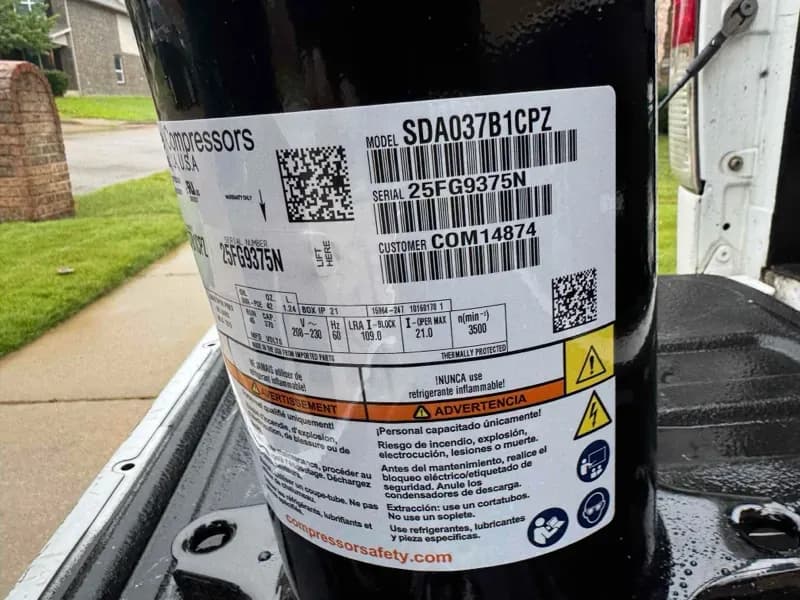
Think of your AC compressor as the heart of your cooling system. It pumps refrigerant through your AC unit, pressurizing it so it can absorb heat from your home and release it outside. When this critical component fails, your entire system shuts down or operates so inefficiently that it's basically useless.
When a compressor starts failing, you'll notice your home isn't cooling properly even though the system is running. The compressor might make strange grinding, clicking, or banging noises. In some cases, the unit will run but blow warm air, or it might not start at all. You might see your circuit breaker tripping repeatedly, or notice the compressor is extremely hot to the touch.
The worst part? A bad compressor doesn't just stop working, it can damage other components in your system, turning a single expensive repair into multiple problems that compound over time.
Let's talk numbers, because this is probably why you're researching this topic in the first place. In 2026, replacing an HVAC compressor typically costs between $1,500 and $3,500 for most residential systems. However, this range varies significantly based on several factors.
For a basic residential compressor replacement in the Dallas-Fort Worth area, you're looking at around $1,800 to $2,200 including labor. Mid-range systems with higher SEER ratings run between $2,200 and $2,800. High-efficiency or larger systems (4-ton or 5-ton units) can push costs to $3,000 or even $3,500.
Here's the breakdown of what you're actually paying for: the compressor itself costs anywhere from $800 to $2,500 depending on the brand and capacity. Labor typically adds another $500 to $1,000, which includes recovering the refrigerant, replacing the compressor, recharging the system, and testing everything. If your system uses R-22 refrigerant (the old Freon that's been phased out), expect to pay significantly more—sometimes an additional $1,000 or more just for the refrigerant.
This is the million-dollar question, or rather, the several-thousand-dollar question. The answer isn't always straightforward, but there's a simple rule of thumb that HVAC professionals use to help homeowners make this decision: the $5000 rule.
The $5000 rule is a practical guideline that helps you decide whether to repair or replace your air conditioning system. Here's how it works: multiply the age of your AC unit by the cost of the repair. If the result is more than $5,000, you should probably replace the entire system instead of repairing it.
For example, if your AC unit is 12 years old and the compressor replacement will cost $2,500, you multiply 12 × $2,500 = $30,000. That's way over $5,000, which means replacement makes more financial sense. On the other hand, if your unit is only 5 years old and the repair costs $2,000, that's 5 × $2,000 = $10,000, which is still over $5,000, but you might consider repair since the unit is relatively new and likely has warranty coverage.
However, the $5000 rule isn't the only factor to consider. If your system is under 8 years old and still under warranty, replacing the compressor often makes sense because you might only pay for labor. If your system is over 15 years old, has an efficiency rating below 13 SEER, or uses R-22 refrigerant, replacement is almost always the better long-term investment.
Here's some good news if you're leaning toward replacement: the federal Energy Efficient Home Improvement Credit has been extended and enhanced for 2025 and 2026. You can claim up to 30% of the cost of a new HVAC system, with a maximum credit of $2,000 for qualifying equipment.
To qualify for the 2025-2026 tax credit, your new AC system must meet these requirements: it must have a SEER2 rating of at least 16 (SEER2 is the new testing standard that replaced SEER in 2023), and it must be an Energy Star certified central air conditioning system. Heat pumps that provide both heating and cooling can qualify for even higher credits.
This tax credit can significantly offset the cost of a full system replacement. If you're installing a $7,000 HVAC system that qualifies, you could get $2,000 back on your taxes. That makes the effective cost $5,000—suddenly making replacement much more attractive compared to a $2,500 compressor replacement on an old, inefficient system.
Catching compressor problems early can sometimes save you from a complete failure, but you need to know what to look for. The most obvious sign is when your AC runs but doesn't cool your home adequately. You might notice the outside unit making unusual noises—grinding, squealing, or hard starting sounds that indicate the compressor is struggling.
Circuit breakers that trip repeatedly when the AC runs often point to compressor issues, as failing compressors draw excessive current. If you notice the compressor unit is vibrating excessively or the fan runs but the compressor doesn't kick in, these are red flags. Some homeowners report a burning smell coming from the outdoor unit, which can indicate electrical problems related to the compressor.
Listen for clicking or chattering sounds when the system tries to start—this often means the compressor is attempting to engage but can't. If you're checking your outdoor unit and notice it's unusually hot, or if there's visible leaking around the compressor, don't wait to call a professional. These symptoms indicate the compressor is on its last legs.
The number one killer of AC compressors is dirty coils and restricted airflow. When your evaporator or condenser coils get caked with dirt, dust, and debris, the compressor has to work much harder to move refrigerant through the system. This extra strain causes the compressor to overheat and eventually fail prematurely.
Refrigerant leaks are another major culprit. When your system is low on refrigerant, the compressor runs without proper lubrication and cooling, causing excessive wear. Many homeowners don't realize they have a leak until the compressor has already been damaged. This is why those "just add refrigerant" quick fixes without finding and repairing the leak are so problematic, they're setting up your compressor for failure.
Electrical problems rank high on the list too. Power surges, faulty capacitors, and bad contactors can all damage compressor motors. In Texas, where we have severe thunderstorms and power fluctuations, this is a particularly common issue. A single major power surge can fry the compressor's electrical components instantly.
Lack of maintenance is the underlying cause of many compressor failures. Systems that don't receive annual tune-ups develop multiple small problems that compound over time. Dirty filters restrict airflow, causing the evaporator coils to freeze. When ice builds up and then melts, liquid refrigerant can flood back into the compressor, a condition called liquid slugging that causes catastrophic damage.
Beyond the most common causes, several other factors can destroy your compressor. Installing the wrong size system for your home causes short cycling—the unit turns on and off repeatedly, which wears out the compressor quickly. A 3-ton unit in a home that needs 4 tons will run constantly without adequate cooling, burning out the compressor in just a few years instead of the normal 12-15 year lifespan.
Contaminated refrigerant or air in the lines damages compressors from the inside. When technicians don't properly evacuate the system during repairs or installation, moisture and air create acids that corrode internal components. This is why you should only work with certified HVAC technicians who follow proper procedures.
Running your AC in cold weather might seem harmless, but most compressors aren't designed to operate below 60°F outdoor temperature. The refrigerant doesn't flow properly when it's cold, and the compressor oil doesn't circulate correctly, leading to damage. Many thermostats have safeguards against this, but if you override them, you're risking expensive damage.
Physical damage from severe weather, falling debris, or poor installation can crack compressor housing or damage internal components. In areas like Arlington and Fort Worth, we've seen compressors damaged by hail, falling tree branches, and even improper concrete pad placement that causes the unit to sink and strain the refrigerant lines.
Under normal conditions with proper maintenance, an AC compressor should last 12 to 15 years. However, this is just an average—some compressors fail after 8 years, while others keep running for 20 years or more. The actual lifespan depends heavily on how well you maintain your system, how often you use it, and the quality of the original installation.
In Texas, where air conditioners run for 6-8 months per year (and sometimes more), compressors face more wear than in milder climates. A compressor in Houston or Dallas might last 10-12 years, while the same model in a cooler climate could run for 15-18 years. This is why location matters when evaluating whether to repair or replace.
High-quality compressors from brands like Trane, Carrier, or Lennox tend to outlast budget models. If your original system came with a 10-year parts warranty on the compressor, that's a good indicator of expected lifespan. The manufacturer is essentially betting that most compressors will last beyond 10 years under normal conditions.
This depends on how the compressor is failing. In many cases, yes, your AC will still run, but it won't cool properly or at all. The outdoor fan might spin, the indoor blower might operate, but without a working compressor, refrigerant doesn't circulate and your home doesn't cool down. You're basically just running expensive fans that circulate warm air.
Some compressors fail intermittently, working for a while then shutting down. You might get a few hours of cooling before the compressor overheats and stops, then it works again once it cools off. This creates the frustrating situation where the system seems fine when the technician arrives but fails later that evening.
In other cases, a completely failed compressor prevents the entire system from starting. The thermostat calls for cooling, but nothing happens, or the system tries to start, you hear clicking or humming, but the compressor never engages. This is actually better than a partially working compressor because at least you know immediately that there's a serious problem requiring professional help.
When troubleshooting AC problems, many homeowners want to test the system repeatedly by turning it off and on. However, there's an important safety feature you should know about: the 3-minute rule. Modern air conditioners have a built-in delay that prevents the compressor from restarting for at least three minutes after shutting down.
This delay exists to protect the compressor from damage. When a compressor stops, refrigerant pressure needs time to equalize throughout the system. If you restart the compressor immediately, it has to work against high pressure on one side and low pressure on the other, which can damage the motor or even cause it to burn out.
If you're experiencing AC problems and want to reset the system, turn it off at the thermostat and wait at least five minutes (even better than three) before turning it back on. Better yet, turn off the circuit breaker, wait five minutes, then restore power. This gives all the electrical components and refrigerant pressure time to stabilize before restarting.
Many compressor issues can be temporarily resolved with a proper reset, though this isn't a fix for actual mechanical failure. To safely reset your AC compressor, start by turning off the thermostat completely. Then locate your outdoor unit's disconnect box (it's usually a grey box mounted on the wall near the unit) and turn it off, or flip the circuit breaker labeled "AC" or "Air Conditioner" to the off position.
Wait a full five minutes, this is crucial for pressure equalization. While you're waiting, check your outdoor unit for obvious problems like debris blocking airflow, ice buildup, or visible damage. After five minutes, restore power by flipping the breaker or disconnect back on. Then go inside and turn your thermostat back on, setting it to cool mode a few degrees below the current temperature.
Listen to the outdoor unit. You should hear the compressor start within a few minutes along with the fan. If the compressor makes grinding noises, won't start at all, or the breaker trips again immediately, you have a real problem that a reset won't fix—it's time to call a professional.
Keep in mind that if you're resetting your compressor multiple times per week, or even multiple times per month, something is wrong. Frequent resets indicate an underlying issue that needs professional diagnosis and repair before it leads to complete compressor failure.
Many Texas homeowners wonder if running their AC continuously during hot summer months will damage the compressor. The short answer is no—compressors are designed to run for extended periods. In fact, short cycling (turning on and off frequently) is harder on compressors than steady operation.
However, there's a cost consideration. Running a 3-ton AC unit 24 hours in Texas during peak summer will cost approximately $4 to $7 per day, or $120 to $210 per month, depending on your electricity rates and the efficiency of your system. A newer 16 SEER system will cost less to run than an old 10 SEER unit doing the same work.
The real issue with 24/7 operation isn't the running—it's usually an indicator that your system is undersized, inefficient, or there's a problem with your home's insulation and air sealing. A properly sized, efficient AC system should cycle on and off even on hot days. If yours runs constantly and still can't keep your home cool, you might be setting up conditions that lead to premature compressor failure due to overwork.
Since many compressor failures lead homeowners to consider full system replacement, let's talk about those costs. In 2026, a complete central AC replacement in the DFW area typically costs between $4,500 and $8,500 for most homes. This includes removing the old system, installing the new outdoor condenser and indoor evaporator coil, connecting everything, charging with refrigerant, and testing.
A basic 2-ton to 3-ton system with a 14-16 SEER rating costs $4,500 to $6,000 installed. Mid-range systems with 16-18 SEER and better features run $6,000 to $7,500. High-efficiency systems with SEER2 ratings above 18, two-stage compressors, and advanced features cost $7,500 to $10,000 or more.
The size of your home matters significantly. A 1,500 square foot home needs a smaller, less expensive system than a 3,000 square foot home. Your ductwork condition also affects cost—if ducts need significant repair or replacement, add another $2,000 to $5,000 to the total.
Beyond the Energy Efficient Home Improvement Credit we discussed earlier, there are additional ways to benefit from AC replacement on your taxes. If you use part of your home exclusively for business, you may be able to depreciate a portion of the AC system cost as a business expense. However, this only applies if you have a legitimate home office that qualifies for the home office deduction.
For most homeowners, the 30% tax credit with a $2,000 maximum is the primary tax benefit available for 2025-2026. To claim this credit, you'll need to keep all receipts and the manufacturer's certification statement proving your system meets the efficiency requirements. Your HVAC contractor should provide this documentation.
It's worth noting that routine maintenance, repairs, and compressor replacements don't qualify for tax credits—only complete system replacements that meet the efficiency standards. This is another factor that tips the scales toward full replacement when you're deciding what to do about a failed compressor in an aging system.
After spending years in the HVAC industry across Texas, we've learned that most compressor failures are preventable with proper care. The single most effective prevention strategy is annual professional maintenance. During a tune-up, technicians clean coils, check refrigerant levels, test electrical components, and catch small problems before they damage the compressor.
Change your air filter every 30-60 days, or more often if you have pets or allergies. A dirty filter reduces airflow, causing all sorts of problems that stress the compressor. This simple $20-per-month habit can add years to your compressor's life.
Keep your outdoor unit clean and clear. Spray down the condenser coils monthly during cooling season to remove dust and pollen. Clear away grass clippings, leaves, and debris that restrict airflow. Maintain at least two feet of clearance around the entire unit.
Install a surge protector specifically designed for HVAC systems. In Texas, where thunderstorms are common, power surges are a major cause of compressor failure. A good surge protector costs $300-400 installed but can save you from a $3,000 compressor replacement.
If you notice any signs of compressor problems, warm air, strange noises, frequent cycling, high energy bills, or repeated circuit breaker trips, don't wait. The longer you run a failing compressor, the more damage it can cause to other system components. What starts as a repairable problem can become a complete system failure.
At Team Enoch, we've helped thousands of homeowners across the Dallas-Fort Worth area make informed decisions about their HVAC systems. Whether it's compressor replacement, full system replacement, or preventive maintenance to avoid problems in the first place, we provide transparent pricing and honest advice.
Our technicians don't work on commission, so you'll never get a high-pressure sales pitch for unnecessary repairs or replacements. We'll show you exactly what's wrong, explain your options clearly, and help you make the decision that's best for your home and budget.
If you're experiencing AC problems or want to prevent compressor failure through proper maintenance, give us a call at 817-769-3712. We serve Arlington, Fort Worth, Dallas, and the entire DFW metroplex with fast, reliable HVAC services that put your comfort and satisfaction first.
About Team Enoch: Since 2015, Team Enoch has been the trusted choice for HVAC services across the Texas Triangle and Florida. With over 15,000 residential jobs completed annually, 5,000+ positive reviews, and a 4.9/5 Google rating, we deliver the expertise and customer service that homeowners deserve. We're a locally owned company that treats every customer like family, providing fair prices, quality workmanship, and lifetime relationships built on integrity.