How to Keep Your A/C Running Strong This Summer
Keep your A/C running strong this summer with simple maintenance tips. Improve efficiency, prevent breakdowns, and stay cool all season long.
Team Enoch
April 6, 2026
Your air conditioner doesn't ask for much. It runs quietly in the background, sometimes for ten to twelve hours a day during a Texas summer, and most homeowners don't think about it until the moment it stops working. That's understandable. But the gap between a system that lasts eight years and one that lasts eighteen is almost never about luck or brand. It's about what happens, or doesn't happen, during the years in between.
This guide covers everything that actually matters when it comes to keeping your A/C running reliably, from the simple habits you can manage yourself to the professional checks that catch problems before they turn expensive. None of it is complicated. All of it makes a measurable difference.
If there is a single habit that has the greatest impact on A/C longevity, this is it. A clogged air filter restricts airflow through the system, which forces every component to work harder than it was designed to. The evaporator coil freezes. The blower motor strains. The compressor runs hotter and longer. Over time, that compounded stress shaves years off the life of the system.
Standard 1-inch filters should be replaced every 30 to 60 days in actively used homes, especially those with pets or residents with allergies. Thicker media filters, 4 to 5 inches, can go three to six months between changes. The right MERV rating for most homes falls between 8 and 11: efficient enough to capture meaningful particulate without choking airflow the way high-MERV hospital-grade filters can. Set a recurring reminder and don't skip it, this one habit alone can prevent the majority of avoidable A/C failures.
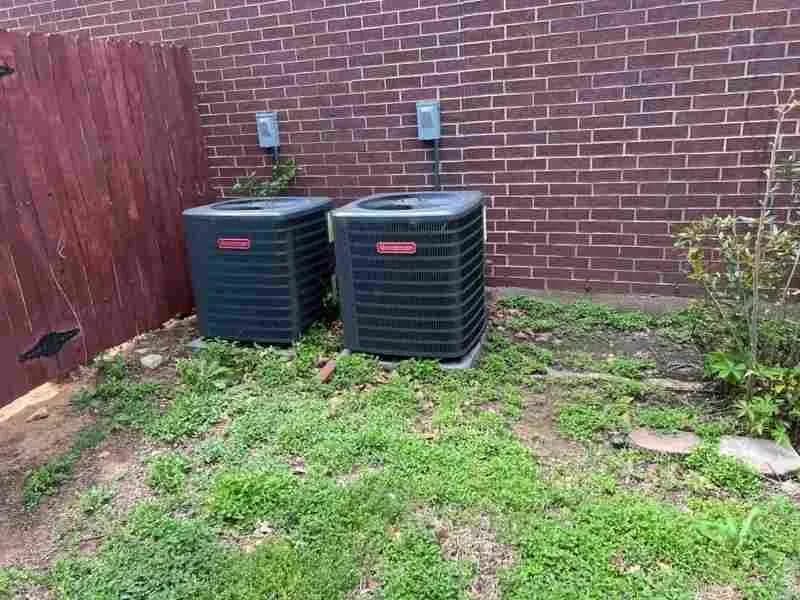
The condenser unit outside your home is where your system releases heat from inside the house into the outdoor air. For that heat exchange to work efficiently, the unit needs clean coils and unobstructed airflow on all sides. Grass clippings, cottonwood, leaves, and dirt accumulate on the coil fins and act as insulation, trapping heat inside the system and forcing it to work harder to reach your set temperature.
Rinse the outdoor unit gently with a garden hose from the inside out once or twice per season to dislodge debris from the fins. Keep landscaping, shrubs, and fencing at least two feet away from all sides of the unit to ensure adequate airflow. Never enclose the condenser in a decorative box or cabinet, it needs to breathe. Also avoid letting sprinkler systems spray directly onto the unit, as mineral deposits from hard water can coat the coils over time.
As your A/C cools the air, it also removes humidity, and that moisture has to go somewhere. It drips off the evaporator coil, collects in a drain pan, and flows out through a condensate drain line, typically to a floor drain or outside the home. Over time, algae, mold, and debris build up inside that line and cause clogs. A clogged condensate line leads to an overflowing drain pan, water damage to ceilings or walls, and, in systems with a float switch, a complete system shutdown.
Flushing the line once at the start of each cooling season takes about five minutes. Pour a cup of distilled white vinegar into the access port near the indoor air handler and let it sit for 30 minutes before flushing with water. This kills biological growth before it has a chance to cause a blockage. It's one of the easiest maintenance tasks a homeowner can do, and one of the most consistently skipped.
How you operate your thermostat has a direct impact on system wear. Constantly adjusting the temperature, setting it to extreme lows expecting faster cooling, or leaving it at the same temperature around the clock regardless of occupancy all contribute to unnecessary run cycles and compressor strain.
A programmable or smart thermostat allows you to set temperature schedules that match your household's actual occupancy, cooling the home before you arrive rather than running aggressively all day. Keeping indoor temperatures between 75 and 78 degrees during occupied hours and allowing a slight setback when the home is empty reduces total runtime without sacrificing comfort. Every degree you raise the thermostat while away reduces energy consumption by roughly 3 percent, and less runtime means less wear on every mechanical component.
One important note: avoid drastic temperature swings. Raising the thermostat 10 degrees while away and then demanding a rapid pulldown when you return forces the compressor to run hard for an extended period. A modest 4 to 5 degree setback is sufficient and far gentler on the system.
Studies consistently show that the average home loses 20 to 30 percent of conditioned air through leaks, holes, and poorly connected sections in the duct system. That's air you've already paid to cool escaping into attic spaces or wall cavities before it ever reaches a living area. The result is a home that never quite reaches the set temperature, a system that runs longer than it should, and energy bills that seem higher than they ought to be.
Inspect accessible ductwork in the attic or crawl space for disconnected joints, visible gaps, or sections of insulation that have slipped. Seal leaks with mastic sealant, not standard duct tape, which degrades quickly under temperature swings, and re-wrap insulation around any exposed sections. In older homes, a professional duct pressure test can identify hidden leaks that aren't visible to the eye. Addressing duct efficiency is one of the highest-return investments a homeowner can make in overall system performance.
A well-maintained system still ages, and catching early-stage problems prevents them from cascading into expensive ones. Pay attention to the following signals.
Warm air from vents despite the system running is often a refrigerant issue, a frozen coil, or a failing compressor, all of which are far less expensive to address early than after full failure. Unusual sounds like clicking at startup, humming from the outdoor unit, or rattling from the air handler indicate failing capacitors, loose components, or motor issues. Higher energy bills without increased usage often mean the system is losing efficiency due to dirty coils, low refrigerant, or duct leaks. Frequent short cycling, where the system turns on and off repeatedly without completing a full run, can signal an oversized system, a refrigerant overcharge, or a failing thermostat. Moisture or pooling water near the indoor unit is almost always a drain line issue that needs attention before it causes secondary damage.
Everything covered so far is something a motivated homeowner can manage. But there are elements of A/C maintenance that require calibrated tools, technical training, and hands-on access to components that aren't visible from the outside. An annual professional tune-up, ideally scheduled in early spring before peak demand, addresses all of it in a single visit.
A thorough professional maintenance visit should include testing refrigerant pressure and inspecting for leaks, measuring voltage and amperage draws on the compressor and fan motors, testing the capacitor and contactor for proper function, cleaning the evaporator and condenser coils, checking and clearing the condensate drain, verifying thermostat calibration and operation, inspecting electrical connections and tightening any that have loosened, and checking the blower motor and belt for wear.
Each of these checks catches the small failures, a capacitor reading low, a contactor showing pitting, refrigerant slightly below charge, before they become the catastrophic ones. The cost of an annual tune-up is a fraction of even a single major repair, and a small fraction of a premature system replacement.
The homeowners who get the longest, most reliable life out of their A/C systems are not the ones who bought the most expensive equipment. They're the ones who changed their filters consistently, kept the outdoor unit clean, flushed the drain line, and had a technician look at the system once a year before the Texas heat made it critical. None of that is difficult or expensive. All of it compounds over time into a system that runs the way it was designed to, for the full extent of its useful life.
At Team Enoch, we service and maintain A/C systems across Arlington, Fort Worth, Dallas, Austin, Houston, San Antonio, and our Florida markets. Whether you're due for your annual tune-up, noticing something that doesn't sound right, or just want a professional set of eyes before summer arrives, we're here to help.
Call us at 817-769-3712 or schedule online at teamenoch.com. Your system works hard for you every single day, a little attention goes a long way.