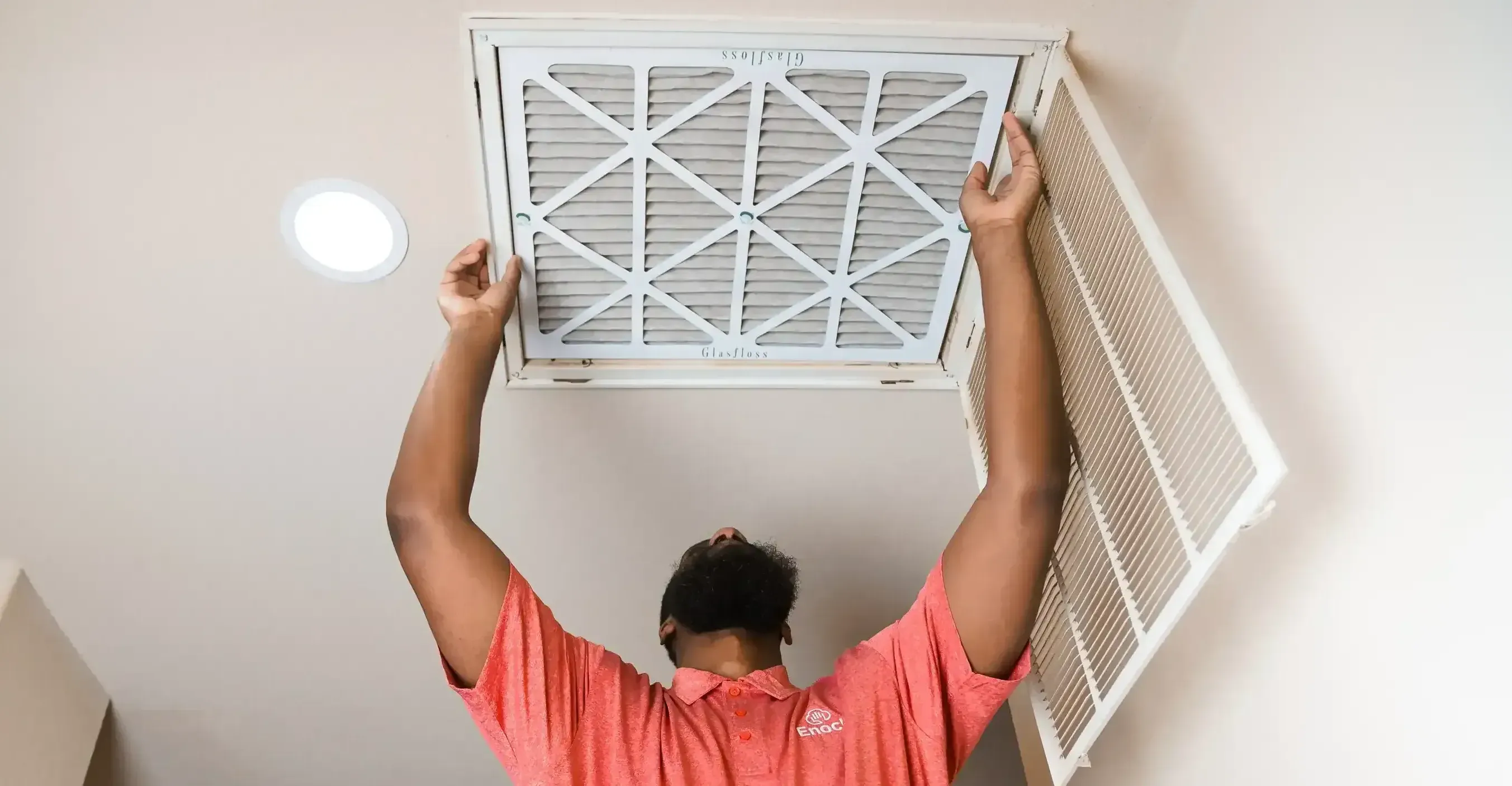
Neglecting AC maintenance leads to a gradual decline in performance, higher energy bills, and breakdowns that always seem to happen on the hottest day of the year. But how often should you really service it, and what's changed in 2025 and 2026 that every homeowner needs to know? This guide covers everything, from costs and checklists to the new refrigerant regulations and expiring tax credits.
Most homes need professional AC service once a year, ideally in spring before peak cooling season. Homes with pets, older systems (10+ years), or allergy sufferers may benefit from twice-yearly service.
What's In This Guide
• How often should you have your AC serviced?
• How much does AC service cost in 2025–2026?
• What does an AC tune-up include? (Full checklist)
• Signs your AC needs a tune-up right now
• Benefits of regular AC maintenance
• When is the best time to schedule AC service?
• How often should YOU service your AC? (By household type)
• The 2025 refrigerant phaseout, what homeowners need to know
• Federal HVAC tax credits expiring December 31, 2025
• Should I repair or replace my AC unit?
• DIY maintenance tips between professional visits
• How to choose the right HVAC contractor
How Often Should You Have Your AC Serviced?
The standard recommendation from HVAC professionals and manufacturers is once per year, scheduled in early-to-mid spring before the summer heat arrives. However, several factors can shift that recommendation.
An unserviced AC loses approximately 5% efficiency per year. Over five years, that translates to 25% more energy consumed, and a bill that keeps climbing every summer.
Pro Tip: Always check your manufacturer's warranty. Many require documented annual professional service to keep the warranty valid. Skipping even one year can void your coverage.
How Much Does AC Service Cost in 2025–2026?
One of the most searched questions is "how much does an AC tune-up cost?" Here's what you can realistically expect to pay:
Additional costs to be aware of:
• Refrigerant recharge (R-410A): $100 – $320 per recharge. Costs are rising as supply tightens due to the 2025 phaseout.
• Refrigerant leak detection: $100 – $330 to locate; $200 – $1,500 to repair depending on severity.
• Capacitor replacement: $100 – $250, one of the most common repairs.
• Fan motor replacement: $200 – $700.
• Duct cleaning (if needed): $250 – $500, a separate service from the standard tune-up.
Money-saving tip: Book your AC service in early spring or late winter. Peak summer demand can push prices up significantly, and technician availability drops fast. Many companies also offer pre-season discounts.
What Does an AC Tune-Up Include? (Full Checklist)
Many homeowners wonder what a technician actually does during an AC service visit. Here is a full checklist of what a thorough, professional tune-up should cover:
Electrical & Controls
• Inspect and tighten all electrical connections
• Test and calibrate the thermostat
• Check capacitors and contactors
• Test start and run components
• Verify safety controls and shutoffs
Refrigerant & Coils
• Check refrigerant levels (low refrigerant = major efficiency loss)
• Inspect for refrigerant leaks
• Clean evaporator coil (indoor)
• Clean condenser coil (outdoor)
Airflow & Filtration
• Replace or clean air filter
• Inspect and clear condensate drain line (prevents water damage and mold)
• Check blower motor and wheel for debris or wear
• Verify airflow from all supply vents
Mechanical Components
• Lubricate all moving parts (motors, bearings)
• Inspect fan blades for damage or imbalance
• Check belts and pulleys if applicable
• Clear debris around outdoor condenser unit
Performance Testing
• Measure temperature differential (supply air vs. return air, should be 16–22°F difference)
• Measure system operating pressures
• Test overall system efficiency
• Provide written report of findings
Ask for a written report after every service visit. A good technician will document what was found, what was done, and any recommendations. This documentation also protects your warranty.
Signs Your AC Needs a Tune-Up Right Now
Don't wait for the annual calendar date if your system is showing any of these warning signs. Address them promptly to prevent minor issues from becoming expensive failures.
• Decreased cooling efficiency: Your home isn't reaching the set temperature, or some rooms are noticeably warmer than others.
• Sudden spike in energy bills: If your bill jumps without a change in usage habits, your system is working harder than it should.
• Strange noises: Grinding, squealing, banging, or rattling are mechanical red flags that need immediate attention.
• Weak airflow: Could indicate a failing blower, clogged filter, or blocked ductwork.
• Short cycling: If the AC kicks on and off frequently without completing a full cooling cycle, it may signal thermostat issues, low refrigerant, or an improperly sized system.
• Moisture or leaks around the unit: Could be a clogged condensate drain (common and fixable) or a refrigerant leak (more serious).
• Musty or burning smells: Musty odors suggest mold in the ducts or drain pan; burning smells indicate electrical issues, turn off the system and call immediately.
• Ice forming on the unit: Ice on the evaporator coil means restricted airflow or low refrigerant. Do not ignore this.
• System is over 8 years old and hasn't been serviced: Older systems need more frequent attention. Skipping service accelerates wear significantly.
Benefits of Regular Air Conditioning Maintenance
• Lower energy costs: The U.S. Department of Energy found that well-maintained HVAC systems can cut energy use by 15–20%. On a $200/month summer cooling bill, that's $30–$40 saved every single month.
• Prevent expensive breakdowns: Regular tune-ups reduce the risk of a major breakdown by up to 95%. Emergency AC repair averages $300–$600, and a full system replacement runs $5,000–$12,000.
• Extended lifespan: A well-maintained system can last 15–20 years. Neglected systems often fail in 8–10 years. Annual service could add a decade to your unit's life.
• Better indoor air quality: Clean filters and coils reduce dust, pollen, pet dander, mold spores, and other allergens circulating through your home.
• Warranty protection: Most manufacturers require documented professional maintenance to honor warranty claims. One missed year can void coverage worth thousands.
• Carbon monoxide safety: Your technician checks for CO leaks and other hazards that could be invisible and dangerous.
• Consistent comfort: Maintained systems distribute air more evenly, eliminating hot spots and humidity problems throughout your home.
• Environmental benefits: Efficient systems use less fuel, reducing your carbon footprint, and using refrigerants responsibly prevents potent greenhouse gases from escaping into the atmosphere.
When Is the Best Time to Schedule AC Service?
Timing your service correctly makes a real difference, both in cost and in making sure a technician is available when you need one.
Dallas, Fort Worth & Arlington homeowners: Texas summers are punishing. Book your spring service in February or March before the rush. Once May hits, service slots fill up fast and you may be waiting during the first 95-degree week of the year.
The 2025 Refrigerant Phaseout: What Every Homeowner Needs to Know
This is one of the biggest changes the HVAC industry has seen in decades, and most homeowners have no idea it happened.
What Changed?
As of January 1, 2025, the EPA banned the manufacture and import of new air conditioning systems using R-410A refrigerant under the American Innovation and Manufacturing (AIM) Act. R-410A, while safe for the ozone layer, has a global warming potential (GWP) of over 2,000, making it a significant contributor to climate change.
New systems must now use refrigerants with a GWP of 700 or below. The two replacements entering the market are:
• R-454B (Puron Advance): GWP of ~466, used in whole-home ducted systems by most major manufacturers including Lennox and Carrier.
• R-32: GWP of ~675, used in many ductless mini-split systems. Already widely used internationally.
Does This Affect Your Existing System?
If you already have an R-410A system, you do NOT need to replace it immediately. Here's what you need to know:
• Your existing R-410A system can still be legally serviced and repaired.
• R-410A refrigerant remains available for servicing existing systems (only reclaimed R-410A will eventually be used as new production ends).
• As supply tightens, expect R-410A recharge costs to increase, potentially 10–30% over the next few years.
• If your system is over 10 years old or frequently needs refrigerant, now is a smart time to evaluate replacement before prices rise further.
What If You Need a New System?
New systems using R-454B and R-32 are slightly more expensive upfront (roughly $1,200 or more added to the system cost) due to new safety sensors required for these mildly flammable refrigerants. However, they come with better efficiency ratings and will not face the supply constraints of R-410A.
Bottom line: Don't panic. Your current system is fine. But if you're due for a replacement in the next 2–3 years, it's worth having a conversation now about your options and costs. Our technicians can assess your system and advise you, call 817-769-3712.
Federal HVAC Tax Credits Expiring December 31, 2025
If you're considering upgrading your AC or heating system, time is running out to claim significant federal tax credits. The Energy Efficient Home Improvement Credit (Section 25C), originally set to run through 2032, was accelerated to expire on December 31, 2025 under the One Big Beautiful Bill Act.
Important details:
• System must be installed (not just purchased) by December 31, 2025.
• Must be installed in your primary U.S. residence.
• Credits are nonrefundable, they reduce your tax bill but won't generate a refund if the credit exceeds what you owe.
• You must file IRS Form 5695 (Residential Energy Credits) with your tax return.
• For 2025 installations, you must include the manufacturer's Qualified Manufacturer ID Number (QMID) on your tax return.
If you've been thinking about a new high-efficiency system, act now. These credits expire December 31, 2025, and the savings are real, potentially $600–$2,000 off your tax bill. Call Team Enoch today at 817-769-3712 to discuss qualifying systems.
Should I Repair or Replace My AC Unit?
This is the question every homeowner faces eventually. Here's how to make a smart decision:
The $5,000 Rule
Multiply the age of your system by the estimated repair cost. If the result exceeds $5,000, replacement is likely the smarter choice.
Example: A 12-year-old system needs a $500 repair. 12 × $500 = $6,000, over $5,000, which suggests replacement is worth considering.
Key Questions to Ask
Before making any decision, ask your HVAC technician these critical questions — and if you're also evaluating contractors for the job, check out our guide on the 9 Must-Ask Questions Before Hiring an HVAC Contractor.
- How old is the system? A well-maintained AC typically lasts 15–20 years. If your unit is over 12–15 years old and experiencing repeated breakdowns, replacement is almost always the more cost-effective path forward.
- What refrigerant does it use? Systems running on R-22 (Freon) are a red flag — R-22 was fully banned in 2020 and is now only available in reclaimed form at premium prices. If your system uses R-22, replacement isn't just smart, it's inevitable.
- What is the SEER2 rating? Older systems typically run at SEER 8–10, while modern high-efficiency units achieve SEER2 18–21+. That upgrade alone can cut your cooling energy costs by 40–60% annually.
- How much will repairs cost? Apply the 50% rule — if repair costs exceed half the price of a new equivalent system, replacement almost always delivers better long-term value.
When Replacement Makes Clear Sense
• System is more than 15 years old
• Uses R-22 refrigerant
• Has needed multiple costly repairs in recent years
• SEER rating is below 13 (now illegal in new units)
• You're consistently uncomfortable despite repairs
Team Enoch Tip: If your system is 8–12 years old and needs a repair over $800, request a replacement quote at the same time so you can make a fully informed side-by-side comparison.
DIY Maintenance Tips Between Professional Visits
Professional service handles the complex stuff. These simple tasks between visits keep your system running optimally and extend the time between repairs.
Filter Replacement (Most Important DIY Task)
Change your air filter every 1–3 months. Use these guidelines:
• 1–2 inch filters: Every 1–2 months if you have pets or allergies; every 3 months for standard homes.
• 4–5 inch media filters: Every 6–12 months.
A clogged filter is the single most common cause of AC problems, it restricts airflow, causes the coil to freeze, and forces the motor to work harder. It costs $5–$30 to fix. Ignoring it can mean a $500+ repair.
Keep the Outdoor Unit Clear
• Maintain 2 feet of clearance around the condenser unit, no plants, furniture, or structures.
• Rinse down the condenser fins with a garden hose (from inside out) at the start of cooling season to remove dust, seeds, and debris.
• After storms, check for leaves, branches, or other debris lodged in or around the unit.
Condensate Drain Maintenance
The drain line removes humidity from your home. A clogged drain causes water to back up and can result in water damage, mold growth, or system shutdown.
• Pour 1 cup of distilled white vinegar or diluted bleach down the drain line monthly during cooling season.
• If you notice water pooling near your indoor unit, call for service, this is a clogged drain until proven otherwise.
Smart Thermostat Upgrades
If you still have a manual or basic programmable thermostat, upgrading to a smart thermostat is one of the highest-ROI home improvements you can make. Benefits include:
• Automated temperature schedules that match your routine, savings of $100–$200/year on average.
• Remote control from your phone, never come home to a 90-degree house or forget to adjust it before vacation.
• Energy usage reports that help identify if your system is running inefficiently.
• Compatibility with geofencing to automatically adjust when you leave or arrive home.
Popular models compatible with most Team Enoch-installed systems include the Ecobee and Google Nest. Ask your technician which is best for your setup.
How to Choose the Right HVAC Contractor
Not all HVAC services are equal. Watch out for contractors who advertise ultra-low tune-up prices as a way to get in the door and then push unnecessary repairs. Here's what to look for:
• Licensed and insured: Always verify state HVAC contractor licensing and general liability insurance before allowing anyone to work on your system.
• NATE-certified technicians: North American Technician Excellence certification is the gold standard for HVAC technicians.
• Transparent pricing: A reputable company provides a written estimate before beginning any work beyond the standard tune-up.
• Detailed written service report: Every visit should result in documented findings, this protects your warranty and keeps your system history on record.
• No-pressure approach: A trustworthy technician presents findings and options; they don't manufacture urgency or push same-day expensive repairs on routine visits.
• Clear warranty on work performed: Reputable contractors stand behind their repairs.
Team Enoch has served Dallas, Fort Worth, Arlington, and Austin since our founding. Our NATE-certified technicians provide written service reports on every visit, transparent flat-rate pricing, and no-pressure recommendations. Call 817-769-3712 or fill out our form above to schedule your service today.
Team Enoch: Expert AC Service in Dallas, Fort Worth, Arlington & Austin
Whether your system needs a routine annual tune-up, a refrigerant check in light of the 2025 phaseout changes, or a full replacement consultation before the federal tax credits expire, Team Enoch's NATE-certified technicians are ready to help.
• Residential and commercial service in Dallas, Fort Worth, Arlington, and Austin
• Biannual maintenance included with Team Enoch Membership plans
• Written service reports on every visit, your warranty stays protected
• Transparent, no-surprise pricing
• Available for emergency HVAC service
Don't wait until your AC breaks down in July. Call Team Enoch today at 817-769-3712 or fill out our online form to schedule your spring AC tune-up and keep your home cool all summer long.