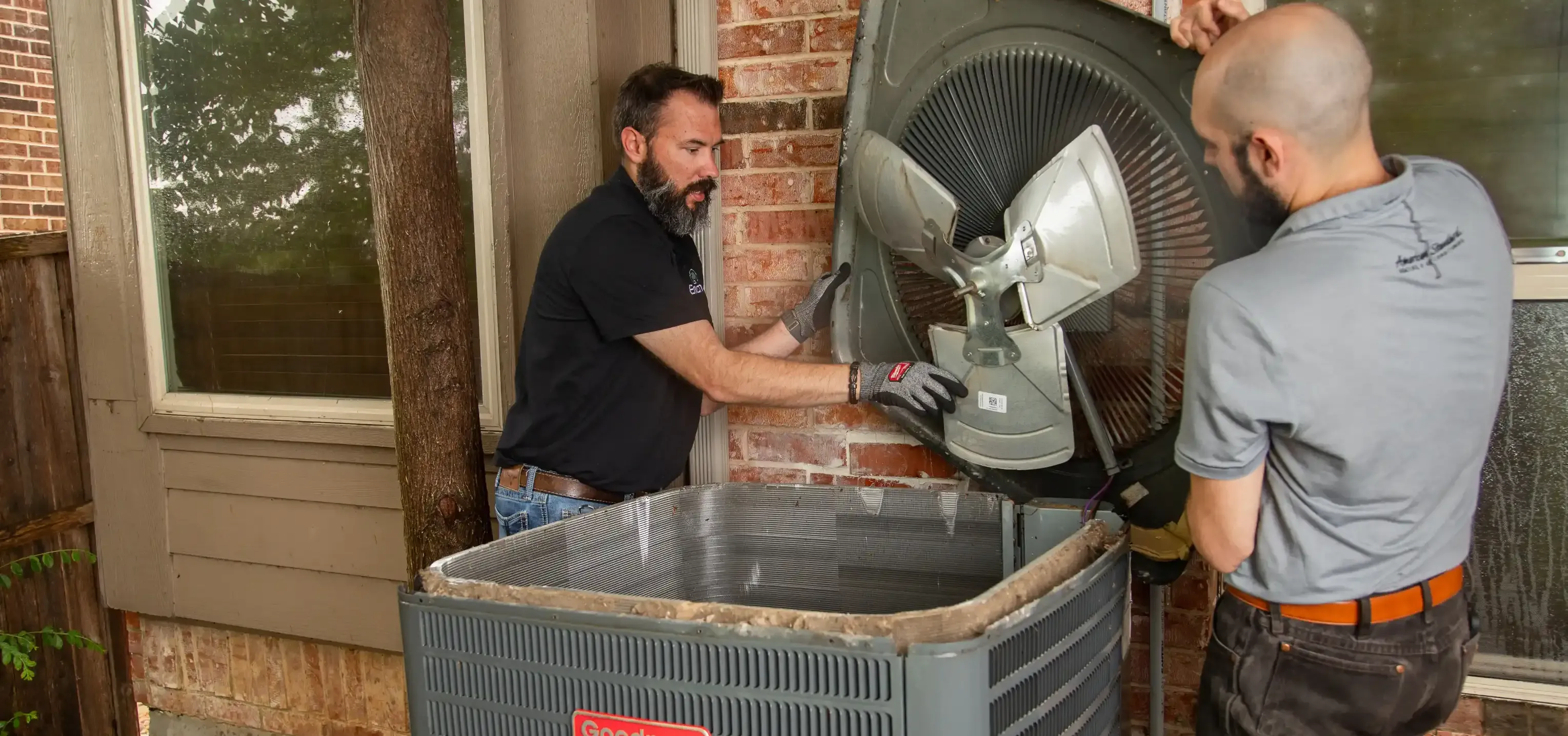
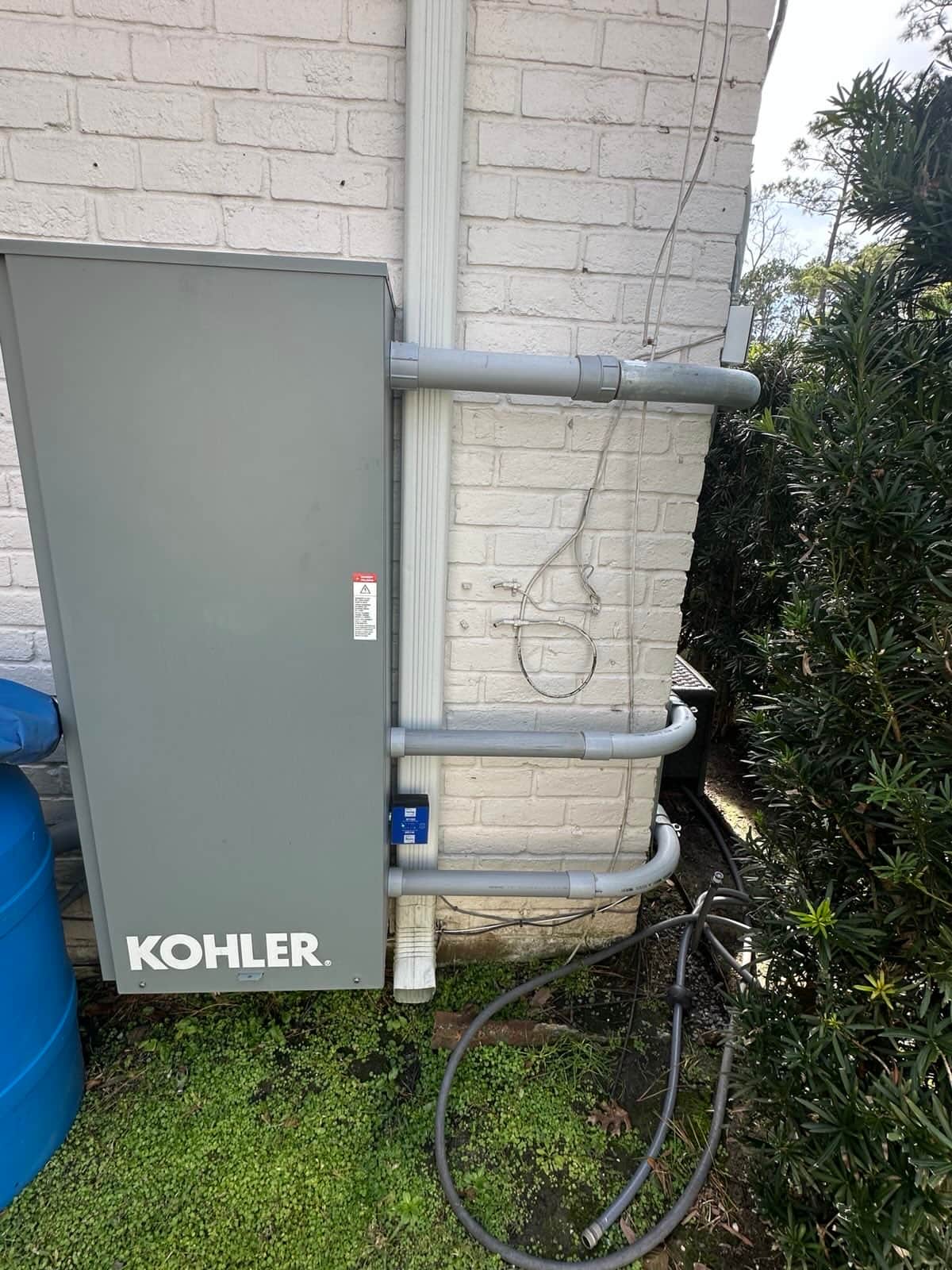
When the lights went out across Texas during Winter Storm Uri, the homes that stayed warm had one thing in common, a working whole house generator. Five years later, those same homeowners are asking a different question: how much longer will it last?
Quick answer: Whole house generators typically last 15 to 30 years, or 10,000 to 30,000 runtime hours, with proper maintenance. They can run continuously for around 500 hours (2–3 weeks) during a single outage. Brand, fuel type, climate, load, and annual maintenance all determine the final lifespan.
This guide gives you the real numbers, lifespan by brand, runtime by tank size, what kills generators early, and exactly when it's time to replace yours.
Whole House Generator Lifespan at a Glance
Generator Type | Lifespan (Years) | Lifespan (Hours) | Avg. Cost to Replace |
Air-cooled residential | 15–25 years | 1,500–3,000 hrs | $8,000–$15,000 |
Liquid-cooled residential | 25–30+ years | 10,000–30,000 hrs | $12,000–$20,000 |
Commercial standby | 30+ years | 30,000+ hrs | $20,000–$50,000+ |
Portable generator | 8–15 years | 1,000–2,000 hrs | $500–$2,500 |
A generator's lifespan is measured two ways, calendar years and runtime hours. Both matter in Texas and Florida, where storm-season heavy use can rack up runtime hours fast. A unit that hits 30,000 hours may need replacement before its 30-year calendar mark.
How Long Can a Whole House Generator Run Continuously?
A standby whole house generator is designed to run continuously for approximately 500 hours, or 2 to 3 weeks, before needing a break for maintenance and inspection. In practice, the real limit is fuel supply, not the engine.
- Air-cooled units: ~500 hours continuous before requiring rest
- Liquid-cooled units: Multiple weeks continuously if fuel is available
- Pause schedule: Most modern units self-monitor and recommend a quick oil check every 24 hours
- Florida hurricane reality: A typical 5–7 day hurricane outage is well within capability
- Texas Uri reality: Average 42–70 hour outage was easily within range
During Hurricane Ian (2022), many Florida Generac and Kohler units ran continuously for 8–10 days without issue, proving residential standby units can handle extended outages when properly sized and maintained.
How Long Generators Last by Brand
Brand | Expected Lifespan | Common Failure Point |
Generac | 18–25 years | Control board, battery |
Kohler | 25–30 years | Higher service cost |
Cummins | 25–30+ years | Commercial-grade pricing |
Briggs & Stratton | 15–20 years | Engine wear at high hours |
Champion | 12–18 years | Limited dealer network |
Generac holds 75%+ of the residential standby market, most homes in Texas and Florida neighborhoods have one. Kohler costs more upfront but consistently reaches 25–30 years with proper service. Cummins is the choice for commercial properties and homeowners who want commercial-grade build quality.
In our 12+ years installing generators across Dallas, Fort Worth, Houston, Austin, San Antonio, and the Gulf Coast, we've seen Generac and Kohler units consistently reach 20+ years when serviced annually. The biggest factor isn't the brand, it's the maintenance schedule.
The Battery Dies First (Long Before the Generator Itself)
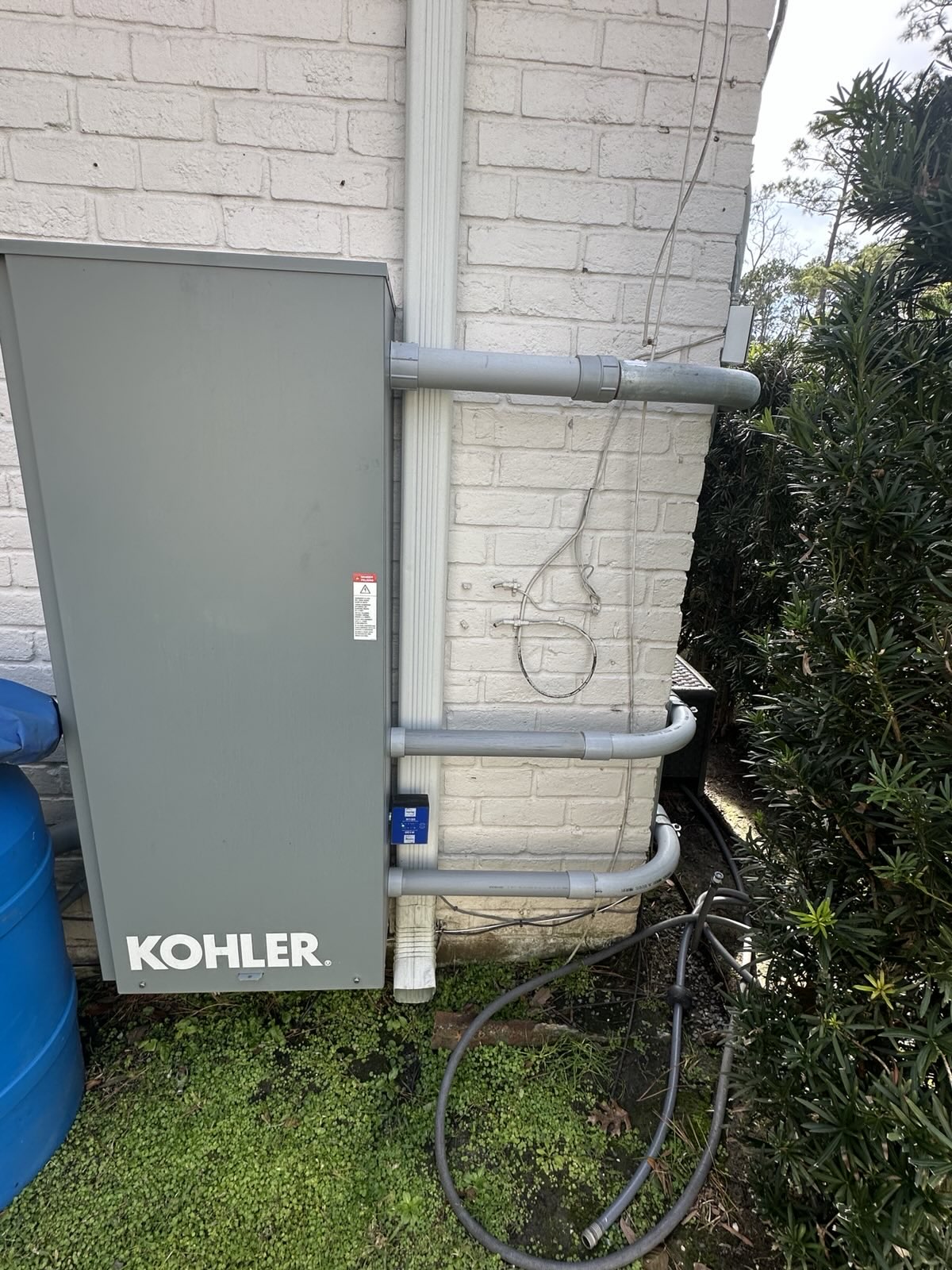
Your whole house generator's lifespan is 20+ years, but its battery lasts only 2 to 3 years.
This is the #1 reason owners think their generator failed — it didn't. The battery did. When the unit fails to start during a maintenance check or an actual outage, it's usually a $200 battery, not a $15,000 generator.
- Replacement cost: $150–$300 for the battery; $200–$400 with professional service
- Texas heat shortens battery life by roughly 30% compared to milder climates
- Florida humidity accelerates terminal corrosion
- Warning signs: Failed weekly self-test, slow crank, dashboard error code
Pro tip from our service techs: Set a calendar reminder to replace your generator battery every 24–30 months, before it fails during an outage. A $200 preventive battery beats a 3 a.m. panic call during a storm.
Propane Tank Runtime — How Long Will Your Fuel Last?
Propane tanks are filled to only 80% of capacity for safety (propane expands with heat). So a "250-gallon tank" actually holds about 200 usable gallons, this changes runtime math significantly.
Estimated Runtime by Tank Size and Load
Tank Size | Usable Fuel | Low Load (25%) ~0.75 gal/hr | Medium Load (50%) ~1.5 gal/hr | High Load (100%) ~3 gal/hr |
100 gal | 80 gal | ~4.4 days | ~2.2 days | ~27 hours |
250 gal | 200 gal | ~11 days | ~5.5 days | ~2.7 days |
500 gal | 400 gal | ~22 days | ~11 days | ~5.5 days |
1,000 gal | 800 gal | ~44 days | ~22 days | ~11 days |
A 250-gallon tank typically powers a whole house generator for 4 to 5 days at average 50% load. A 22kW Generac at full load uses 2–3 gallons per hour.
Natural gas vs. propane: Natural gas costs less per BTU and provides unlimited fuel from the utility line. Propane stores onsite and keeps working when natural gas service is interrupted, a real risk in extreme weather. For Texas Triangle homeowners with city gas service, natural gas usually wins. For rural Texas properties and Florida coastal areas where storms can disrupt gas, propane is the safer bet.
Tank placement: Per NFPA 58 (LP-Gas Code), a propane tank must be installed a minimum of 10 feet from the house and 10 feet from any ignition source. Larger tanks (500+ gallons) require greater setback.
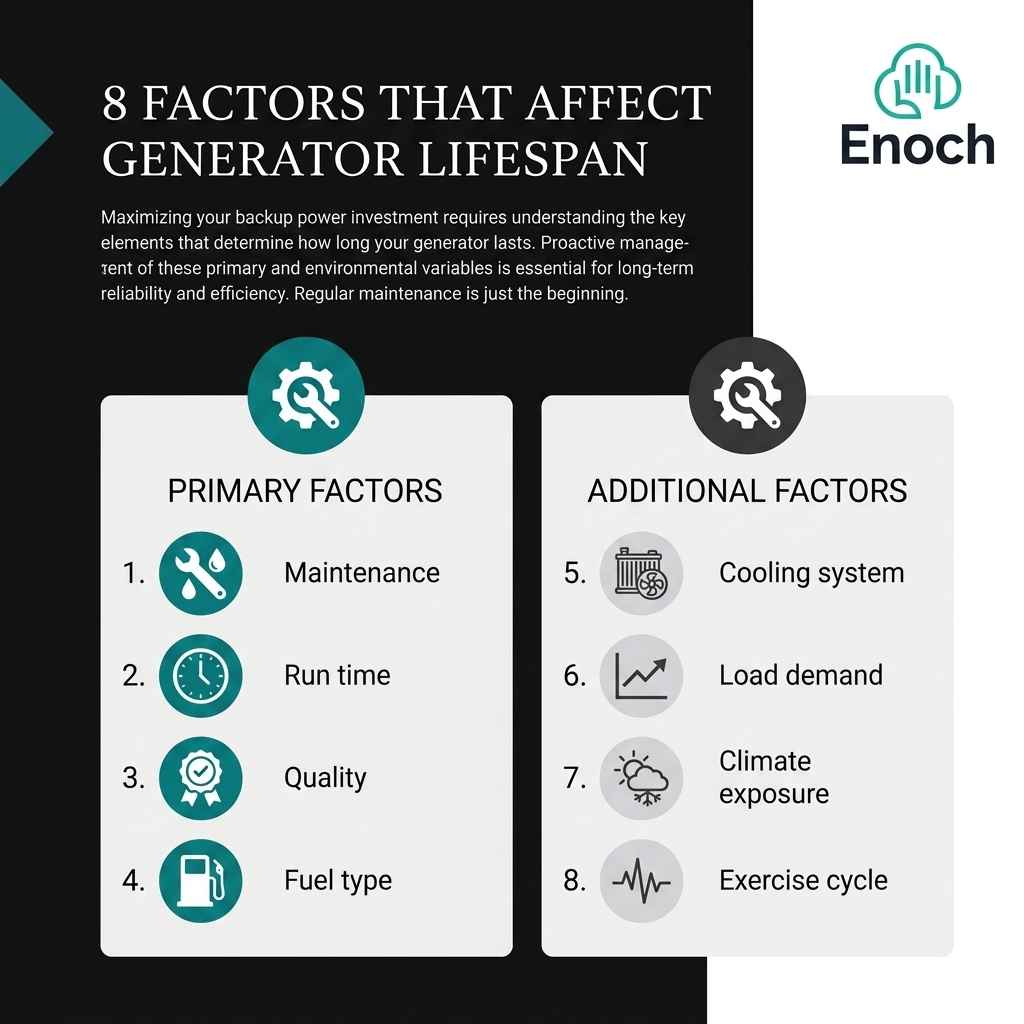
8 Factors That Affect Generator Lifespan
These are the four primary factors determine how long your whole house generator lasts:
- Maintenance — The #1 factor. Routine service adds 5–10 years to lifespan.
- Run time — A generator is essentially a small car engine. More hours = shorter life.
- Quality — Higher-end brands paired with professional installation outlast budget units installed by general contractors.
- Fuel type — Natural gas burns cleanest. Propane and diesel cause more long-term engine wear.
Four additional lifespan factors:
- Cooling system — Liquid-cooled outlasts air-cooled by 2–3x
- Load demand — Constantly running near 100% capacity shortens life (see the 80% rule below)
- Climate exposure — Texas heat, Florida humidity, Gulf Coast salt, and cold cycles all accelerate wear
- Exercise cycle — Weekly automatic self-tests lubricate seals; disabling them is the silent killer
How Texas and Florida Climate Impacts Your Generator
This is where most national generator articles fall short, they don't account for what Texas heat and Florida salt air actually do to a unit over 20+ years.
Texas Heat (DFW, Houston, Austin, San Antonio)
Summer ambient temperatures of 100–110°F push cooling systems hard. Older Generac Evolution control boards have a documented higher failure rate in Texas heat versus milder climates. Houston and Gulf Coast humidity adds corrosion risk to electrical components.
Important timing note for Texas homeowners: The 2021–2022 install wave that followed Winter Storm Uri put thousands of generators in service that are now 4–5 years old, exactly the first major service window. If yours hasn't had a comprehensive professional inspection since install, schedule one now.
Florida Coastal Impact (Tampa, Orlando)
Salt air can cut enclosure lifespan by 30–40% within 5–7 miles of the coast. Hurricane-season heavy usage compresses wear, and year-round humidity accelerates electronic component failure. Aluminum enclosures plus annual coastal-spec maintenance are the difference between a unit that hits 20+ years and one that fails at 10.
Extreme Weather Wear
Major events like Hurricane Ian, Hurricane Beryl, and Winter Storm Uri count as accelerated stress on your generator. A unit that ran 80+ hours during one of these events needs accelerated service immediately afterward, not waiting for the next annual checkup.
Maintenance Schedule + the 20/20/20 Rule
Recommended Maintenance Schedule
Frequency | What's Done | Who |
Weekly (automatic) | 5–20 minute self-exercise cycle | Generator |
Monthly | Visual inspection (debris, leaks, rust, pests) | Owner |
Every 6 months | Oil & coolant check; clear 3–4 ft of vegetation | Owner or Pro |
Annually | Full inspection, oil change, filters, spark plug, battery load test, ATS check | Professional |
Every 2–3 years | Replace battery | Professional |
Every 5 years | Comprehensive electrical inspection, ATS service | Professional |
Annual professional maintenance typically costs $200–$500 depending on unit size and region.
The 20/20/20 Safety Rule (The One You Need to Know First)
Per FEMA / Ready.gov, state emergency officials, the 20/20/20 rule is primarily a safety guideline:
- 20 feet away from house, doors, windows, and vents — prevents carbon monoxide poisoning
- 20 minutes cooldown before refueling — prevents flash fires from a hot engine
- $20 CO detector in your home — your last line of defense
The 20/20/20 Maintenance Rule (Secondary)
Some manufacturers describe a maintenance version: run your generator for 20 minutes, at 20% load, every 20 days to keep seals, fuel lines, and battery in working condition. Modern standby units handle this automatically through their weekly exercise cycle.
6 Most Common Problems That Shorten Generator Lifespan
- Fuel-related issues — the #1 cause of generator failure overall. Contaminated fuel, blocked fuel filters, and stale propane lines.
- Battery failure — dies at 2–3 years; the #1 reason owners think their generator "broke"
- Control board failure — especially older Generac Evolution units in hot climates
- Fuel regulator problems — common in propane units during winter cold snaps
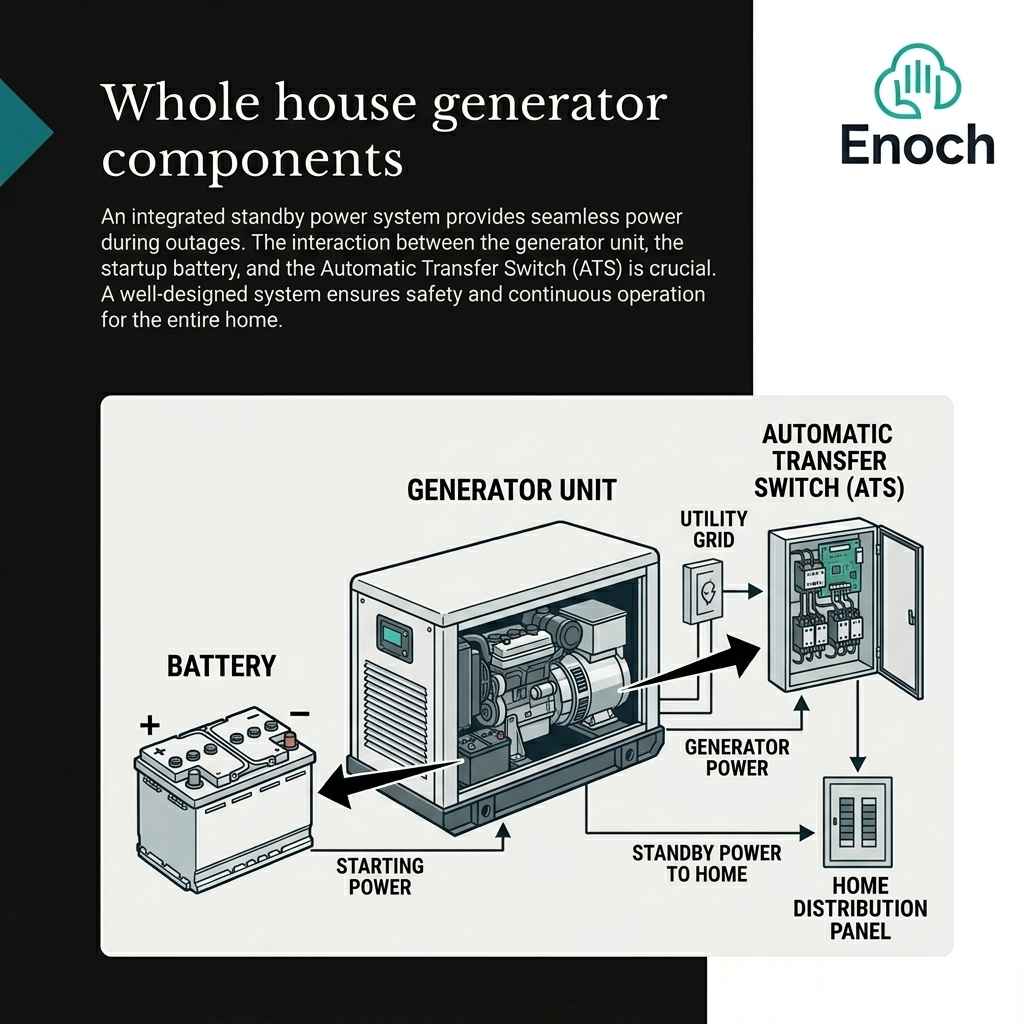
- Automatic Transfer Switch (ATS) failure — often misdiagnosed as a generator problem
- Exhaust corrosion — Florida coastal and Houston humidity accelerate this dramatically
About the ATS: The Automatic Transfer Switch is a separate component from the generator itself. When it fails, the generator never starts during an outage, even though the unit is perfectly fine. Always have your tech inspect both at every annual service.
When to Replace Your Whole House Generator
The 4 Definitive Signs
- It fails to start during a maintenance check or weekly self-test
- It can't run as long as it used to without overheating
- It produces lower-quality power, voltage fluctuations, flickering lights, surging RPM
- The cost of repairs exceeds the value of a new unit
Three additional warning signs:
- Excessive black or blue smoke at startup
- Unusual noises, knocking, grinding, surging
- Visible rust-through on enclosure or exhaust
Repair vs. Replace — Decision Framework
Generator Age | Issue Type | Recommendation |
Under 10 years | Single issue (battery, ATS, sensor) | Repair |
10–15 years | Single issue under $2,000 | Repair |
10–15 years | Major issue (control board, engine) | Case-by-case |
15+ years | Any issue over $2,000 | Replace |
Any age | Visible rust-through or coolant leak | Replace |
Any age | Multiple failures within 12 months | Replace |
Rule of thumb: If repair costs exceed 50% of new install cost, replacement almost always wins on lifetime cost, and you reset the 15–30 year clock.
📞 Need a second opinion? Team Enoch offers transparent generator inspections across Texas and Florida, no pressure to replace, just an honest assessment from a licensed electrician.
How Much Does a Whole House Generator Cost?
What a Generac Costs for a Typical 2,000 Sq Ft Home
Item | Cost |
Unit only (22–24kW air-cooled) | $6,500–$7,500 |
Installation (labor, permits, gas line, pad) | $2,000–$5,000 |
Total installed | $8,000–$16,000 |
Average investment | ~$13,000 |
Specific Models Most Texas and Florida Homes Use
- Generac 22kW (Model 70432) with 200A transfer switch: $6,500–$6,800
- Generac 24kW (Model 7210) with 200A transfer switch: $7,200–$9,700
Cost Drivers
- Fuel source — natural gas hookup is cheaper than installing a propane tank
- Distance between generator, gas meter, and electrical panel
- Transfer switch — a 200A automatic transfer switch is required for whole-house coverage
- Concrete pad, permits, and any electrical panel upgrades
True 25-Year Cost of Ownership
Cost Item | Frequency | Lifetime Total |
Initial install (22kW Generac) | Once | $12,000–$15,000 |
Annual maintenance | Yearly | $7,500 ($300 × 25) |
Battery replacement | Every 2–3 years | $2,000 |
ATS service | Every 5 years | $1,000 |
Propane fuel (~50 hrs/yr) | Yearly | $9,375 |
Total over 25 years | ~$32,000–$35,000 |
That's roughly $1,300–$1,400 per year for guaranteed power during every storm and grid failure, plus the 3–5% home value bump a whole house generator adds in Texas and Florida markets.
Pros and Cons of Whole House Generators
Whole house generators are expensive, use lots of fuel, need frequent maintenance, and must be sized carefully for your home's electrical load. That said, for most Texas and Florida homeowners who've lived through a major outage, the trade-off is worth it.
✅ Pros | ❌ Cons |
Automatic startup in 10–30 seconds | High upfront cost ($8K–$16K installed) |
Powers the entire home, not just essentials | Ongoing maintenance ($200–$500/year) |
Adds 3–5% home value (especially TX/FL) | Noise during operation (60–70 dB) |
Possible tax credit (Section 25D — verify with CPA) | Requires permits, gas hookup, electrical work |
15–30 year lifespan vs. portable's 8–15 | Eventual replacement at end of life |
Alternatives to consider: Portable generators ($500–$2,500) are cheaper but require manual setup and provide no automation. Solar + battery systems like Tesla Powerwall or Anker SOLIX are quieter and fuel-free, but have a higher upfront cost and limited runtime during extended outages without sun.
The 80% Rule for Generators (NEC Sizing)
The 80% rule means you should use only up to 80% of a generator's rated capacity for safe and efficient operation. Operating beyond this limit causes overheating, reduced lifespan, and potential damage.
This rule comes from the National Electrical Code (NEC) Article 220, which says continuous loads shouldn't exceed 80% of rated capacity.
What This Looks Like in Real Numbers
- 20kW generator → max continuous load of 16kW
- 22kW generator → max continuous load of 17.6kW
- 26kW generator (typical for 200-amp service) → max continuous load of 20.8kW
Why it matters for lifespan: Pushing a generator above 80% continuously cuts 5–10 years off the unit's life. This is why proper sizing at install is one of the biggest factors in how long your generator will last.
Get Your Whole House Generator Serviced or Replaced by Team Enoch
Whether your generator is approaching the end of its lifespan, due for annual service, or you're ready to install a new whole house generator, Team Enoch is here to help.
- 12+ years of electrical and generator service experience
- 15,000+ residential jobs per year across Texas and Florida
- 4.9 Google rating from 5,000+ verified customers
- All in-house licensed electricians (TECL #31529) — no subcontractors
- Payment after service — you don't pay until it's running perfectly
- Price guarantee across the Texas Triangle and Central Florida
Service areas: Dallas, Fort Worth, Arlington, Austin, San Antonio, Houston, Tampa, and Orlando.
📞 Call 817-769-3712 for an immediate quote.