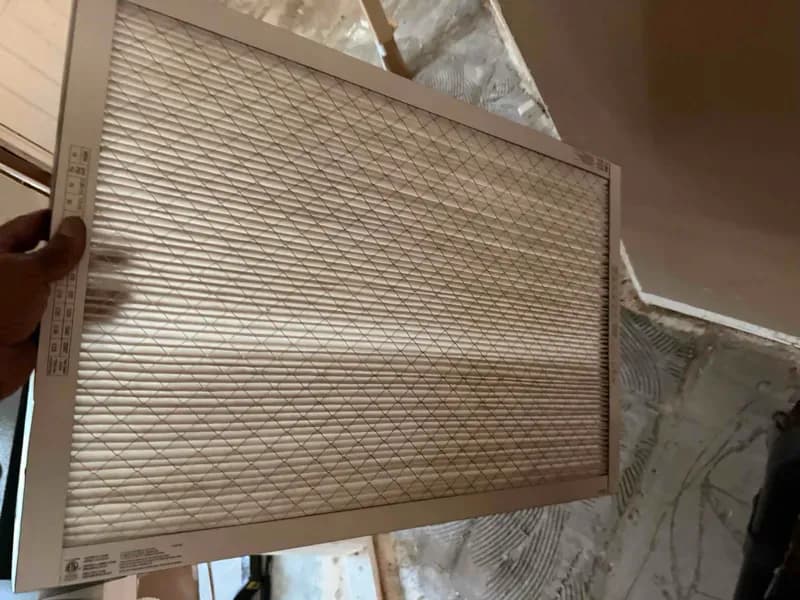
Take a deep breath. With every inhale, you might be drawing in dust mites, pet dander, and mold spores, all because of that forgotten filter in your HVAC system.
Can a dirty air filter actually make you sick? Absolutely. Research shows that indoor air can be up to 5 times more polluted than outdoor air, and a clogged filter is often the culprit.
That neglected rectangular filter could be behind your persistent cough, mysterious allergy flare-ups, and lingering fatigue. When clogged with debris, your air filter transforms from protector to problem, creating breeding grounds for harmful microorganisms and circulating contaminated air throughout your home 24/7.
Quick Answer: Yes, Dirty Air Filters Can Make You Sick
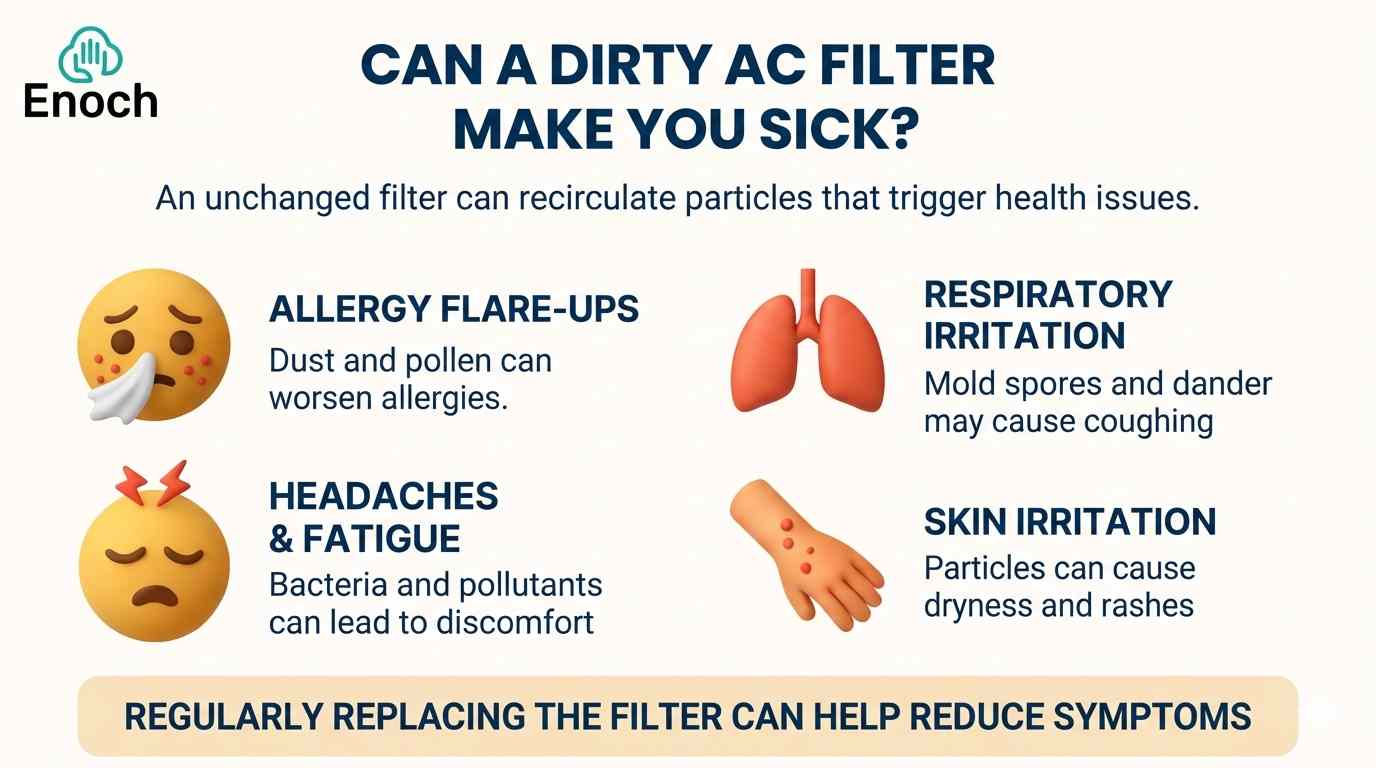
A dirty air filter can absolutely make you sick by trapping and recirculating allergens like dust, pollen, and pet dander, along with mold spores, bacteria, and viruses. This leads to allergy and asthma flare-ups, headaches, fatigue, sore throats, coughing, sneezing, and increased respiratory infections, especially for children, elderly individuals, and those with compromised immune systems.
When filters become clogged, they stop trapping new particles effectively and can even become breeding grounds for mold and bacteria, worsening your indoor air quality with every breath.
Why Air Filters Matter for Indoor Air Quality
Your HVAC air filter is your home's first line of defense against airborne pollutants. A properly functioning filter traps dust, pollen, mold spores, pet dander, and microscopic particles measuring 2-10 microns before they circulate through your living spaces.
A clean filter helps:
- Improve indoor air quality and reduce airborne allergens
- Prevent respiratory irritation and illness
- Support proper airflow and HVAC efficiency
- Protect your family from breathing harmful contaminants
- Lower energy costs by maintaining system performance
When neglected, a dirty HVAC filter or clogged air filter does the opposite, it recirculates pollutants instead of trapping them, and that's when serious health problems arise.
Common Health Symptoms of a Dirty Air Filter
Wondering how to know if your AC is making you sick or if your air filter is the problem? Look for these telltale signs:
Respiratory Issues
- Persistent coughing and sneezing
- Wheezing or shortness of breath
- Runny or stuffy nose
- Sore throat or throat irritation
- Increased asthma attacks in sensitive individuals
- Higher risk of bronchitis and sinus infections
Allergy Flare-Ups
- Worsened seasonal allergy symptoms
- Itchy, watery eyes
- Skin irritation or rashes
- Increased sensitivity to dust mites, pollen, and pet dander
Systemic Symptoms
- Frequent headaches or dizziness
- Chronic fatigue and lethargy
- Poor sleep quality or disrupted sleep patterns
- Brain fog and difficulty concentrating
- General feeling of being unwell ("sick building syndrome")
Physical Irritation
- Dry skin, throat, or nasal passages
- Itchy eyes and nose
- Skin reactions in sensitive individuals
If multiple family members experience these symptoms indoors but feel better when outside, your air filter is likely overdue for replacement.
How Long Does AC Sickness Last?
AC sickness symptoms typically improve within 24-48 hours after leaving the contaminated environment or replacing the dirty filter. However, if mold exposure or severe allergen buildup has occurred, symptoms like coughing and congestion can persist for several days to a week.
For individuals with asthma or chronic respiratory conditions, recovery may take longer, and professional medical attention might be necessary if symptoms worsen.
The Hidden Dangers of a Dirty HVAC Air Filter
1. Mold Growth and "Black Filters"
Dark stains or a musty odor near return vents signal mold growing in a damp, clogged filter. According to CDC studies, contaminated HVAC components are linked to respiratory illnesses like hypersensitivity pneumonitis and allergic reactions.
Can dirty air filters cause mold? Yes. When filters trap moisture along with organic material like dust and pet dander, they create the perfect breeding ground for mold colonies. Once established, these colonies release thousands of airborne spores that circulate throughout your home, causing:
- Chronic coughing and sneezing
- Respiratory infections
- Headaches and fatigue
- Serious lung complications in immunocompromised individuals
If you see a black air filter, replace it immediately and inspect for leaks or excess humidity in your HVAC system.
2. Bacteria and Virus Buildup
Warm, moist debris trapped in filters creates an ideal environment for microbial growth. While your filter's job is to trap pathogens, a neglected filter becomes a contamination source itself, recirculating bacteria and viruses back into your breathing air.
The EPA emphasizes that filter replacement is a critical component of indoor air quality strategy, alongside source control and proper ventilation.
3. Poor Indoor Air Quality in Sealed Homes
Modern, energy-efficient homes are tightly sealed for energy savings, but this creates a challenge for ventilation. In these conditions, a dirty air filter traps indoor pollutants like cooking smoke, pet hair, and volatile organic compounds (VOCs) with nowhere to escape.
Without fresh air circulation, these contaminants accumulate rapidly, contributing to "sick building syndrome", a condition where occupants consistently feel ill due to poor indoor air quality.
4. Increased Allergen Circulation
A filter clogged with pollen, dust mites, and pet dander can no longer trap new particles effectively. Instead, airflow forces these irritants back through supply ducts and into bedrooms, living areas, and common spaces—exactly where you spend most of your time.
For allergy and asthma sufferers, this constant exposure triggers more frequent and severe reactions.
5. Reduced HVAC Lifespan and Rising Energy Costs
Clogged filters increase pressure drop across your HVAC system, forcing the blower motor to work harder. Research confirms that neglected filters can:
- Increase energy consumption by 15% or more
- Cause uneven heating and cooling (hot and cold spots)
- Lead to frozen evaporator coils in summer
- Trigger furnace overheating and safety shutoffs in winter
- Shorten equipment lifespan by years
The added strain accelerates wear on critical components like the heat exchanger and compressor, resulting in costly repairs or premature system replacement.
What in My House Is Causing Me to Cough?
If you're experiencing persistent coughing indoors, several air quality culprits could be to blame:
- Dirty air filters - The most common and easily fixable cause
- Mold growth - Check bathrooms, basements, and around windows
- Dust mites - Found in bedding, carpets, and upholstered furniture
- Pet dander - Even if you don't have pets, dander can enter from outside
- VOCs - From cleaning products, paint, or new furniture
- Poor ventilation - Especially in tightly sealed homes
Start by inspecting and replacing your air filter. If coughing persists after filter replacement and improved ventilation, consider professional indoor air quality testing.
How Do I Know If My Air Filter Is Dirty?
Visual and performance signs that indicate it's time to replace your filter:
Visual Indicators
- Gray, brown, or black discoloration
- Visible dust and debris buildup on the filter surface
- Bent or warped filter frame
- Musty or moldy odor near vents
Performance Symptoms
- Weak airflow from vents
- Unusual noises from the HVAC system
- Longer system run times
- Uneven room temperatures
- Visible dust settling on furniture faster than usual
- Rising utility bills without increased usage
The most immediate result of a dirty air filter is reduced airflow, which forces your system to work harder and begins the cascade of efficiency and health problems.
Air Purifiers: Help or Harm?
Is My Air Purifier Making Me Sick?
While quality air purifiers improve indoor air quality, certain types can cause problems:
Ozone-generating purifiers are the primary concern. Ozone is a lung irritant that can cause:
- Chest pain and coughing
- Shortness of breath
- Throat irritation
- Worsening of asthma symptoms
How do I know if my air purifier produces ozone? Check the product specifications for terms like "ionizer," "ozone generator," or "electrostatic precipitator." The EPA and American Lung Association recommend avoiding ozone-generating purifiers entirely.
Side Effects of Air Purifiers (Even Good Ones)
Even HEPA-based purifiers can cause temporary issues:
- Initial increase in symptoms as trapped particles are released during the first few days
- Dry air if the unit also has a dehumidifying effect
- Noise disruption affecting sleep quality
How long does it take to notice the effects of an air purifier? Most people experience improvement within 2-3 days of continuous use, with optimal results after 2-3 weeks.
Is it okay to sleep in a room with an air purifier? Yes, quality HEPA purifiers are safe and beneficial for bedroom use. Many people sleep better with cleaner air, especially those with allergies or asthma.
How Often Should You Change or Clean an Air Filter?
Filter replacement frequency depends on your household conditions:
Every 30 days if you have:
- Multiple pets that shed
- Severe allergies or asthma
- Dusty environments or ongoing construction
- Smokers in the home
Every 60 days for:
- Average households without major air quality concerns
- Light pet ownership
- Moderate allergy sensitivity
Every 90 days for:
- Vacation homes or lightly used spaces
- Single occupants with no pets
- Areas with excellent outdoor air quality
Pro tip: Set a phone reminder or write the replacement date on the filter frame with a marker so you never forget.
How to Clean or Replace a Dirty Air Filter
Not sure what to do when your air filter looks gray, clogged, or dusty? Here's a step-by-step guide:
1. Identify Your Filter Type
- Disposable filters: Fiberglass or pleated, meant to be replaced
- Reusable/washable filters: Made of durable materials that can be cleaned and reused
2. Turn Off the HVAC System
Always power down your system before removing the filter to avoid damage and prevent debris from being pulled into the system.
3. Remove the Filter
Locate the filter near the return air duct or inside the furnace/AC unit. Slide it out carefully, noting the airflow direction arrow.
4. Check the Condition
If it looks gray, dusty, or clogged with debris, it's time to act.
5. Clean or Replace
- Disposable filters: Replace with a new one of the same size and MERV rating
- Reusable filters: Wash with mild soap and warm water, rinse thoroughly, then allow it to fully dry (4-6 hours minimum) before reinserting
6. Reinstall the Filter
Ensure the airflow arrow on the filter frame points toward the blower motor before sliding it back into place.
How to Choose the Right Air Filter for Your Home
Fiberglass Filters (MERV 1–4)
The most basic and inexpensive option, constructed with layered fiberglass fibers.
- Filtration: Captures only large particles like lint and dust
- Pros: Low cost, widely available
- Cons: Poor at filtering smaller particles such as pollen, mold spores, or pet dander
- Replacement: Monthly
- Best for: Minimal filtration needs or basic HVAC equipment protection
Pleated Filters (MERV 5–13)
Made of polyester or cotton folds, increasing surface area for particle capture.
- Filtration: Effective at trapping dust mites, pollen, mold spores, and pet dander
- Pros: Good balance of performance and cost, available in various MERV ratings
- Cons: Slightly more restrictive to airflow than fiberglass
- Replacement: Every 60–90 days (check monthly if pets or allergies are present)
- Best for: Most homes, especially those with pets or allergy concerns
Recommended: MERV 11-13 pleated filters offer the best whole-home protection without excessive airflow restriction.
HEPA Filters (MERV 17–20)
High-Efficiency Particulate Air (HEPA) filters capture 99.97% of airborne particles ≥ 0.3 microns.
- Filtration: Traps fine particles including smoke, bacteria, and some viruses
- Pros: Highest level of filtration, ideal for severe asthma and allergy sufferers
- Cons: Often not compatible with standard residential HVAC systems due to airflow restriction unless specially designed
- Replacement: Every 6–12 months per manufacturer guidelines
- Best for: Standalone air purifiers, hospitals, or specially modified HVAC systems
Washable/Reusable Filters (MERV 1–8)
Designed to be cleaned and reused rather than replaced.
- Filtration: Varies by design, generally captures large to medium particles
- Pros: Environmentally friendly, long-term cost-effective
- Cons: Requires regular maintenance, must be completely dried before reinstallation to prevent mold growth
- Maintenance: Wash every 1–3 months
- Best for: Eco-conscious homeowners willing to maintain them consistently
How to Get Rid of Air Conditioner Sickness
If you're experiencing AC-related illness symptoms, take these immediate steps:
- Replace the air filter immediately with a MERV 11-13 pleated filter
- Open windows to increase fresh air circulation for 1-2 hours
- Clean supply and return vents with a vacuum and damp cloth
- Check for visible mold around vents, coils, and drain pans
- Schedule professional HVAC cleaning if symptoms persist
- Monitor humidity levels and keep them between 30-50% to prevent mold growth
- Stay hydrated and get fresh air while your home's air quality improves
Symptoms should improve within 24-48 hours. If they don't, or if symptoms worsen, consult a healthcare provider.
The 3-Minute Rule for AC
What is the 3-minute rule for AC? This safety guideline prevents compressor damage by requiring you to wait at least 3 minutes between turning your air conditioner off and on again.
When an AC shuts down, refrigerant pressure needs time to equalize throughout the system. Restarting too quickly can cause:
- Compressor strain and potential failure
- Tripped circuit breakers
- Reduced system lifespan
Modern AC units often have built-in delay timers, but it's still good practice to follow the 3-minute rule manually when adjusting your thermostat.
Preventing Health Issues from Dirty Air Filters: Complete Action Plan
Monthly Tasks
- Visually inspect your air filter
- Check for any musty odors near vents
- Monitor allergy symptoms among household members
Every 30-90 Days (Based on Your Household)
- Replace disposable filters or clean washable filters
- Mark replacement date on calendar or filter frame
Seasonal Maintenance
- Schedule professional HVAC maintenance twice yearly (spring and fall)
- Clean supply and return vents throughout your home
- Inspect ductwork for leaks or visible mold
Long-Term Solutions
- Upgrade to MERV 11-13 pleated filters for better filtration
- Install a whole-home air purifier with true HEPA filtration if allergies are severe
- Monitor humidity levels and maintain 30-50% relative humidity
- Vacuum and dust regularly to reduce indoor particle buildup
- Consider UV light installation in HVAC systems to kill mold and bacteria
Indoor Air Quality Checklist
✓ Replace air filters on schedule
✓ Professional HVAC inspection twice yearly
✓ Monitor humidity (30-50% ideal)
✓ Regular vacuuming with HEPA filter vacuum
✓ Proper ventilation, especially when cooking
✓ Address water leaks immediately
✓ Quality air purifier in bedrooms (if needed)
When to Call a Professional
Contact an HVAC professional if you experience:
- Persistent health symptoms after filter replacement
- Visible mold growth in ductwork or on HVAC components
- Unusual odors that don't resolve after filter change
- Frozen coils or system malfunctions
- Black or extensively contaminated filters repeatedly
- Uneven heating/cooling despite new filters
Professional duct cleaning, mold remediation, or system upgrades may be necessary for severe indoor air quality problems.
A simple $15-30 filter replacement can be the difference between breathing clean air and suffering from persistent health issues. The symptoms of a dirty air filter—coughing, allergies, fatigue, and respiratory infections—are completely preventable with regular maintenance.
Your two-minute action plan:
- Check your filter today
- Replace it if it's gray, bent, or hasn't been changed in 90+ days
- Set a reminder for your next replacement
- Breathe easier knowing you've taken control of your indoor air quality
Your health and your family's wellbeing depend on the air you breathe. Don't let a neglected filter put them at risk.