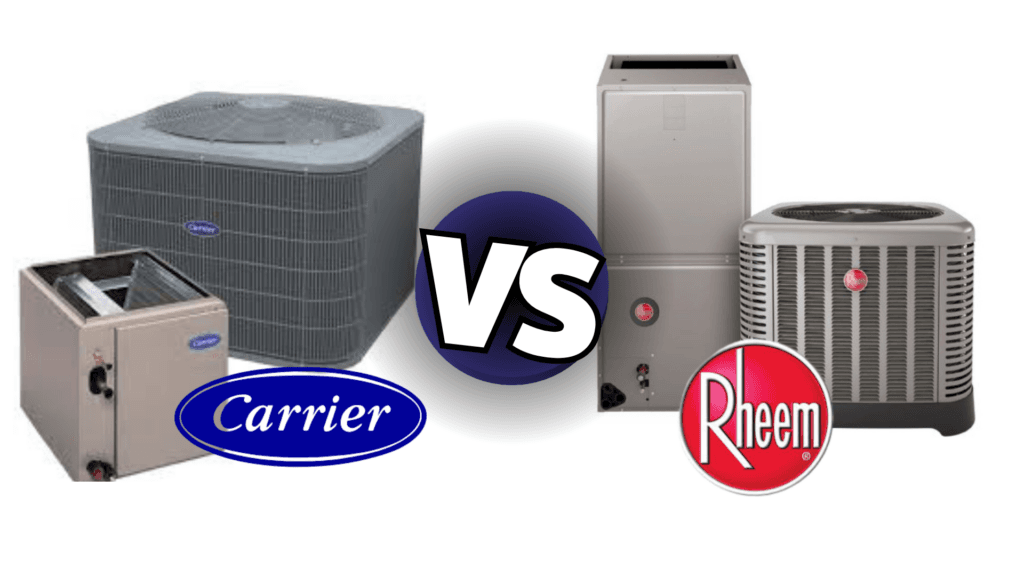
Carrier vs. Rheem: Which HVAC Brand Has the Best Lifespan?
Compare Carrier and Rheem HVAC systems. Discover which brand lasts longer, performs better, and delivers the best value for your home in Texas.
Team Enoch
December 3, 2025
When investing in a new HVAC system, homeowners often face a familiar question: Carrier or Rheem, which brand lasts longer and performs better? Both are respected leaders in heating and cooling technology, recognized for their durability, energy efficiency, and indoor comfort. However, when it comes to long-term performance and reliability, a few key differences can influence your decision.
Whether you’re upgrading your air conditioner in Dallas, TX, or planning a new HVAC installation in Houston, TX, this guide breaks down everything you need to know to make an informed, confident choice.
This comprehensive guide is designed for homeowners comparing these two industry leaders. It provides factual, unbiased insights to help you make the right HVAC investment.
Carrier and Rheem both deliver dependable HVAC solutions for residential and commercial properties. With proper maintenance and professional installation, either brand can last 15–20 years or more.
Understanding these differences helps homeowners in Houston, Dallas, and surrounding Texas cities select the system that best matches their priorities and budget.
Founded in 1902 by Willis Carrier, the inventor of modern air conditioning, Carrier has built a reputation for innovation and engineering excellence. Their systems are recognized for quiet operation, high efficiency, and smart technology.
Founded in 1925, Rheem has built its name on reliability and affordability. The brand offers energy-efficient systems with solid warranties, appealing to homeowners who want dependable comfort without premium pricing.
Here's a critical truth that many HVAC salespeople won't emphasize, proper installation and commissioning impact your system's performance, efficiency, and lifespan more than the brand name on the equipment.
Commissioning goes beyond basic installation. It involves comprehensive testing, precise calibration, and fine-tuning of every system component after installation is complete. This process ensures your system operates exactly as the manufacturer designed it to perform.
In Dallas, TX, and Arlington, TX, professional installers often emphasize commissioning as part of their standard service to extend HVAC lifespan.
Feature | Carrier | Rheem |
Build Quality | Premium materials, superior insulation | Durable, service-friendly design |
Energy Efficiency | SEER2 up to 24 / AFUE up to 98.5% | SEER2 up to 20.5 / AFUE up to 96% |
Noise Level | Ultra-quiet operation | Slightly louder at high speeds |
Technology | Advanced Infinity® system | EcoNet® smart controls |
Learn which HVAC brand matches your budget, efficiency goals, and comfort needs. Whether you prioritize smart features or simple reliability, this guide helps homeowners choose with confidence.
In Austin, TX, many tech-savvy homeowners lean toward Carrier’s Infinity systems for energy management. In contrast, homeowners in Fort Worth, TX, often choose Rheem for its affordability and ease of maintenance.
Both Carrier and Rheem stand out as trusted names in the HVAC industry, each offering impressive quality, energy efficiency, and long-term comfort. Carrier leads in innovation, smart technology, and whisper-quiet operation, ideal for homeowners who want premium performance and control. Rheem, on the other hand, delivers excellent value, straightforward maintenance, and reliable comfort that’s easy on the budget.
No matter which brand you choose, the true measure of system longevity lies in professional installation, correct sizing, and ongoing maintenance. A properly installed HVAC system can easily exceed its expected lifespan, saving you money on energy costs and repairs while ensuring year-round comfort. Investing in expert installation today means enjoying dependable heating and cooling for many years to come.
Homeowners comparing Carrier and Rheem often find themselves evaluating other major HVAC brands before making a final decision. If you’re also weighing how different manufacturers perform in terms of durability, efficiency, and long-term value, our in-depth comparison of Trane vs Goodman HVAC systems offers additional perspective. Looking at multiple brand matchups side-by-side helps clarify which HVAC system best aligns with your budget, comfort expectations, and long-term reliability goals.
Both are excellent HVAC brands, but they serve different needs. Carrier stands out for advanced technology, quiet performance, and top-tier efficiency, while Rheem is known for reliable, budget-friendly systems that deliver great everyday comfort.
With proper installation and routine maintenance, systems from Carrier, Rheem, and Trane can last 15–20 years or more. Carrier units may have a slight edge in lifespan thanks to their premium materials and corrosion-resistant design.
Carrier and Rheem are among the most trusted brands in the HVAC industry. Carrier offers cutting-edge performance, while Rheem earns praise for consistent reliability and easier maintenance.
A Rheem HVAC system typically lasts 15–20 years, depending on care, usage, and climate. With regular tune-ups and filter changes, some units can perform efficiently well beyond that.
Yes, Rheem systems are known for their solid construction, energy efficiency, and affordability. They’re a dependable choice for homeowners who want consistent comfort without the higher cost of premium models.
The $5000 rule helps decide between repair and replacement. Multiply your system’s age by the repair cost, if the total exceeds $5,000, replacing the unit is usually the more economical option.
Warranty
10-year parts + optional extended |
10-year parts + conditional replacement |
Price | Higher upfront investment | More affordable |
Manufacturing | Global (U.S. & international) | Primarily U.S.-made |